New Zealand looks small on a map, but over 22 days, it refuses to stay the same.
You cross two islands, move through landscapes that feel cinematic, and experience four seasons in what can feel like a single day. This isn’t a trip you pack for one moment — it’s a trip you pack for constant change.
From alpine hikes to coastal rides, here’s what to pack for New Zealand aboard a 22-day multisport journey.
What to pack for New Zealand’s North Island
Travel documents
Zip-off layers/functional activewear
Toiletries
Hiking shoes
Hat
Binoculars
Headphones
Scarf/buff
This journey begins in Auckland, where your travel documents step nervously into the spotlight.
Passports, visas, insurance, arrival forms, and of course, New Zealand’s famously strict biosecurity declaration. There is usually a brief wave of uncertainty here. Does this snack count as food? Do hiking boots need declaring? The answer is simple: if in doubt, declare it. The system is not there to catch you out, but to protect one of the most unique ecosystems in the world.
Once through arrivals, the tone shifts quickly. You make your way to the hotel. You meet your guide. You meet your group. The logistics begin to fade into the background, and something more important takes over: Anticipation.
By the time you leave Auckland the next morning, your activewear is already proving its worth. The road south opens into the Hauraki Plains before giving way to the Hauraki Rail Trail, where a gentle ride threads through the towering cliffs of Karangahake Gorge. Conditions shift constantly: cool air on the bus, sun on your back, a sudden drop in temperature inside historic rail tunnels, and later the shade beneath Rotorua’s towering redwoods. It’s a day that rewards versatility, where zip-off layers or functional activewear become one of the most underrated parts of your New Zealand packing list.
Rotorua builds on that momentum. You smell it before you see it. Sulphur rising from the ground, geothermal steam drifting through the air. This is a place where the Earth feels alive beneath your feet. Here, the trip opens up.
White water rafting down the Kaituna River? Zorbing down grassy hills? Ziplining through native forest? By the afternoon, the pace slows slightly at Te Puia, where Māori culture, geothermal landscapes and the powerful Pōhutu Geyser all come together in one place.
And then, the toiletries step forward. After a full day of activity, sun exposure and sulphur in the air, there are few better feelings than a hot shower or a soak in a geothermal spa. Aloe vera, moisturiser and shampoo suddenly feel essential, rather than an afterthought.
If the early days ease you into the journey, the Tongariro Alpine Crossing announces what this trip is really about.
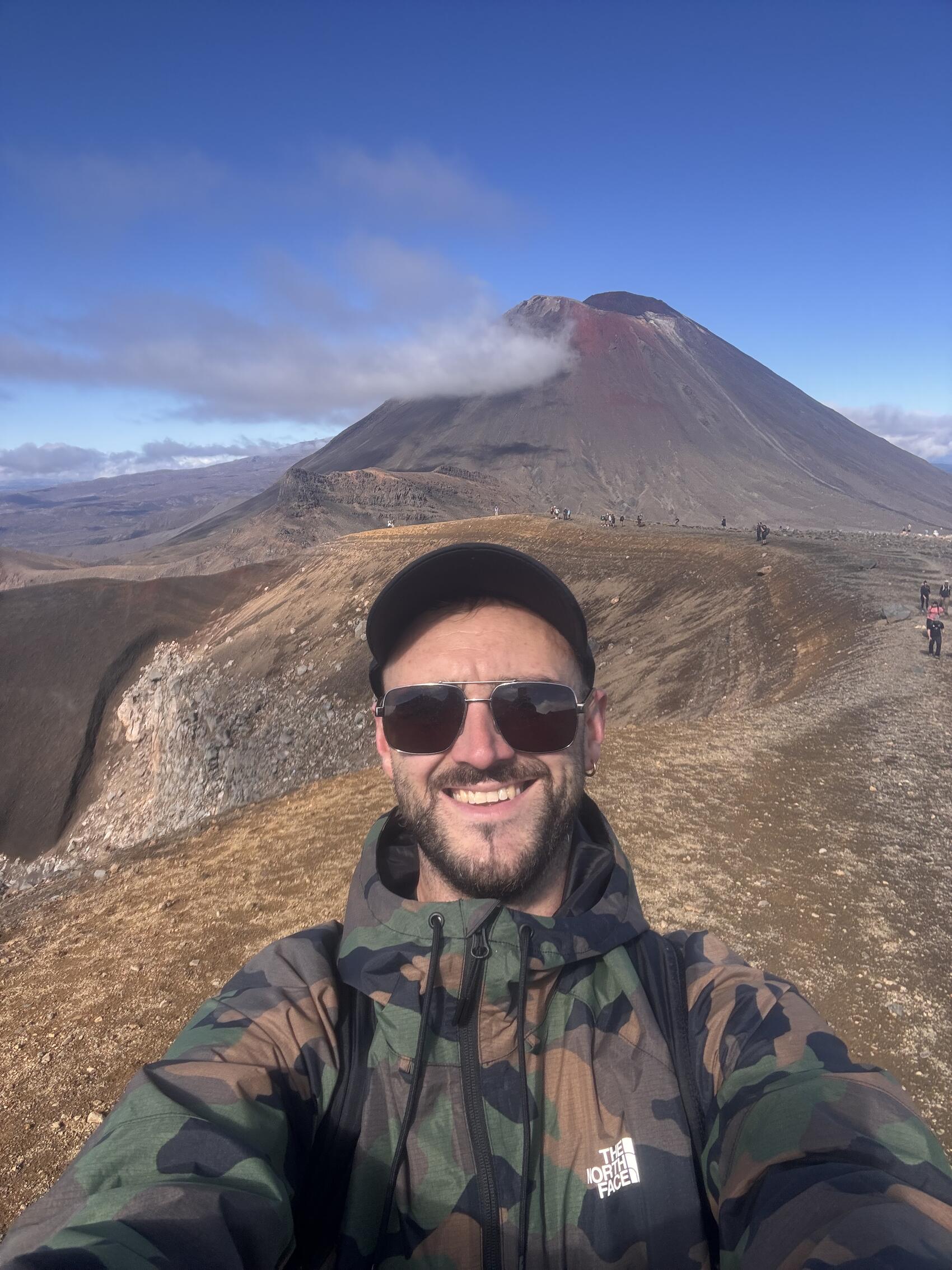
This is where your hiking shoes take centre stage. The drive south skirts Lake Taupō, the result of a colossal volcanic eruption, before the mountains rise on the horizon. Tongariro. Ruapehu. Ngauruhoe (Mount Doom from Lord of the Rings). The crossing begins gently, but it does not stay that way.
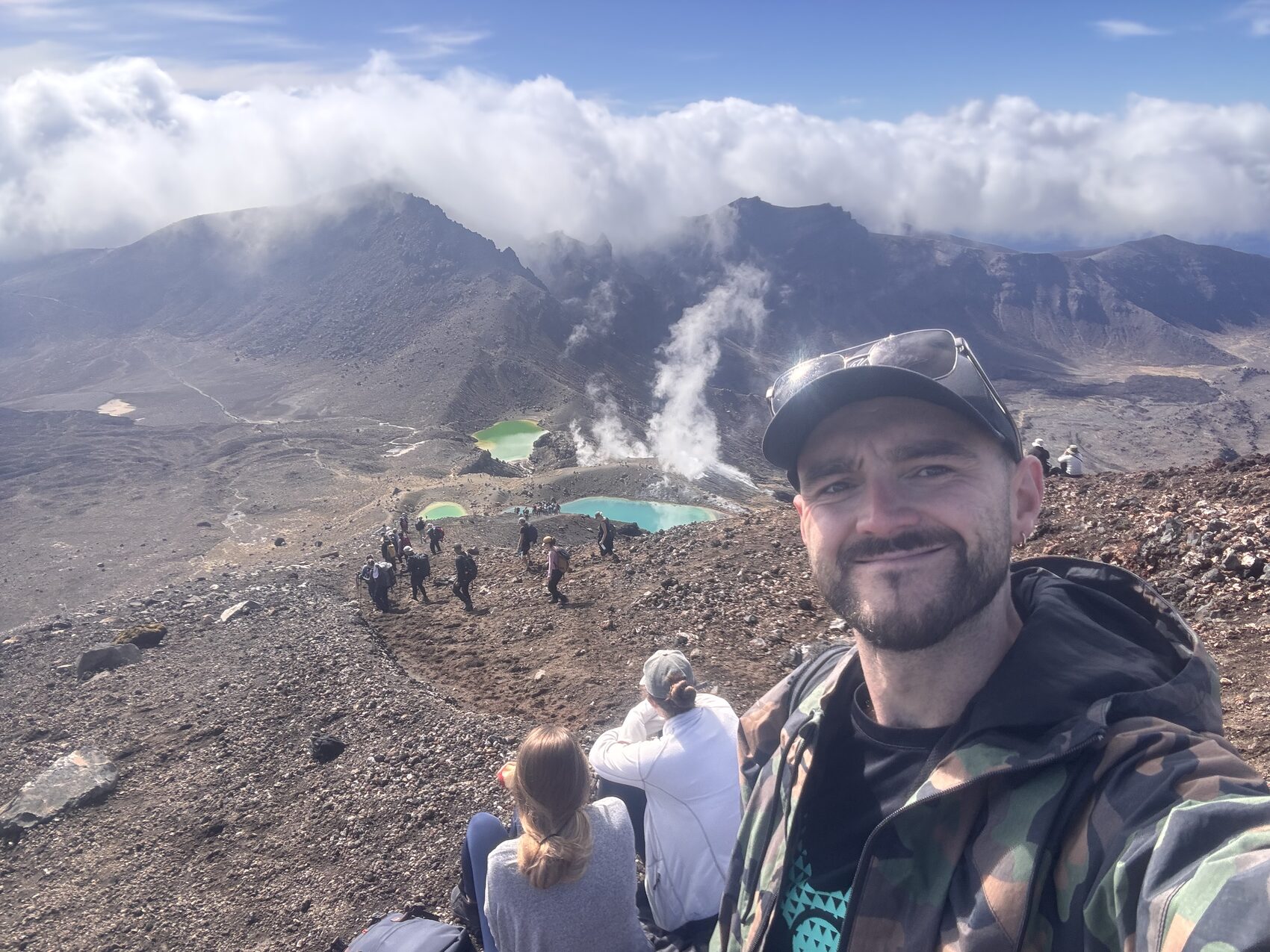
The climb up the Devil’s Staircase tests legs and lungs. The volcanic plateau feels otherworldly, with red rock, black ash and steaming vents stretching out beneath the peaks. Then come the Emerald Lakes, bright pools of mineral water that seem almost unreal against the surrounding landscape.
And then, the descent: Loose volcanic scree, shifting underfoot, forces every hiker to find their own technique. By the end, there are tired legs, dusty boots and a shared sense of achievement that carries well beyond the trail. This is where many travellers realise why hiking in New Zealand is often described as ‘four seasons in a day’.
Where the journey slows, then transforms
From here, the journey shifts again. Blue Duck Station introduces a quieter kind of wilderness. Remote, expansive and deeply connected to conservation, it offers a different perspective on New Zealand’s landscapes. The hat becomes essential under the open sky, while binoculars bring the details closer. Native birds. River valleys. Subtle movements in the bush.
Jet boating on the Whanganui River adds a burst of adrenaline, but it is the stillness between those moments that stays with people. Strangers have become familiar. Conversations flow more easily. Shared experiences around the camp fire begin to build into something more meaningful.
The road to Waitomo introduces a more familiar travel companion: headphones. Gravel roads, long drives and the gentle rhythm of rural New Zealand roads create the perfect conditions for music, podcasts, audio books or simply a moment to bask in your own thoughts. But Waitomo itself shifts everything underground.
The glowworm caves transform darkness into something magical. Thousands of tiny lights suspended above you create the illusion of a night sky beneath the earth.
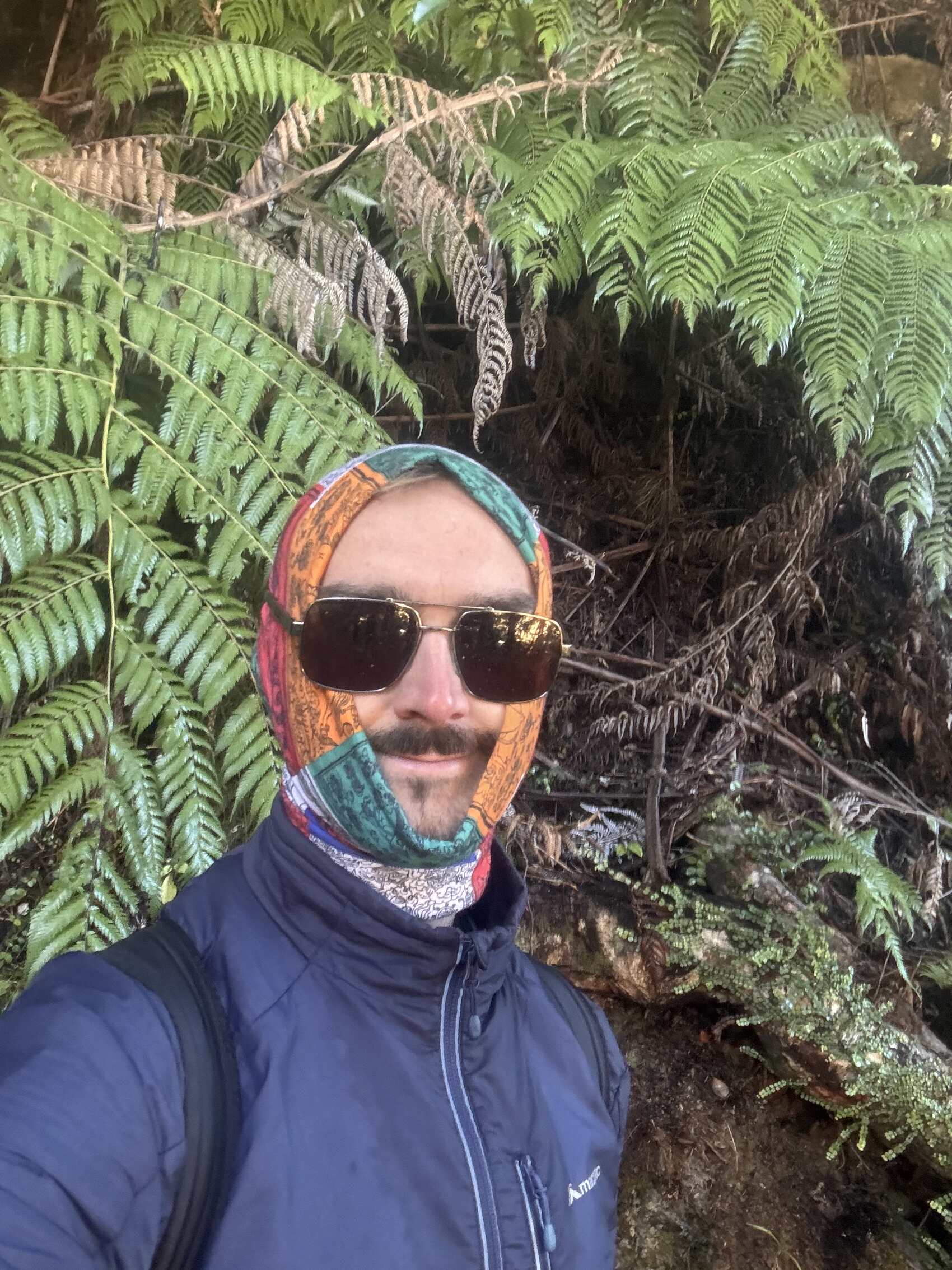
From here, the journey briefly returns to Auckland before flying to the South Island. This is where the scarf or buff earns its recognition, useful in cool cave air, early mornings, and the sudden shift in temperature as the journey continues south.
What to pack for New Zealand’s South Island
Sunglasses
Reusable water bottle
Daypack
Swimwear
Travel towel
Sunscreen
Waterproof jacket
Long-sleeve shirt
Long-trousers
Camera
Hiking poles
Headlight
First aid kit
The difference between the South Island vs the North Island? It feels bigger. Wilder. More dramatic from the outset.
Leaving Christchurch, the road stretches across the Canterbury Plains. Wide, flat farmland that seems to run endlessly toward distant mountains. It is a landscape that feels open in every direction, the sky somehow larger, the air a little sharper. And then, almost without warning, the road bends, the Pacific Ocean appears, and the Kaikōura Ranges rise abruptly from the coastline.
This is where the sunglasses take centre stage. The southern light has a clarity to it. It reflects off the ocean, bounces off the road, and fills the landscape with a brightness that demands attention. Particularly as the drive turns into an unofficial wildlife watch.
Seals stretch out along the rocks, completely unbothered by passing visitors. Dolphins occasionally flick through the water offshore. Whale watching boats head out daily, offering the chance to see one of the ocean’s largest creatures rising slowly from the deep.
By the time the group walks the South Bay Peninsula, with the mountains behind and the ocean stretching out ahead, there is already a sense that this island plays by different rules. From here, the journey continues north and then west, and the rhythm of the road begins to settle in.
A slower interlude before the coastline calls
This is where the reusable water bottle becomes one of the most reliable items on your New Zealand adventure tour. Long travel days, changing climates and the steady pull of outdoor activity make hydration less of a suggestion and more of a necessity. Somewhere between Kaikōura and Marlborough, it becomes a permanent fixture in the side pocket of a daypack — one of the true New Zealand trip essentials.
Marlborough itself introduces a softer contrast. Rolling vineyards, warm sunshine and the crisp, recognisable flavours of Sauvignon Blanc create a different kind of experience. One that is slower, more indulgent, and briefly pulls the trip away from its physical intensity.
A wine tasting here is not just about the wine; it is about pausing, resetting, and enjoying a moment of stillness before the journey continues – because it does not stay still for long.
By the time you reach Marahau, the gateway to Abel Tasman National Park, the landscape has shifted again. Golden sand replaces gravel. The air warms. The sea turns a shade of blue that feels almost out of place, even by New Zealand’s standards. And this is where the swimwear and the travel towel finally step forward and say, ‘this is our day’.
Abel Tasman has a different energy to it. There is movement: walking, kayaking, climbing in and out of water taxis launched by tractor. Beaches appear one after another and the water has a way of pulling people in, even if just for a toe dip.
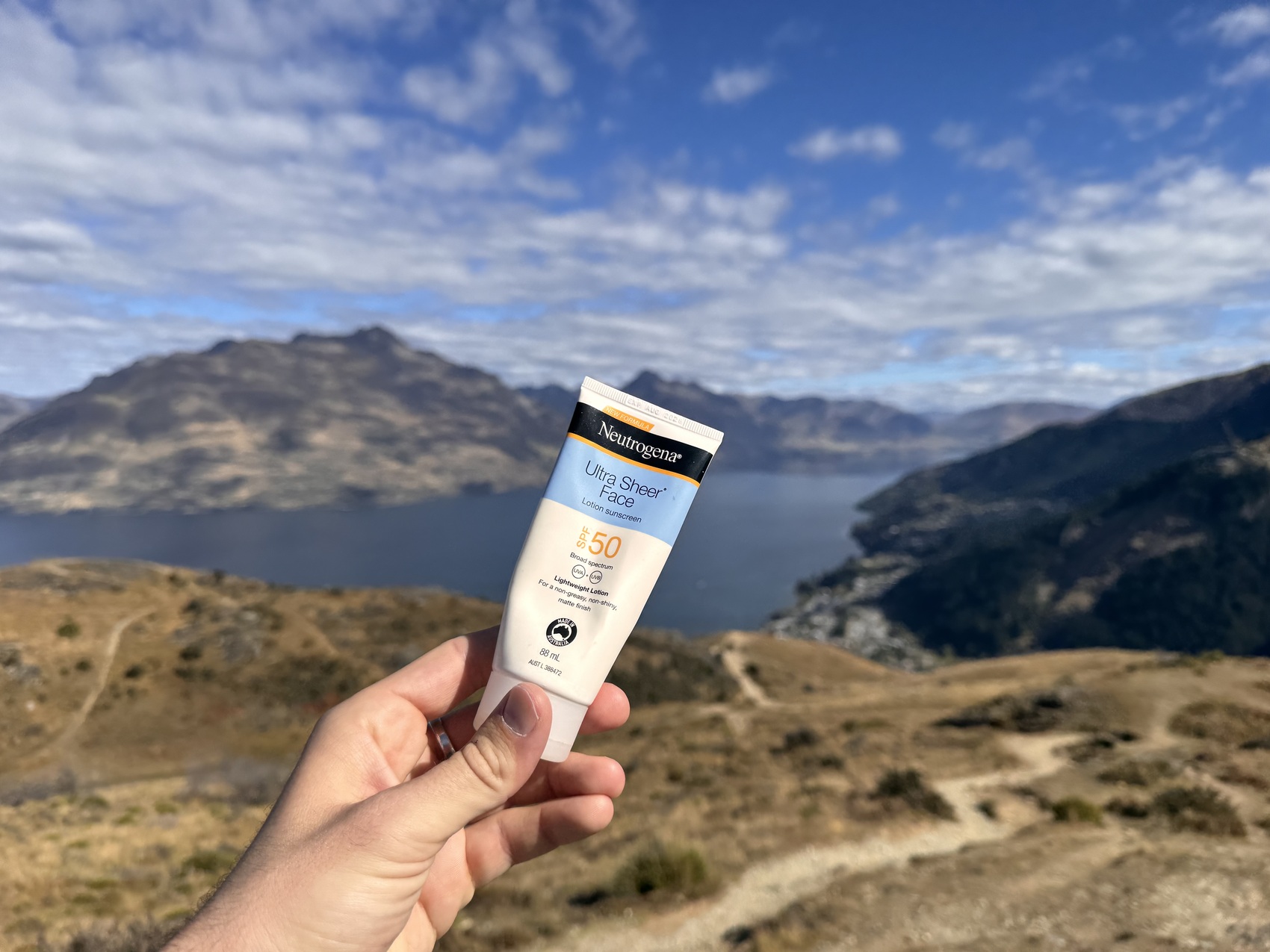
The day becomes a balance of activity, pause and sunscreen. Walking through native forest, paddling along the coastline, stopping for lunch on the sand and dropping bags and stepping straight into the sea.
And somewhere along the way, people realise this is one of those days they will talk about long after the trip ends. Then, just as comfortably as it arrived, that warmth begins to fade.
Where the weather turns and the landscape wildens
The road south from Abel Tasman marks a shift in tone. The West Coast does not ease you in. It announces itself.
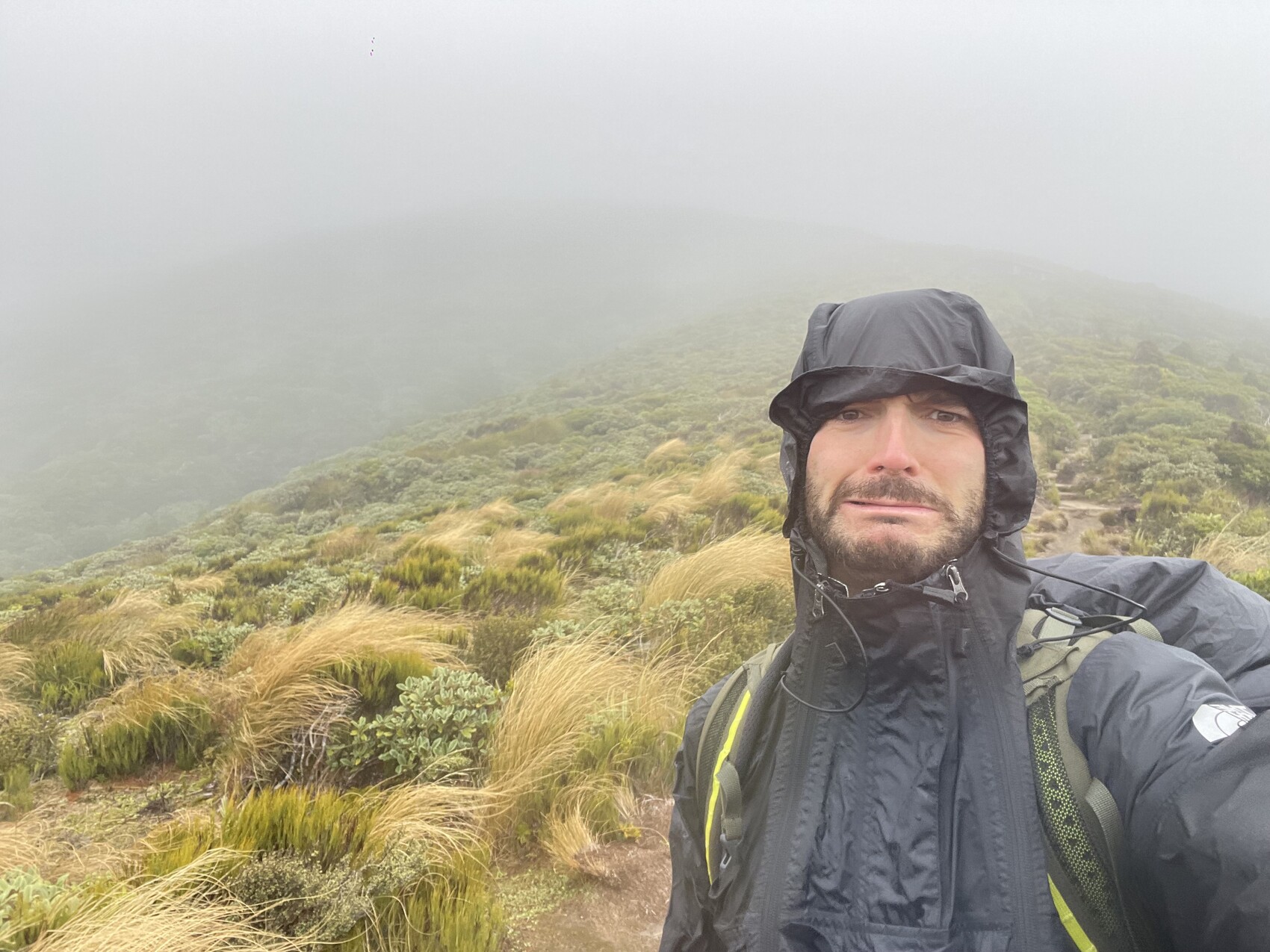
The sky darkens slightly. The air thickens. The landscape becomes denser, wilder, less predictable. And this is where your waterproof jacket taps you on your shoulder.
The ’Wild West‘ Coast has a reputation for rain, and it is well earned. Moisture from the Tasman Sea hits the Southern Alps and falls quickly, feeding the dense vegetation that defines this part of the country.
An hour’s walk at Cape Foulwind lives up to its name, with wind sweeping across the headland and waves crashing against limestone cliffs. Further down the coast, Punakaiki’s Pancake Rocks rise in layered formations that seem almost too unusual to be natural. Behind it all, the rainforest presses in. Thick, green, almost prehistoric.
The atmosphere shifts completely at Lake Brunner. The wind drops, the lake settles into a mirror, and the surrounding forest feels still and quiet. The ideal location for some much needed rest and relaxation.
The following morning, the journey south continues through one of the most scenic stretches of the West Coast. A stop in Hokitika offers driftwood-lined beaches and a glimpse into the world of pounamu carving, before the road leads to Ōkārito. A short but steep climb to the trig delivers sweeping views across wetlands, coastline and, on a clear day, the Southern Alps. Along exposed tracks like this, the long sleeve shirt proves its worth, protection from both sun and coastal wind in equal measure.
Then comes the mighty Franz Josef. Rainforest meets glacier here, creating a landscape that feels both lush and stark at once. A walk into the glacier valley reveals the scale of the Southern Alps, while nearby forest tracks offer peaceful moments beneath towering trees and rushing rivers.
With a full day to explore, the options open up. Some take to the skies for a heli-hike or scenic flight, stepping out onto ice or hovering above it. Others stay grounded, kayaking on Lake Mapourika or exploring rainforest trails. However the day unfolds, one thing becomes clear, your camera is essential. Between shifting weather, glacier views and reflective lakes, the scenery rarely sits still for long.
Reflections, high passes and the road to Queenstown
Leaving Franz Josef, an early morning walk around Lake Matheson offers one final highlight. On still mornings, perfect reflections of Aoraki/Mount Cook and Mount Tasman can be captured across dark water. This is where long trousers quietly prove their worth. Early mornings carry a chill, and the infamous West Coast sandflies make covered legs feel like a strategic advantage.
From there, the road continues south before turning inland through Haast Pass. Rainforest gradually gives way to alpine terrain, rivers widen into braided channels, and the landscape opens into the dry, golden tones of Central Otago in one of the most dramatic transitions on the entire journey.
By the time you arrive in Wānaka, there is a sense of tranquility. The lake sits still. The town feels relaxed. After days of movement and change, it offers a moment to slow down. But the calm does not last. Famous Queenstown waits just over the Crown Range, and with it, a return to energy.
The drive itself is a highlight. Climbing to the highest main road in New Zealand, the view opens out across valleys and lakes before descending toward Lake Wakatipu. It is the kind of scenery that reminds you how far you have come, not just geographically, but physically.
By now, many travellers check their watch out of curiosity for step counts and distances covered. The numbers are usually surprising, because this trip adds up.
Queenstown, however, is less about numbers and more about choice. Adventure presents itself in every direction. Jet boats carve through narrow canyons at speed. Bungy jumps test nerves. Ziplining sends people flying through forest canopy. Scenic cruises offer something calmer, but no less memorable. There is no single way to experience Queenstown, your base for the next three evenings.
Next comes the day trip to Milford Sound. The early start, the long drive, the gradual shift from farmland to deep wilderness. Equating toward something that feels bigger than a single day. It is a drive which forces travellers to settle into the rhythm of the journey. A good book, podcast or music makes the time pass comfortably.
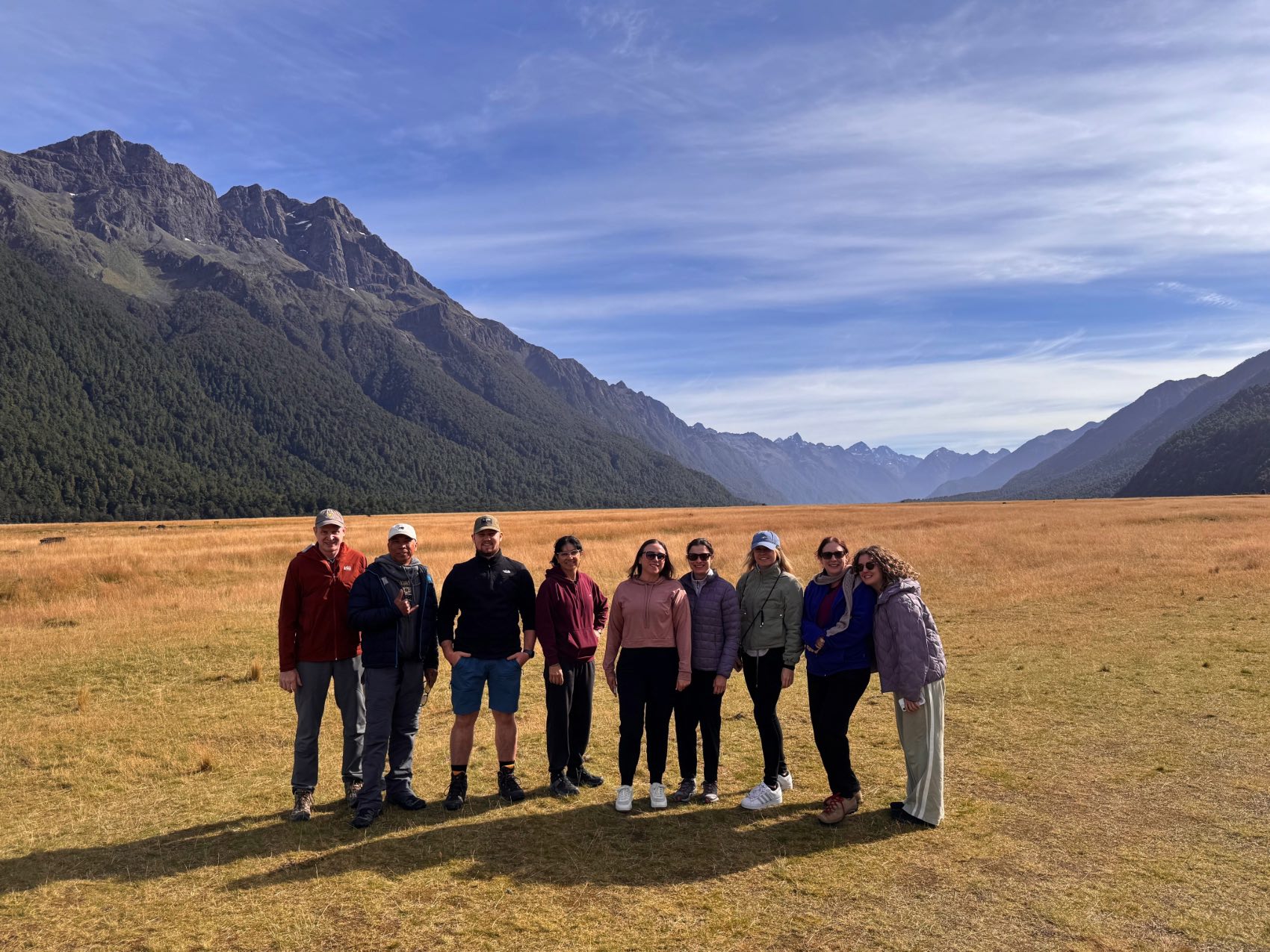
Te Anau passes quietly. Mirror Lakes offer a perfect reflection. The Eglinton Valley opens wide beneath towering peaks. And then the road narrows, the forest thickens, and Fiordland National Park begins to close in around you.
Cliffs rise almost vertically from the water. Waterfalls tumble from heights that seem impossible. Mist moves through the valleys, shifting the mood from one moment to the next.
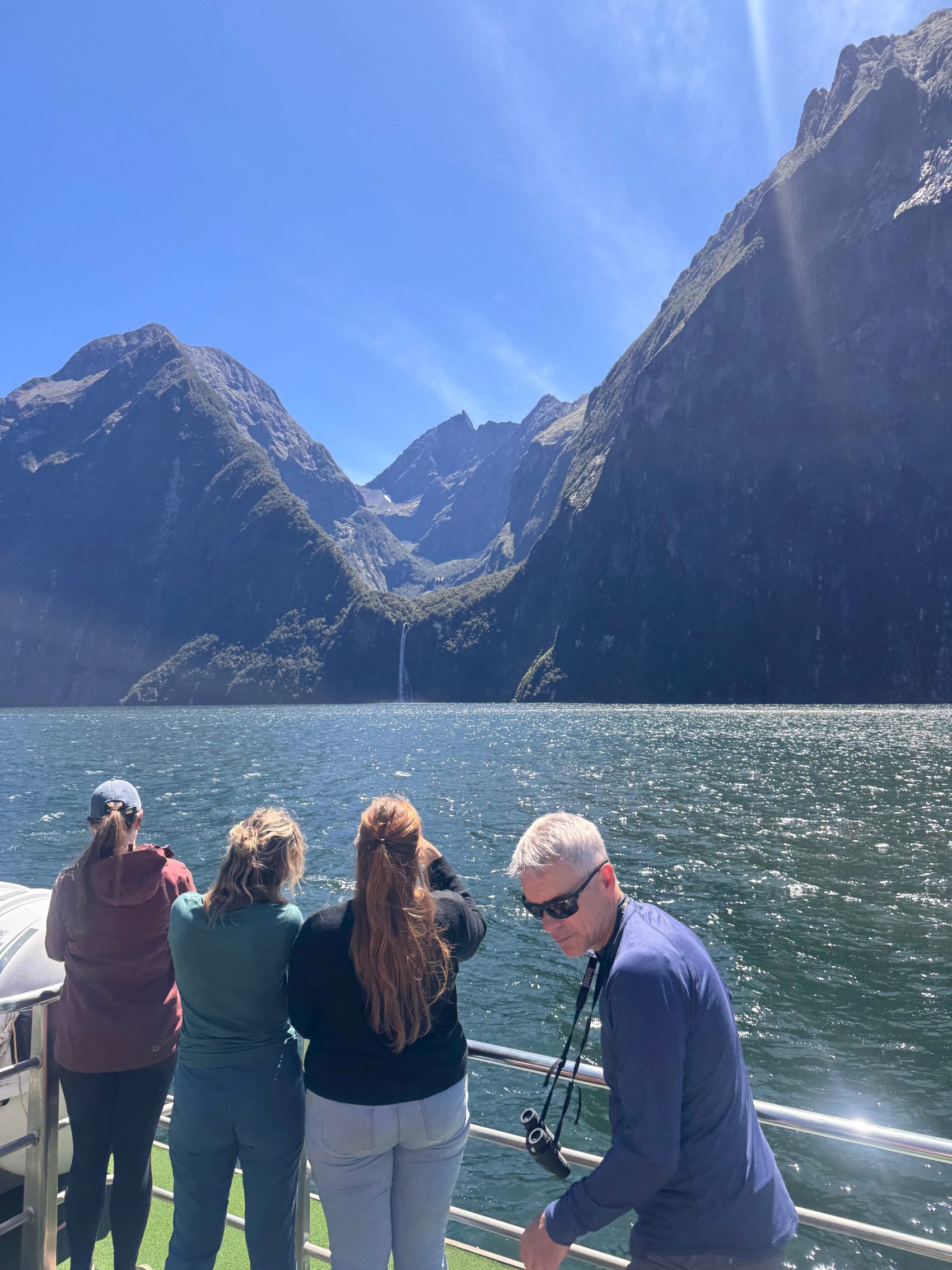
Standing on the deck of the boat, the warm fleece becomes essential. The air is cold, the wind constant, and yet no one wants to step inside. Because this is one of those moments that holds people still.
The following day brings one final ‘Great Walk’ chapter on the Routeburn Track. Here, the pace returns to something familiar. The optional hiking poles make a revival to navigate your way up the gentle incline of this ancient Beech forest.
For some, there is a swim. A quick, sharp immersion in glacial water that is both refreshing and deeply uncomfortable. The kind of moment that becomes a story later.
Where it all comes together
The last morning in Queenstown brings about some free time for one of the many optional activities on offer. Perhaps even more hiking for those who cannot stand still. And then, the final stretch approaches.
The Mackenzie Basin opens out in front of you. Wide, golden, almost surreal. Upon approach to Twizel, the lakes glow in shades of turquoise that your eyes wouldn’t believe. The Southern Alps rise in the distance, their peaks holding snow even in summer.
And at night, something changes again. The head light guides you away from light, out into the dark, until it is no longer needed and the Mackenzie Dark Sky Reserve takes over.
The Milky Way stretches across the horizon. Stars appear in numbers that feel unfamiliar. Constellations sharpen. The Southern Cross becomes unmistakable.
In the light of the next day, the Alps2Ocean cycling trail opens up alongside turquoise canals, lakes and salmon farms. Followed by established walking paths beneath the country’s highest peak, Aoraki himself.
Feeling the weight of the past three weeks in tired legs and small aches, this is where the first aid kit often makes an appearance. A blister plaster? A bandage? An ibuprofen? Nothing dramatic, just enough to keep you moving.
And then, almost without warning, the road turns back toward Christchurch. Lake Tekapo offers one last pause. The Church of the Good Shepherd poses candidly beside the water. Photos are taken. Coffee is grabbed. The journey continues.
And somewhere along the way, the daypack feels heavier. Memories. Habits. Small pieces of a journey that unfolded one day at a time. Later in the evening, a farewell dinner with the group offers the chance for final reflections and a celebratory “cheers” among new friendships formed.
The final morning arrives without much ceremony. No early start. No briefing. No trail ahead. Just suitcases being zipped, conversations slowing, and the sudden realisation that it is over.
And somewhere in that moment, the packing list finally makes sense. What once felt excessive now feels essential.
This was never just a list. It was a guide to travelling well through a country that asks a lot of you. Physically, mentally, sometimes emotionally, but gives even more in return.
Read more stories like this:
New Zealand’s crown jewel: best things to do in Queenstown
Must-sees in Middle Earth: top things to do in New Zealand
Photo hop around New Zealand’s pure beauty

