Planning to hike Peru’s Salkantay Trek to Machu Picchu? One traveller spent months preparing for the trek’s demanding high-altitude conditions through specialised altitude training, strength work, and endurance preparation. Here’s what she learned and how other travellers can prepare for hiking at elevation in Peru.
A birthday challenge inspired by the Misogi tradition
Imagine taking on a challenge so big it actually reshapes the other 364 days of your year. That’s the modern idea behind Misogi, a powerful Japanese ritual rooted in Shinto tradition. While it was once strictly about spiritual cleansing, today’s Misogi has become a personal tradition for people like Jordan LoMonaco.
“Since turning 30, I’ve made that my own little tradition,” LoMonaco shared.
For her 30th birthday, her challenge was diving headfirst into learning to surf at a surf camp in Portugal, despite never having stood on a board.
But for her 31st birthday, the ante was seriously raised. Jordan chose to head to Peru to conquer the legendary Salkantay Trek, a five-day, 72km (44.7 mi), high-altitude journey to Machu Picchu. The moment she heard the Salkantay Trek described as one of the most beautiful multi-day hikes in the world, she was instantly hooked.
“I’d always dreamed of doing a true multi-day trek, and combining that with finally seeing Machu Picchu felt like the perfect way to mark another year,” she said.
Preparing for Peru’s high altitude
LoMonaco was in search of altitude training for one reason: To arrive in Peru feeling prepared, not just hopeful. The Salkantay Trek was going to be the most physically demanding thing she has ever done, and while that excited her, it also instilled some nerves.
“I live with an autoimmune condition that affects my digestive system, and I also deal with post-concussion syndrome. Because many of the symptoms of altitude sickness — nausea, headaches, dizziness, fatigue — overlap with both, the unknown felt a little daunting,” she said.
“I wasn’t just worried about whether I could do the trek; I worried about how my body would respond when the stakes, and the elevation, got high.”
LoMonaco first discovered Toronto-based facility Altitude Athletic Training at an event in 2024, so they immediately came to mind when she started planning her trek to Peru.
“The Mountain Performance Assessment is our starting point for anyone preparing for high-altitude travel,” explained Melanie Miller, founder and co-owner of Altitude Athletic Training.
“It’s a structured session following a set protocol where we gradually expose clients to increasing simulated altitude while monitoring key physiological responses like heart rate and oxygen saturation. This allows us to understand how their body responds as oxygen availability decreases,” she said.
How altitude training helps travellers prepare
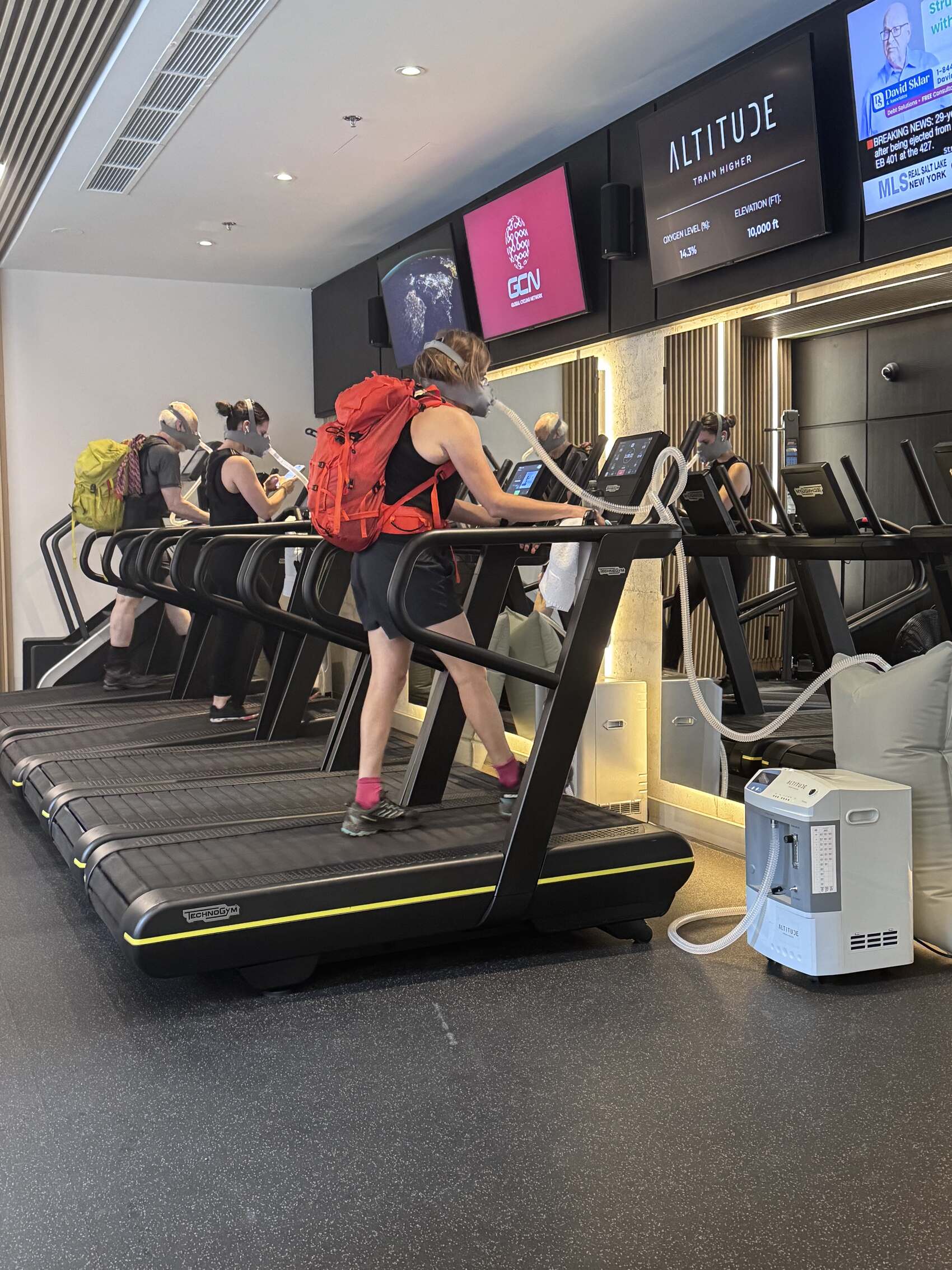
This, according to Miller, allows the team to identify things like altitude sensitivity, fitness limitations, and potential risk factors.
She adds every program the centre offers is individualised and is regularly adjusted based on how their clients respond, both physically and subjectively.
“We start by understanding the client’s goal — whether that’s a multi-day trek, a summit attempt, or simply wanting to feel comfortable and confident at elevation. From there, we factor in their current fitness level, lifestyle, training history, timeline, and any previous altitude experience,” she said.
“Programs typically combine strength training, aerobic conditioning, and progressive exposure to altitude. Sessions are structured to reflect the actual demands of the trip — long sustained efforts, climbing-specific strength, and managing fatigue in low-oxygen environments.”
In addition to physical training, Miller emphasizes the team also spends time helping clients understand the full picture of what they’re walking into.
“That includes guidance around pacing strategies, recovery, hydration, and general expectations at altitude. We also provide practical support—things like packing considerations, layering systems, and how to think about gear in relation to the environment they’ll be in,” she said.
“The goal is to reduce uncertainty. When clients know what to expect and feel prepared across multiple fronts, their experience on the trip is significantly better.”
Training for the Salkantay Trek
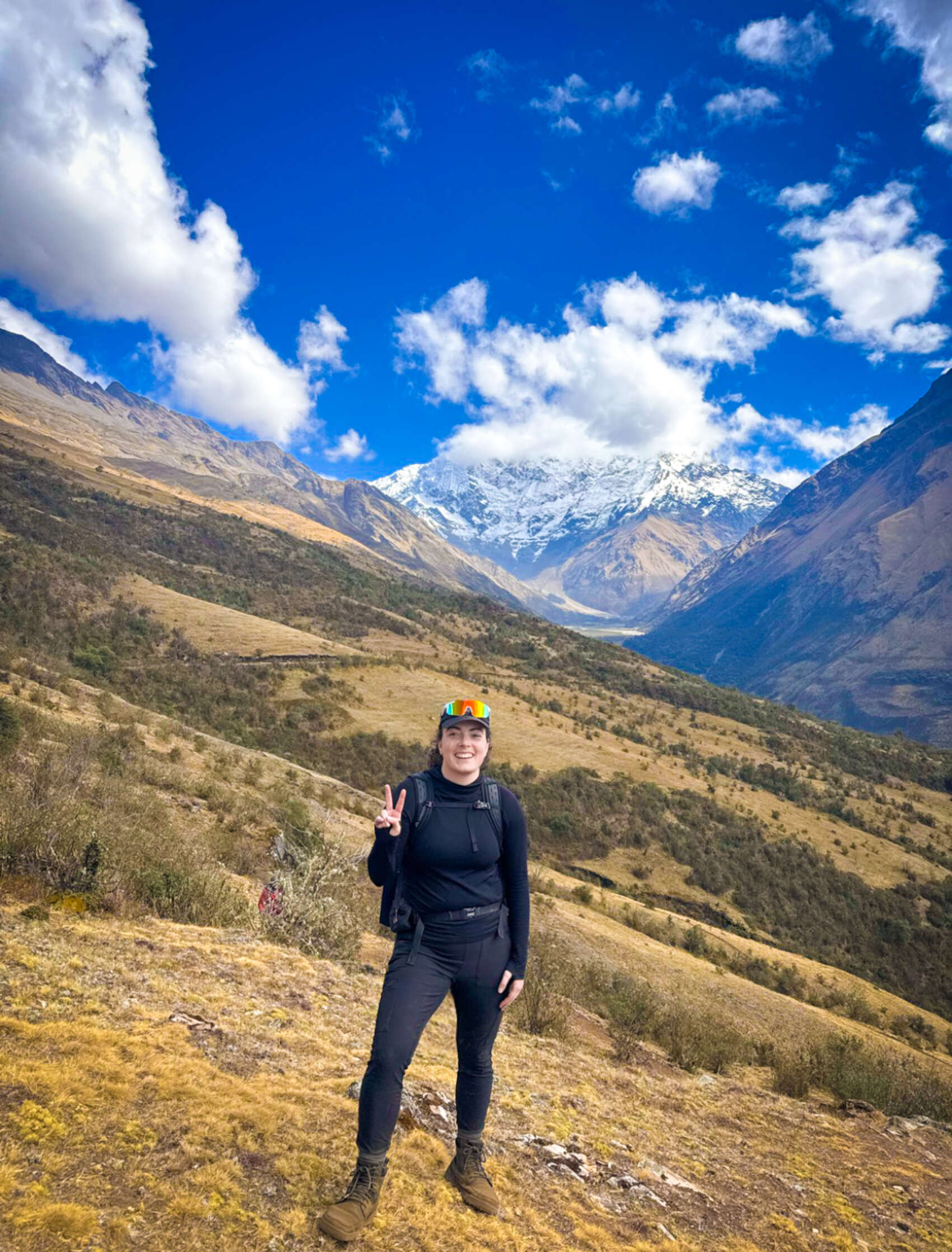
After being assessed by the Altitude Athletic Training team, LoMonaco learned she was susceptible to altitude sickness and enrolled in their Mountain Program.
“It gave me unlimited access to their hypoxic training gym, where I trained in a simulated high-altitude environment, and I worked closely with their coach Yaath, to build a personalised plan,” said LoMonaco.
Miller emphasises one of the best parts of training with the team is the community.
“You’re training alongside others preparing for similar trips, sharing plans, experiences, and advice — and often, those same people end up crossing paths again on the trail or on the mountain. We’ve seen that happen time and time again,” she said.
The team’s goal isn’t just to help clients complete their trips but to genuinely enjoy it.
“When you feel prepared, you’re able to take in the views, connect with the experience, and be present in the moment, rather than just pushing through it,” said Miller.
Trek the Salkantay with G Adventures: Salkantay Trek & Machu Picchu
Hiking Peru’s Salkantay Trek
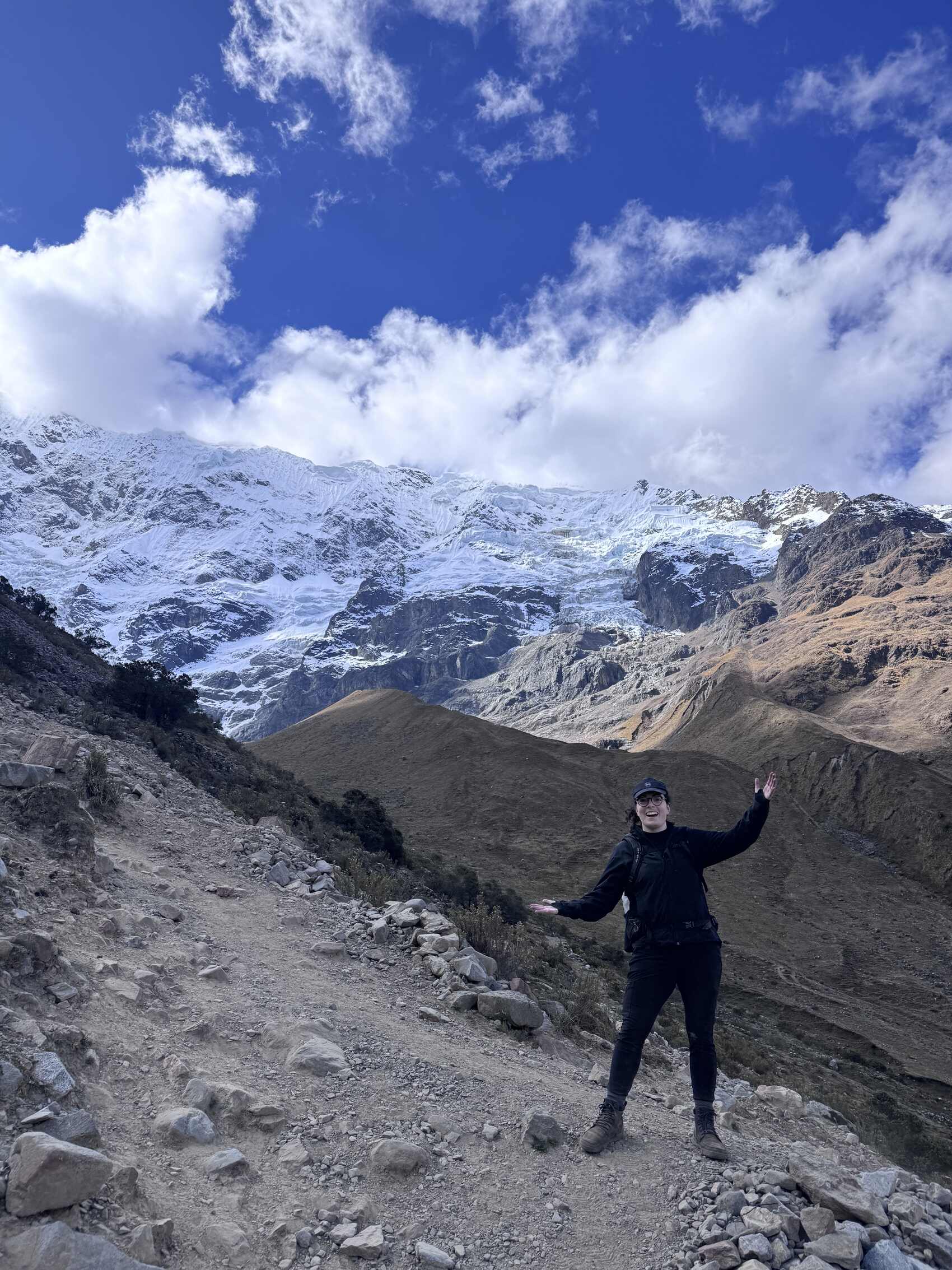
LoMonaco’s intensive training paid off exactly where it mattered most: on the steepest climbs and at the highest elevations. But even with that advantage, the Salkantay Trek to Machu Picchu had a few surprises in store.
The real challenge wasn’t the altitude — it was the sheer volume of walking.
“You can train for a trek, and I did. Hours on the treadmill, weighted climbs, long walks, plenty of strength work,” LoMonaco noted. “But nothing quite replicates hiking seven to eleven hours a day, for multiple days in a row, at altitude.”
That kind of relentless mileage, she shared, introduces you to muscles you didn’t know you had. By the end of each day, her body was sore in ways that felt “both impressive and slightly alarming.”
To her surprise, the best remedy wasn’t collapsing into bed, it was movement. While her body felt ready to quit, she made a conscious effort to stretch and engage in gentle mobility exercises between daily treks.
“Each morning, I’d wake up stiff and question everything … After a few kilometres, my body would remember what it was there to do. In many ways, it got stronger as the trek went on,” she said.
Beyond the physical grind, LoMonaco focused on the fundamentals: staying consistently hydrated, eating enough, and genuinely listening to her body.
“What I appreciated most was that the training had prepared me so well that I didn’t have to overthink it,” she said.
“My body knew what to do. It was strong, acclimatized, and ready. That meant I could spend less time worrying about whether I could handle the trek, and more time soaking in the experience.”
How travellers can prepare for a high-altitude adventure
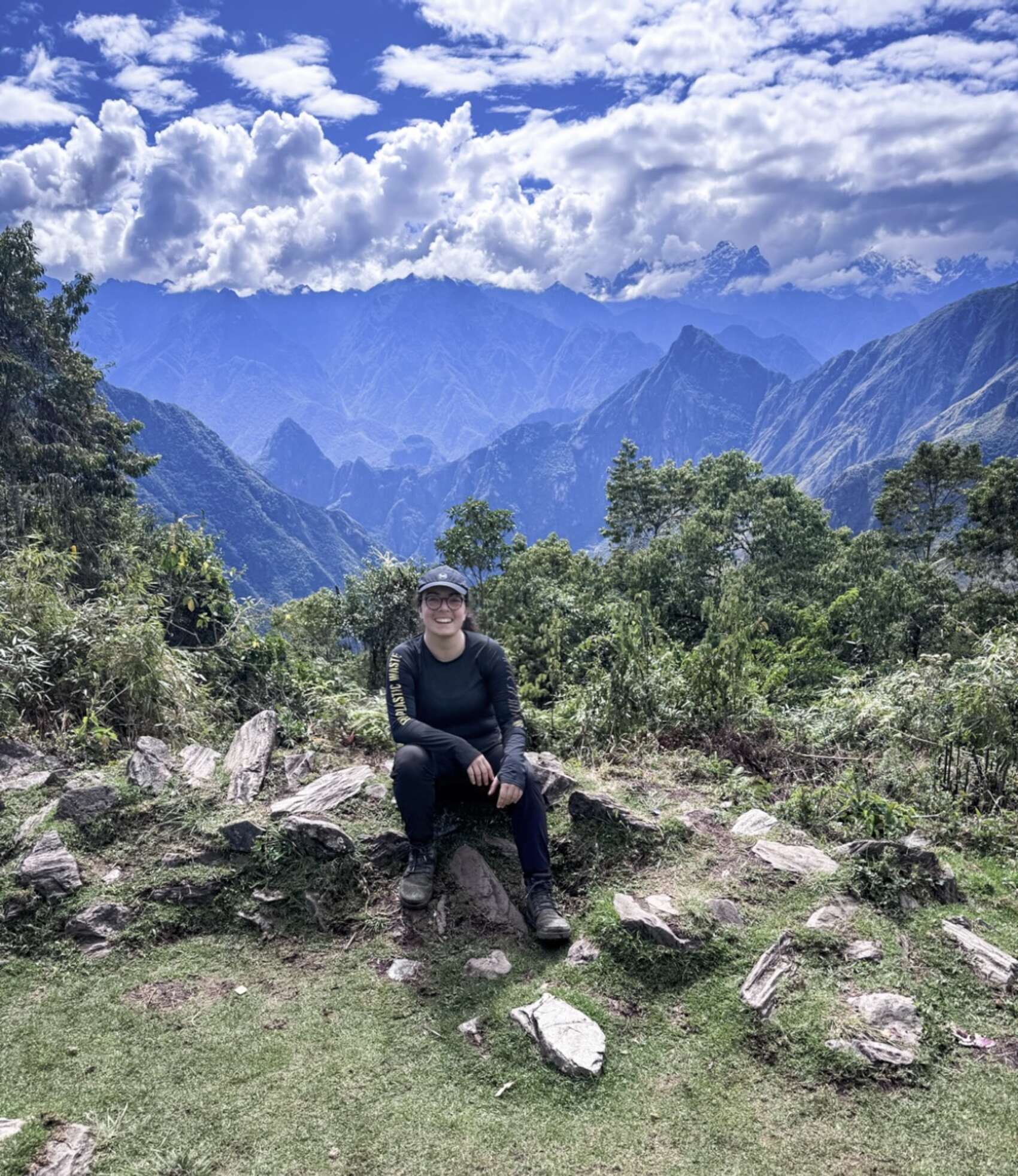
The most rewarding part of completing the trek was the confidence that LoMonaco gained. When it was over, what stayed with her most wasn’t just the accomplishment itself but the sheer realisation that she did it.
“There was something incredibly empowering about that. For a long time, I think I quietly assumed that experiences like this might belong to other people — People healthier, stronger, tougher, or somehow better equipped,” she said. “But this trek challenged that idea completely.”
For anyone debating whether the Salkantay Trek is for them, her advice is simple: identify what you want from the experience.
“If your goal is simply to complete the trek, that’s one kind of preparation. But if, like me, you want to feel strong, safe, and able to truly enjoy every step of it, then preparing well is one of the greatest gifts you can give yourself,” she said.
The beauty of trekking, she noted, is that there is no single formula for success. She points to a fellow hiker in her tour group as the perfect example: a man who showed up in running shoes, basketball shorts, and a red cowboy hat, without trekking poles, and absolutely thrived on the trail.
“The truth is, many people do this trek with little formal training and have an incredible experience. Others find it much more challenging. There’s no one right way to prepare,” she explained.
“But there is immense value in understanding your own body, your own limits, and what will help you feel confident when the trail gets tough.”
Read more stories like this:
The very best things to do in Peru
Geared for adventure: your Peru packing list
The go-to guide for solo travel in Peru

