The restaurant opened on Skillman Avenue earlier this year.
Photo: Courtesy of Makina
Queens, our most diverse borough, is rightfully known as an immigrant-restaurant hub. But among its Tibetan momos and real-deal goat barbacoa, it was not home to an Eritrean or Ethiopian restaurant until this winter, when Makina opened in Sunnyside. “I’m one of those people that eats injera on a daily basis,” says owner Eden Egziabher, who was born in Eritrea, raised in Ethiopia’s capital, Addis Ababa, and moved to Queens in 2008. She had to commute into Manhattan whenever she wanted her favorite food: “I was making other Habesha restaurants very rich before I opened up my restaurant.” She started with the Makina food truck in 2017, intended as a point of introduction for Eritrean and Ethiopian food, offering a build-your-own format, scooping tibs, a classic dish of seared meat and aromatics, into wraps and onto turmeric-rice bowls for midtown lunches. The goal was to make the food as familiar as possible to an American audience, but the plan was always to open a restaurant, even if she didn’t know it would take three years to build. (In addition to the usual headaches with funding and landmark-building permits, Egziabher had to find the one guy in California who imports beer from Asmara.) When it finally came time to open the brick-and-mortar location — it seats 36 and has Art Deco touches that evoke the architecture in Eritrea’s capital; additional outdoor tables are due in August — Egziabher wanted to focus less on accessibility and instead zoom in on unsung elements within her culture’s recipe canon.
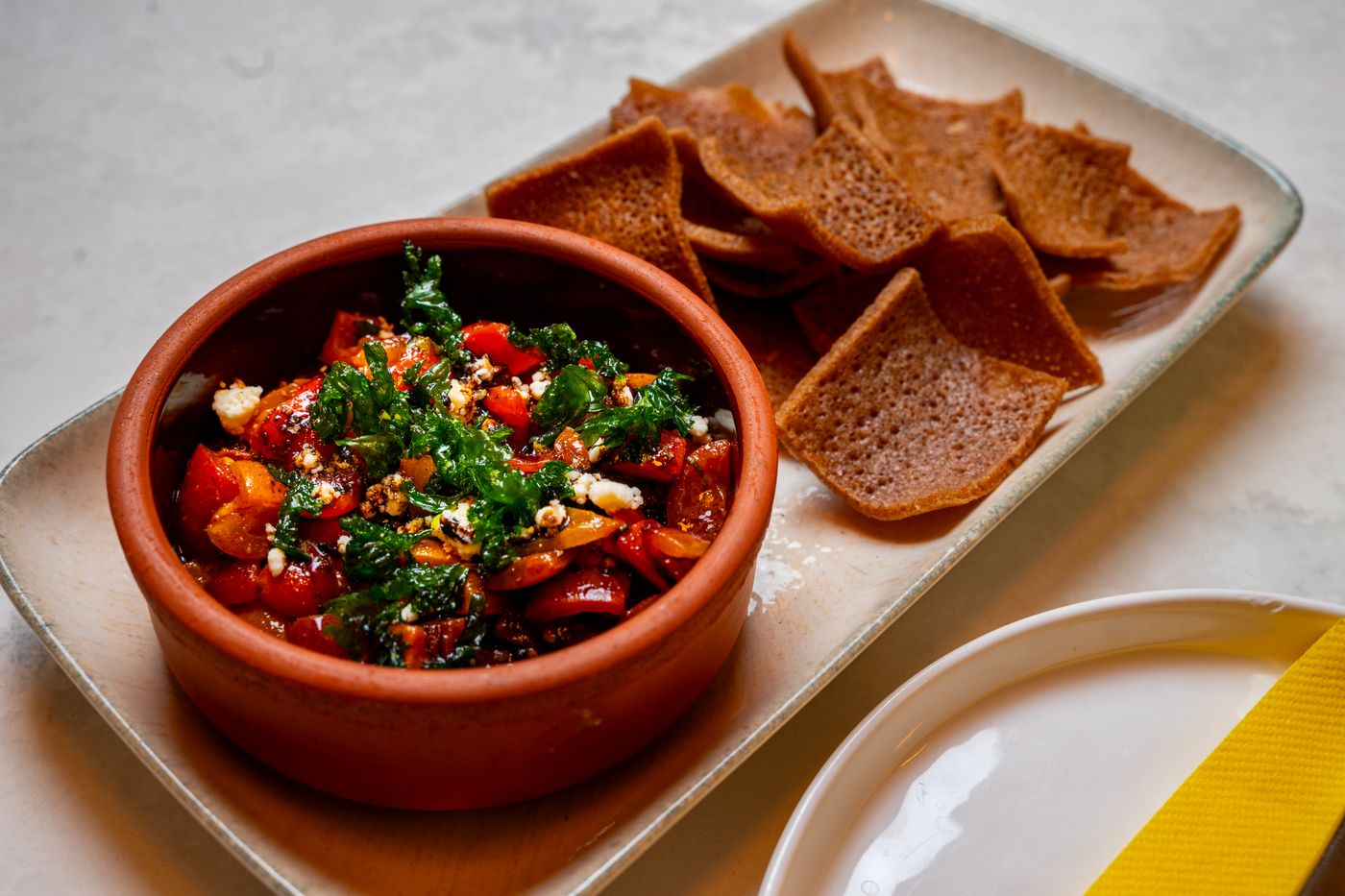
Injera chips with tomato, berbere, and ayib cheese.
Photo: Courtesy of Makina
She consulted with Tsehay Parvaresh, a.k.a. Tsehay’s Kitchen, a Swedish-based Ethiopian chef with a shared sensibility, who developed recipes and introduced Egziabher to suppliers like Red Fox Spices, which specializes in heirloom blends. One of the resulting dishes is Makina’s koseret tibs, its name nodding to koseret, an indigenous highland plant with a heady, minty aroma that is infused into clarified butter and used throughout the cuisine. For the tibs, the saucy lamb gets a boost from the butter as well as dried koseret that’s added during cooking.
Makina eschews the communal-dining format customers might otherwise expect from Eritrean and Ethiopian restaurants in favor of a family-style format with sharable plates served alongside injera. “Each dish needs its own shine. The way that we’re displaying it, it’s standing on its own,” Egziabher says. It’s true to how she ate with her family, as is the inclusion of cotoletta — breaded cutlets — which, like lasagna, cappuccinos, and the word macchina, is Eritrean by way of Italian colonization.
Makina’s “cotoletta Asmara” starts with skirt steak, which stays juicy and medium rare under berbere panko, that’s fried to a golden crunch and plated with a halo of frisée and sherry-vinegar shallots. Egziabher says the cutlet serves as an effective hedge for picky or spice-averse diners; they could also go for lamb alicha, braised with sweetly caramelized minced onions and flavored with ginger and turmeric, which turns into a rich but relatively mild sauce. The same slow-cooked onion base is the foundation for Makina’s berbere-based, 12-hour doro wat. “You can’t expedite that process,” Egziabher says.
There is also dulet, a labor-intensive dish of chopped offal, which is ideally prepared right after a lamb has been killed, one of many reasons that it is more likely to be found at a wedding or Easter celebration than in a restaurant. Makina’s version uses mushrooms to mock the chew of intestine with minced peppers and lots of the requisite parsley. It joins the classic standbys of misir (spicy red-lentil stew), shiro (powdered-chickpea stew), gomen (collard greens), and tikel gomen (cabbage with potatoes and carrots) as vegan options. Seafood comes in the form of fish tsebhi, simmered with wine, and berbere-grilled prawns. Everyone else should get the kitfo, raw beef peppered with mitmita, a blend of bird’s-eye chile, cardamom, cloves, and salt. Makina’s is as good as it gets, combined with enough of the aforementioned scented butter to pool around the edges of the bowl. It’s served with a scoop of crumbly homemade cottage cheese to cool the burn, or, alternatively, you can order more mitmita to turn it up.
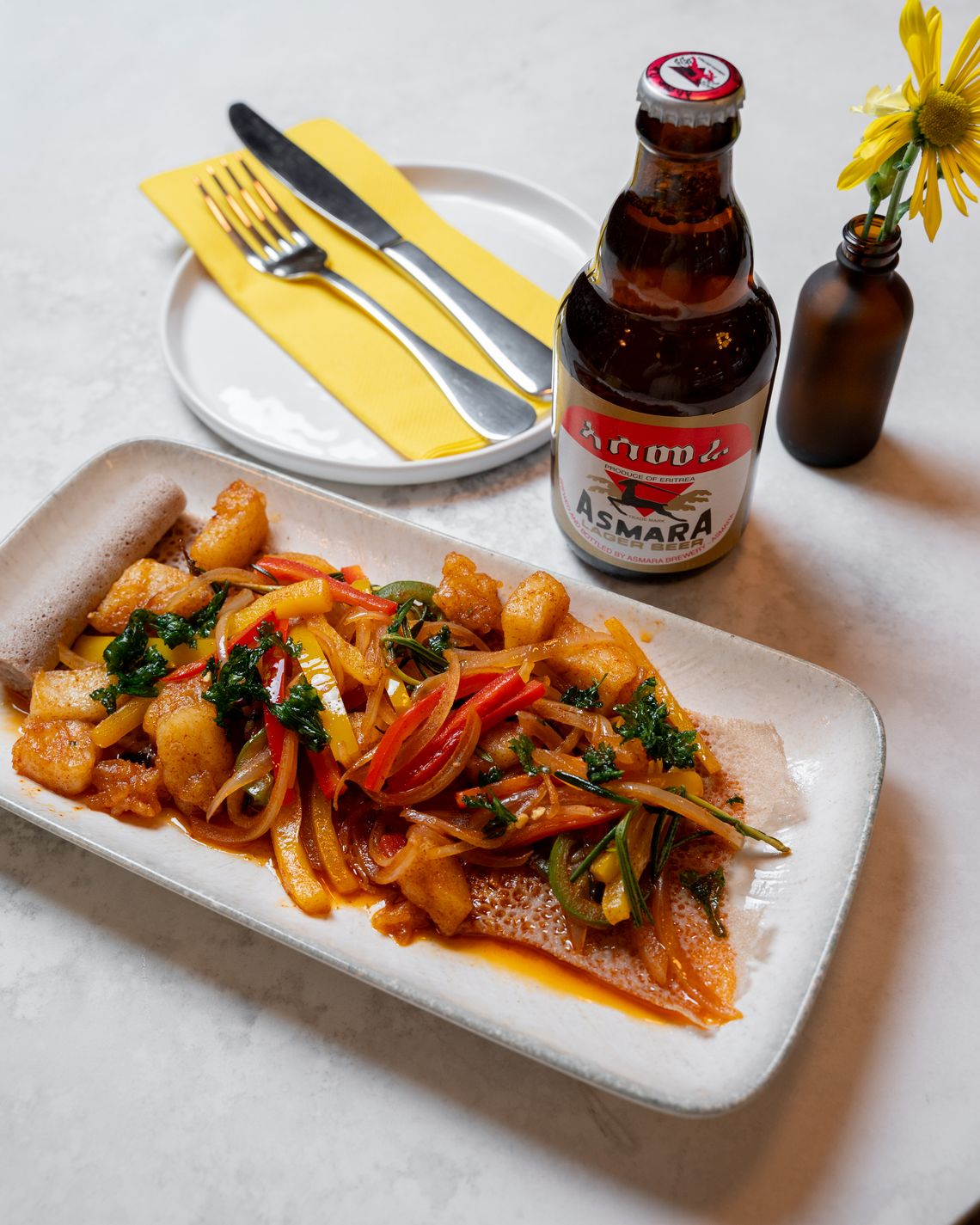
Fish tsebhi with a beer from Eritrea’s Asmara Brewery on the side.
Photo: Courtesy of Makina
See All

