Over the years in Japan, we have tried sake here and there, I’ve done tastings and been to the occasional sake brewery. I know how to locate a brewery or distributor by the sugidama or aged cedar ball hanging at the door, but I’ve never really figured out what I like or why.
It’s an interesting part of Japanese culture and history, so I decided this year to work out what good sake meant to me. There are many sake districts in Japan, but we chose the Fushimi Sake District in Kyoto. It’s only a short train ride south of the city, is the second largest sake district in Japan, and is home to Gekkeikan, the largest sake brewer in the country.
Getting to the Fushimi Sake District
Most people will be more familiar with Kyoto’s Fushimi ward for Fushimi Inari Shrine. Both can be easily accessed from Kyoto station, the sake district via Momoyamagoryo-Mae station is about 12 minutes on the Karasuma subway line, while Inari is around 5 minutes on the faster Nara JR line. Linking the two, if you want to go between the sake district and the shrine, is a third company, and it will take around 15 minutes on the Keihan line, which can also take you back to central Kyoto stations like Gion-Shijo.
Sounds a bit confusing, it’s not really. Google Maps will do the work for you if you put the station you want to go to when you are there, and it will find the fastest route.
Kyoto Insider Sake Experience
Just trying different sake when I had the chance wasn’t really getting me anywhere. I knew I liked some better than others and that they had different aspects to the taste, but my palate struggled to put labels on the differences, and I didn’t know which I might or might not like in advance.
To speed up my learning, we joined the Kyoto Insider Sake Experience. They run three different tours: the 3-hour sake tasting and brewery tour that we did, a 90-minute sake tasting and an advanced sake tasting course.
The tour starts at the Gekkeikan Ōkura Sake Museum, this is Japan’s, and therefore the world’s, largest sake brewery with operations not just in Japan but also in the USA. They still produce some of their sake using traditional methods, but most is now made in modern distilleries; some of the huge metal vats can be seen around the local area rising above the traditional blackened wooden warehouses as you walk through the streets and lanes.
Our tour started at 10 am, and we met our guides, Mai and Momo, a few minutes before. We collect our lanyard and tasting cup inside the brewery and meet the rest of our tour group. There are 9 of us today from Australia, Singapore, and the USA. It was the perfect-sized group, with a diverse range of experience and tastes, but small enough to keep everyone involved in the discussion.
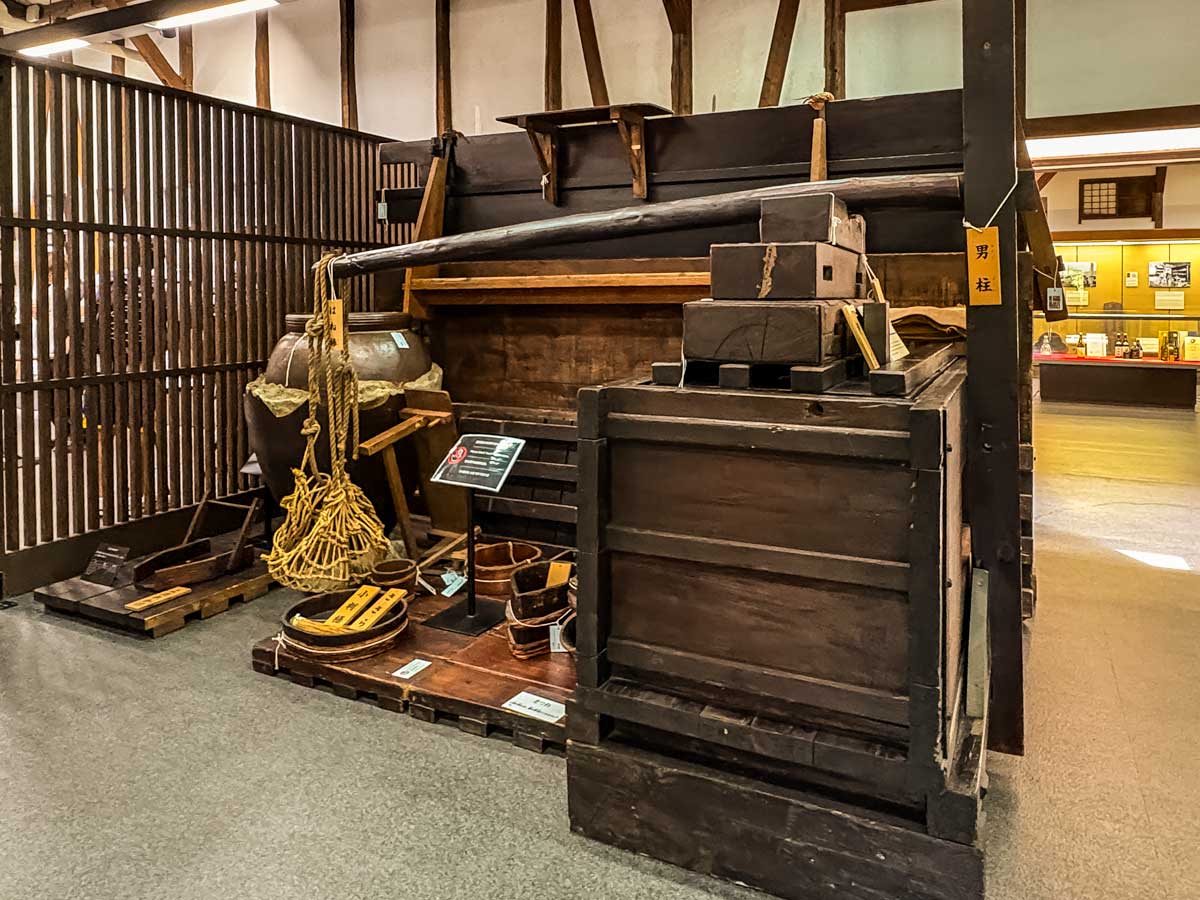
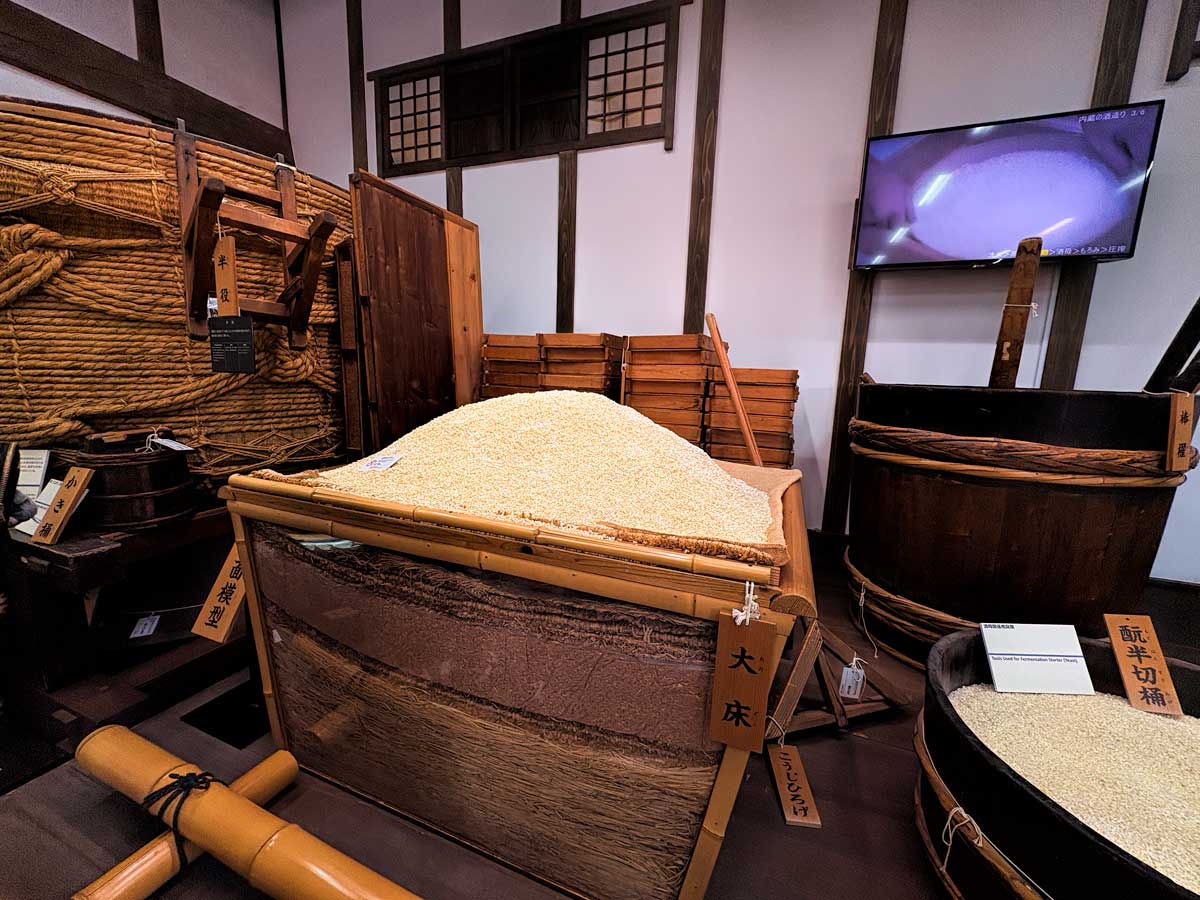
Momo ran the museum section of our tour. She has extensive knowledge of the sake-making process and perfect English, which meant she could field everyone’s questions with ease. The tour is structured to get all the information across in the time. There is a range of slides to help understand the complexities of the production processes, which becomes important later when distinguishing the various types. They are all presented in an easy-to-understand way, and her style retains the flexibility to follow other questions and prompts from the various displays.
Even this early in the day, I am starting to see that some preconceptions I had were based on knowledge from other types of distilling or things I have seen in Japan. For example, with most types of alcohol, aging and storage vessels factor into at least the high-end products; that’s not the case with sake, and those racks of beautifully decorated barrels I’d seen at shrines are a cultural tradition that has been maintained; the sake isn’t being aged in them to improve drinking characteristics as I’d expected, it can go directly into glass or vats.
Later in the museum section of the tour, there is a tasting. We are given tokens and have our sake cups. Now it’s time to select a few from the 10 sakes on the list. The sake is loaded into automated pouring machines. All you need to do is enter a token and press the button. These are all produced by Gekkeikan, and there are a few from each of the categories we’d just learned about, along with tasting notes. At this stage, I still had little idea which I would like best, so I just tried a couple of them and compared.
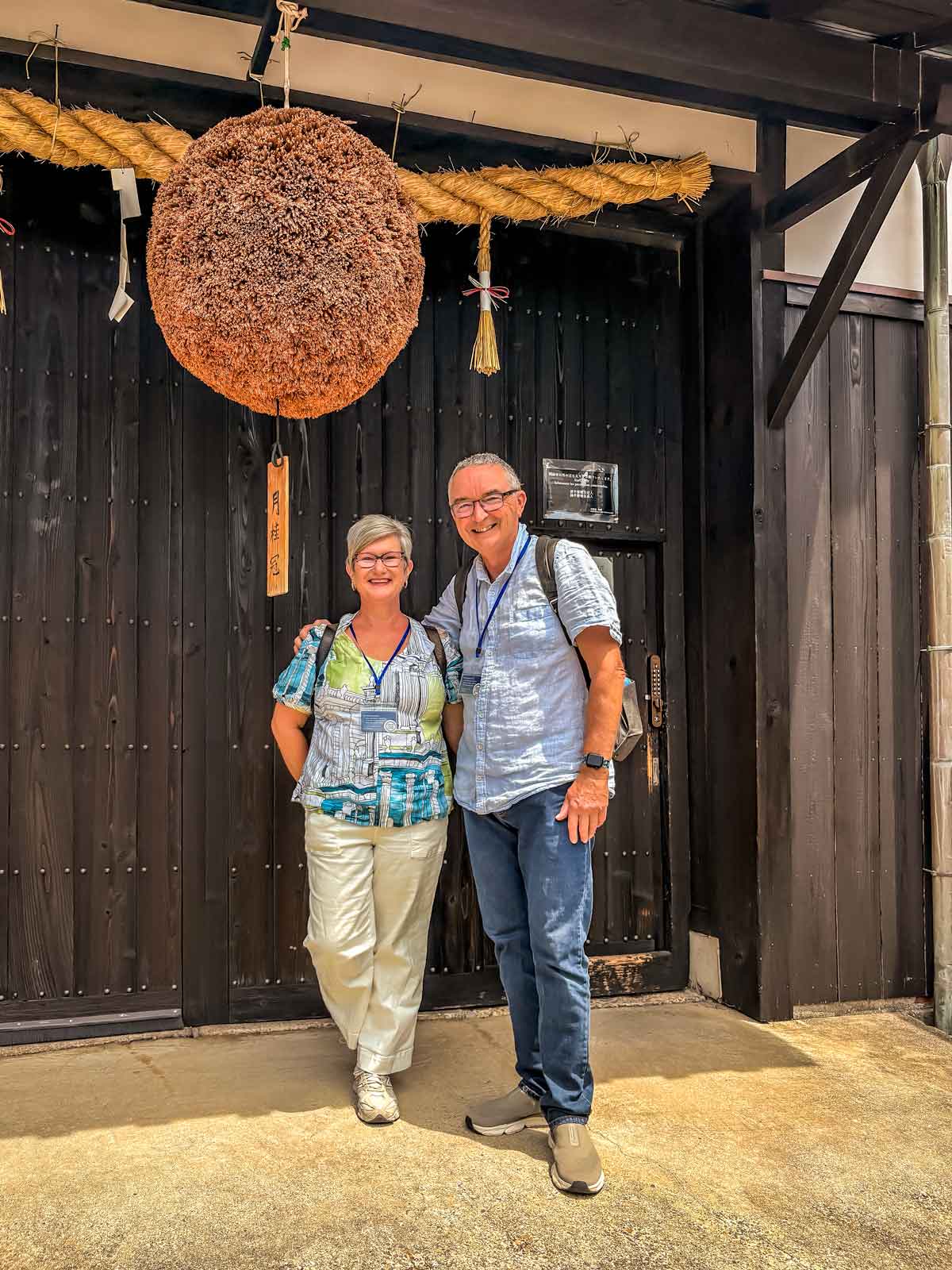
It’s about a 5-minute stroll from the museum to the Kyoto Insider Sake tasting rooms, and Momo takes us there before handing us over to Mai, the sake sommelier who will guide us through the tasting and food pairing section of the day. There is some excitement in the room for this section, especially when we see the trays of glasses lined up in front of each seat and the bar of bottles behind us.
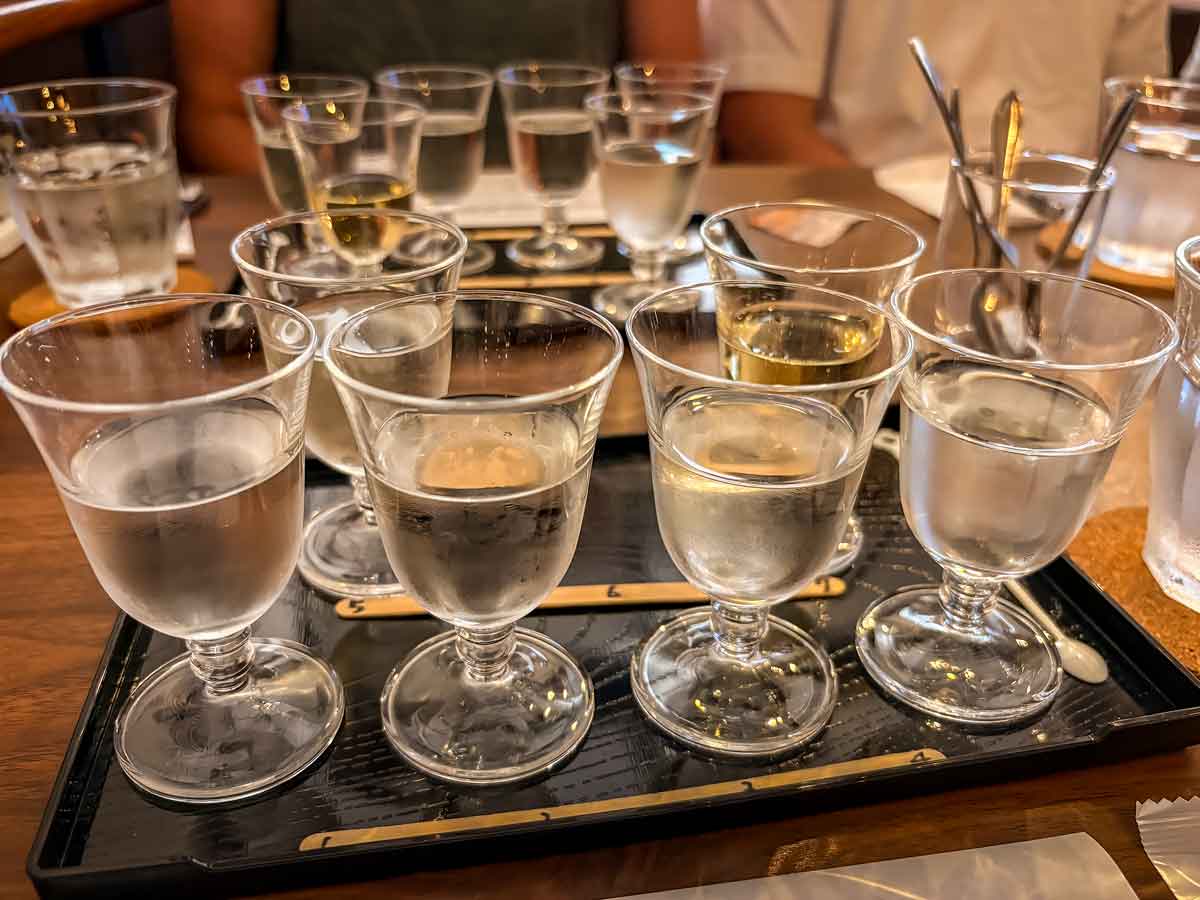
There are originally 6 glasses lined up on trays in front of each of us, and a sheet for our own notes and scores. An extra glass is added later to maintain its specific serving temperature, so in total, we had 7 samples here and 3 earlier at the brewery. These are generous samples, and you taste up to half of the glass in the first round, reserving the other half for when the tasting plates are served later.
In the food round, there are recommended pairings, or you can try what combination you like and rerate each glass. The idea is to see whether adding food makes the drink more enjoyable or sharpens any particular flavour notes. Like any pairing, it will depend on your personal palate as well as the general ‘rules’.
The experience was really informative, and I learned that I prefer a sake on the dry, fruitier and less ricey end of the spectrum. I also learned a couple of kanji to watch for on bottles and menus to help me determine which sakes are more likely to suit my tastes.
Both guides, Mai and Momo, were fantastic. They are very easy to talk to; they explained what can be quite complex information in a way that was very easy to understand and remember, encouraged questions and observations while engaging the whole group, and they made the morning a lot of fun, too.
Exploring the Fushimi sake district
There are a few other spots around the Fushimi Momoyama area that are well worth a look after your sake experience.
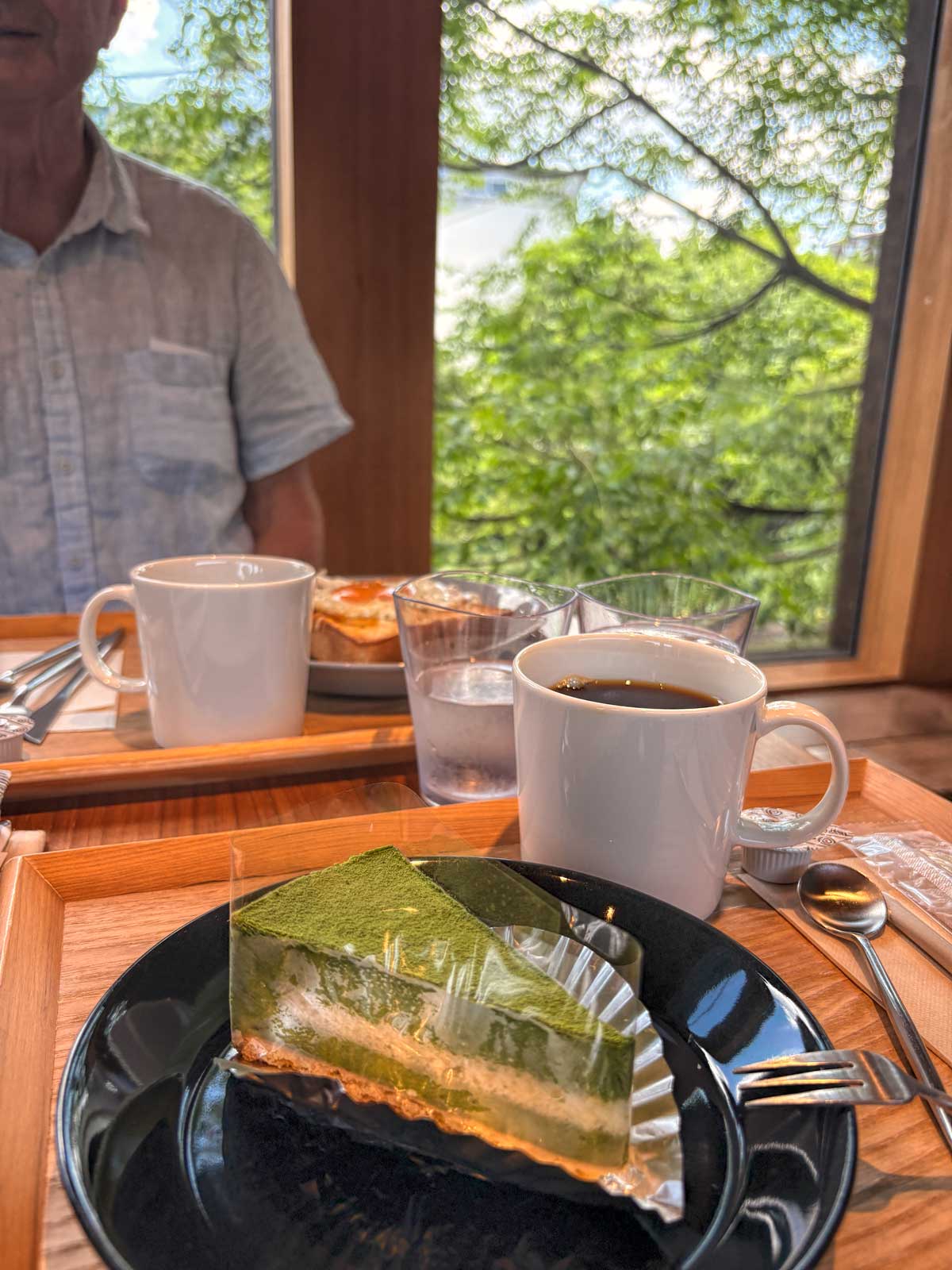
Our tour finished at 1 pm, so we were after something light to eat and found Shimao Coffee, a cafe right on the river with a few tables inside that have a lovely green view over the water, where you can watch the riverboat tours go past.
That matcha cheesecake and black coffee were delicious. Not the most nutritious choice, I will admit, but the bitterness of the matcha with the light, rich cheesecake was divine, and there is always a place for a good coffee in the day.
The Uji River and Gou River flow through the Fushimi sake area; today, they are peaceful spaces where you can stroll, following the water and wildflowers, but traditionally, they were a hive of activity. The river and canals were used for moving sake and sake-making supplies in and out of the region.
A remnant of that today is the Fushimi Jukoku-bune, which runs short tours up and down the river for visitors. These low, flat boats were originally workhorses on these same canals. The tour itself is a 15-minute trip up the river, a 30-minute stop at the Fushimi museum (not the sake museum) and back again.
For a couple of weeks in April, when the river is ablaze with cherry blossom, it would be stunning, but honestly, you will see the same thing on the short walk along the river path, and the narrative on the boat is entirely in Japanese.
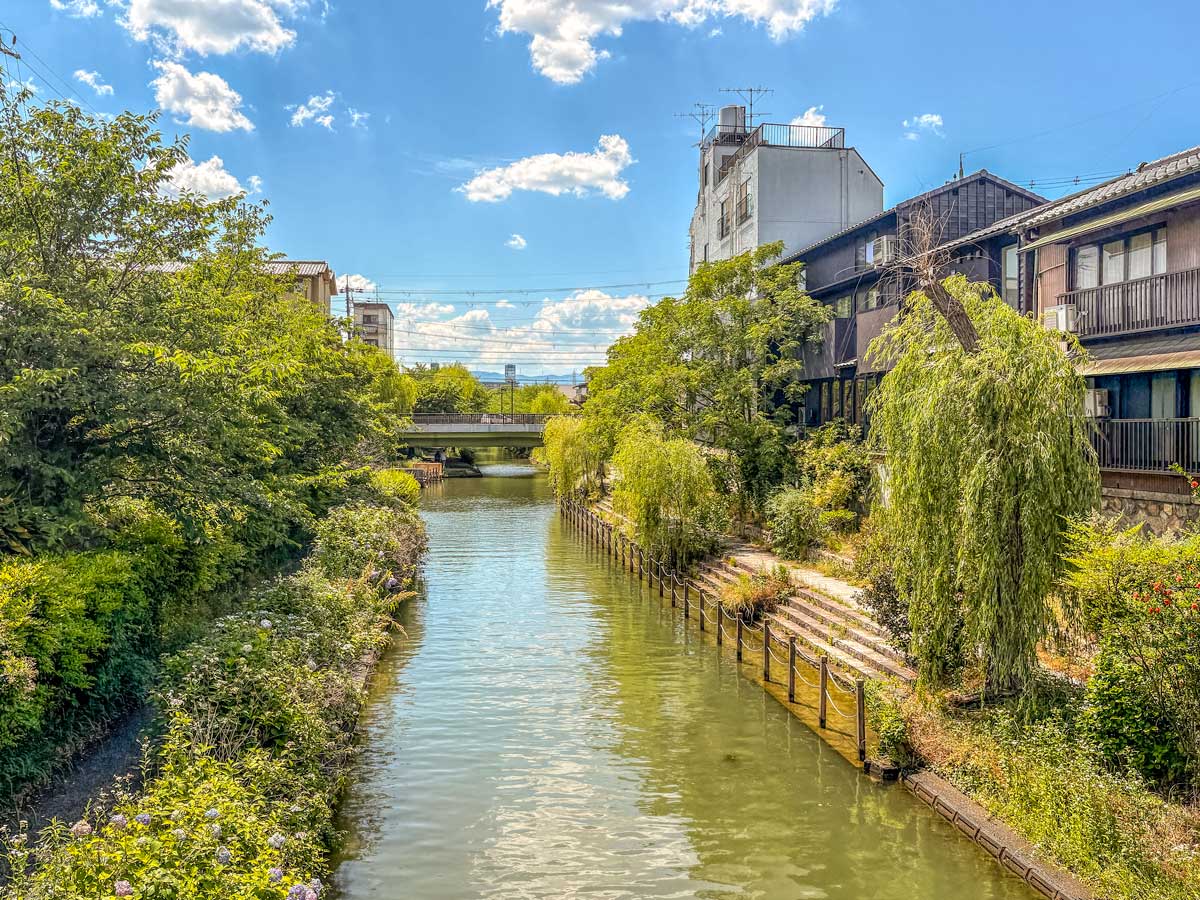
If you want to taste and buy more sake in the area, another stop is Fushimi Yume Hyakushu Cafe. This building used to be Gekkeikan’s headquarters and is just around the corner from the museum entrance. You can buy sake and related items here or have something at the cafe, including a sake tasting, sake and cake or try an unusual but quite tasty combination of ice cream with sake. I think they also did coffee.
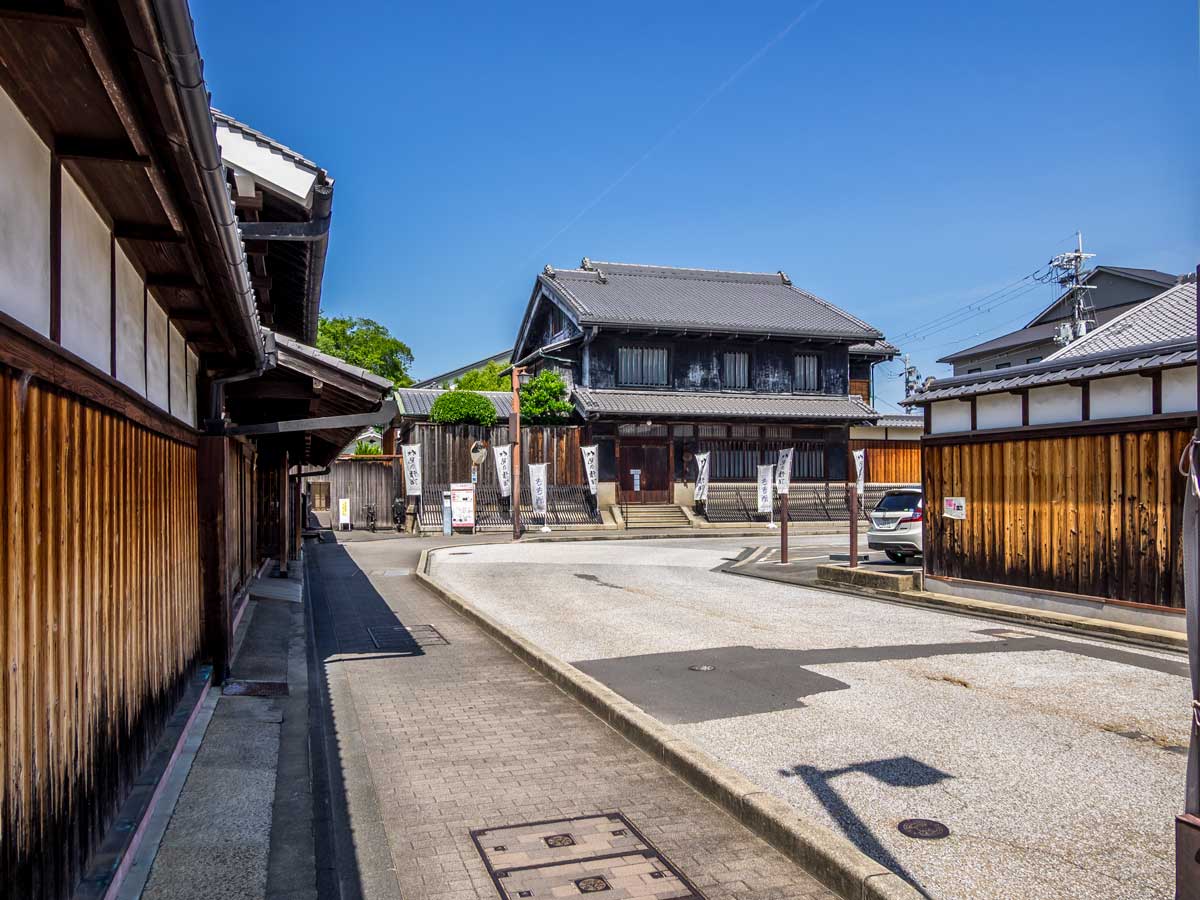
As you leave the station, you will come to Fushimi Otesuji shōtengai or a covered shopping street. We always find these worth a walk-through, with interesting local shops, restaurants, bakeries, and snacks, plus a warm local atmosphere. In this area, there are also a few sake shops.
Final thoughts on the Fushimi sake district
We had meant to come here several times in the past when we were in Kyoto, but something else came up or won out on the day. I’m pleased we made it this year, as we really enjoyed our time in the Fushimi sake district. It is a great addition to an itinerary.
Spending a day or part of a day in Fushimi is ideal for anyone looking for a quieter destination after a few days in the major cities, who wants somewhere close and easy to access from Kyoto, enjoys traditional Japanese streetscapes and architecture, and, of course, has at least a passing interest in sake.
We aren’t big sake drinkers and had considered coming out to see the sights and looking around for on-site tasting opportunities. I am really pleased we did the tasting tour and were able to leave with a far better understanding of sake and, more importantly, my own preferences and dislikes.
The Kyoto Insider Sake tour was excellent, and I particularly enjoyed the practical food-pairing aspect, which is often skipped or briefly mentioned.
What else is nearby?
With only a 15-20 minute train ride from Kyoto, anything in and around the inner city is quite easy to combine with a part day in the sake district, but there are a couple of options we think are well worth considering, as they are directly on your way or easily connected on public transport.
Fushimi Inari Shrine
The Inari shrine in Fushimi is an incredibly beautiful and popular destination, but it can be overrun with crowds daily, making it difficult to enjoy the serene walk up the mountain without constantly stopping to avoid walking into someone else’s photo.
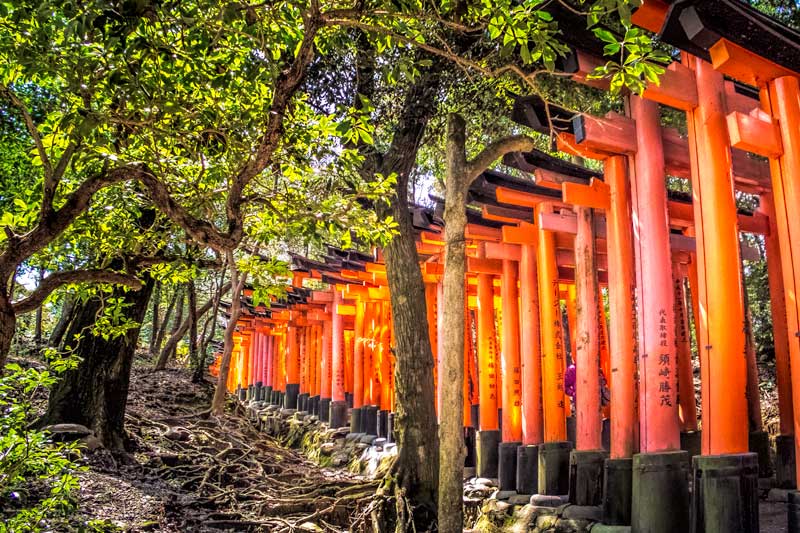
There is a trade-off worth considering: going either early or late in the day. Not in the dark, but when the restaurants, stalls and shopping streets are closed. Fushimi Inari can be accessed 24/7, like most shrines in Japan, so if you are visiting to worship or to quietly hike up through the torii gates and forest to the top to enjoy the spectacular view over Kyoto, then this is the best time to enjoy it.
If you normally wake early, you could easily incorporate this and still stop somewhere for breakfast before the sake district opens around 10 am, or, if you haven’t oversampled the produce, it could be a really nice late-afternoon walk before dinner.
Fushimi Inari Station and Fukuoka-Momoyama Station in the sake district are about 15 minutes (5 stops) apart on the Keihan Main Line, which runs frequently on this route.
Tofukuji temple
Tofukuji temple is only one stop from Kyoto station, but this area has a completely different, more local feel than most of the central city. Tofukuji temple is vast and holds historical and spiritual significance, but many people visit primarily for its immaculate and diverse gardens.
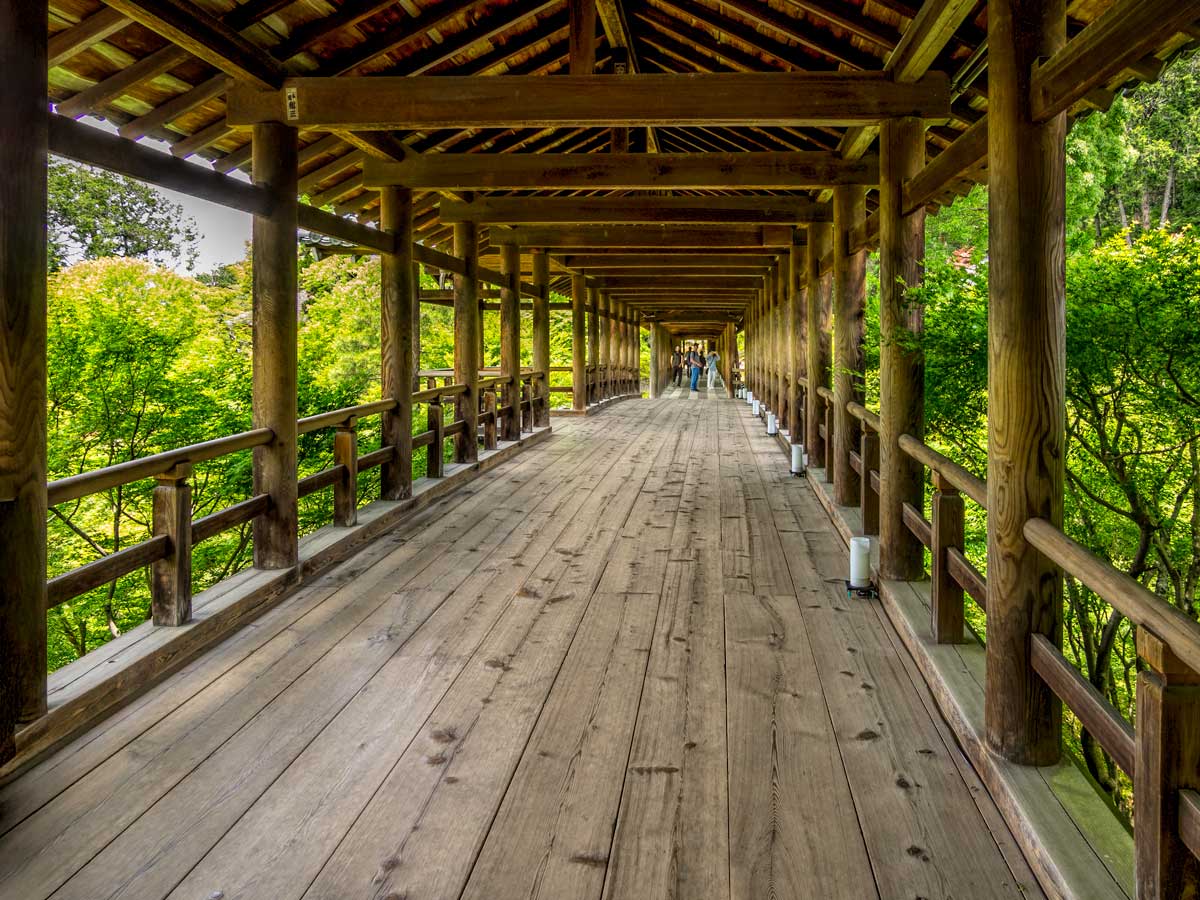
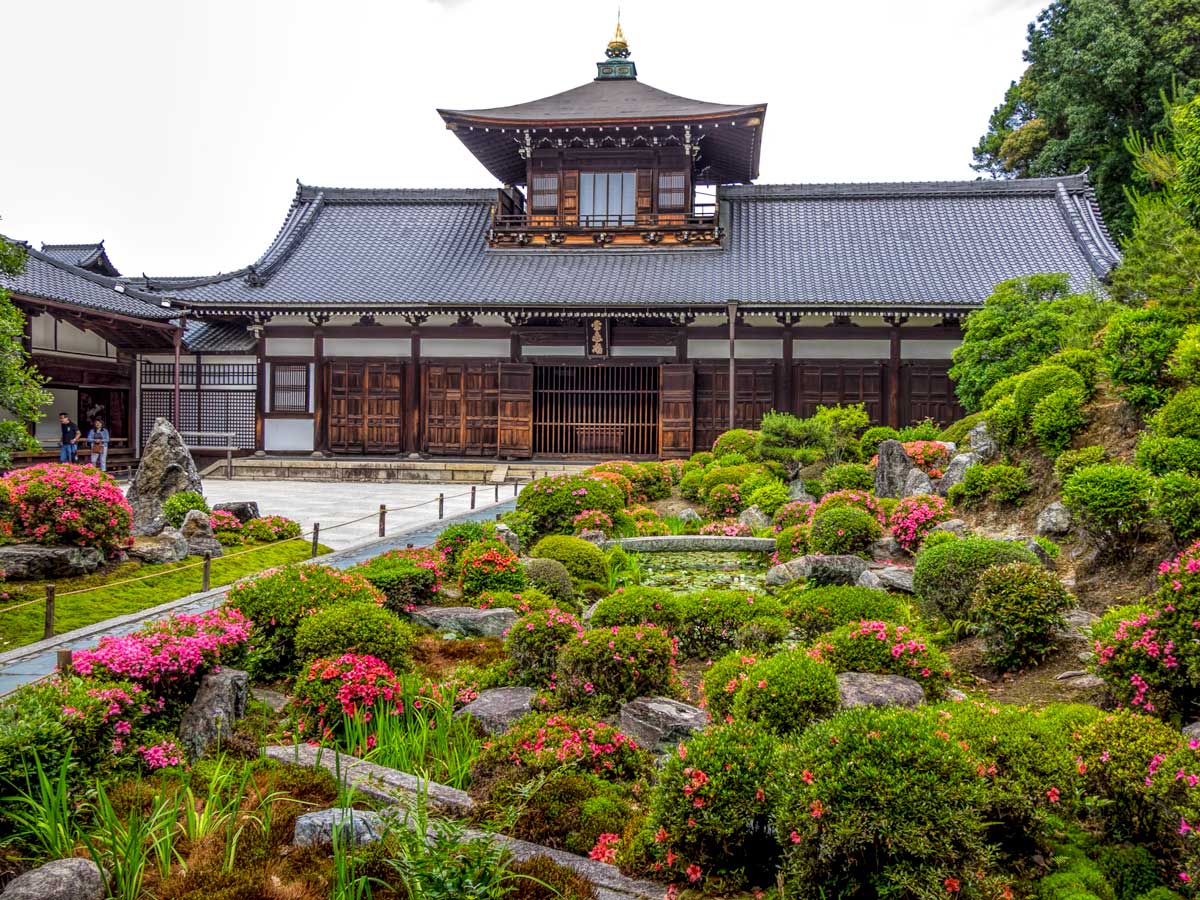
The walk through the local area to the temple is also part of the appeal, passing other smaller sub-temples, a shopping street and restaurants.
I have to give a shout-out to Root2 Coffee here for incredible coffee, their stylish, restorative reno on the heritage kominka that gives better insight into the sand wall finish than any museum, baked cheesecake that is absolute heaven, a great sound system, and a top LoFi jazzhop playlist. Love this place and wish it were my local.
The trip from Fukushima-Momoyama Station to Tofukuji Station on the Keihan Main Line takes about 18 minutes (7 stops), with frequent service at both stations.
Fushimi-Momoyama castle
This isn’t on any must-visit castle list; it’s not an original castle, but as an addition to a day in Fushimi, it’s worth considering. The original castle, built in the 1500’s and rebuilt in the 1960s, is only viewed from the outside.
It is set in park-like grounds and is adjacent to Emperor Meiji’s mausoleum. You have likely been to the impressive Meiji Shrine in Tokyo but here in Fushimi, Kyoto is his final resting place and potentially by choosing that also his final act of unification following the move of the capital and consolidation of power from Kyoto to Tokyo.
Take the Kintetsu Kyoto line one stop from Momoyamagoryo-Mae Station to Kintetsu-Tambabashi Station, then walk about 20 minutes (1 km) to the castle.

