Article
SUMMITS launched a new AI platform that bridges the gap between what wearable data tells people to eat and what ends up on their plates.
Jacob Rudoy and SUMMITS staff prepare a meal. Source: SUMMITS
April 22, 2026 by Amy Sorter — Writer and Editor, Networld Media Group
In early 2024, Sam Pisker weighed close to 300 pounds. The former Division I volleyball player knew he needed to get back into shape, but as he tracked his progress with wearable fitness devices, he realized that the nutritional recommendations didn’t align with restaurant offerings.
“I thought there had to be a better way to do this,” Pisker told Fast Casual.
From that “ah-ha” moment, Pisker and friends, Chef Jacob Rudoy and Kyle Dijamco, launched Summits Technologies, which features an AI-powered platform that they named StarAI. It tracks a person’s biometric data, goals and activity plans to create personalized fast-casual meals, which chefs assemble from a 350-square-foot ghost kitchen inside the Colony food hall at 401 Lincoln Blvd., in Venice Beach.
From concept to test kitchen
When Pisker conceived of the idea of personalized meal prep in mid-2024, he envisioned it all happening in a restaurant rather than online. At the end of the year, he asked Beverly Hills restaurant Funke’s executive sous chef Rudoy for help with generating tasty meals under strict nutritional guidelines. Rudoy became Summits’ culinary director, creating menus on the meal platform.
Between late 2024 and early April 2025, the concept shifted from an on-site restaurant to an AI-supported app. Pisker spent eight months building up the technology’s back end and generating a test mobile visualization. He also invited Dijamco, to join Summits as the company’s chief marketing officer.
The co-founders initially planned to offer the platform as vertically integrated technology for fast casual restaurants, but early feedback changed the approach.
“When we showed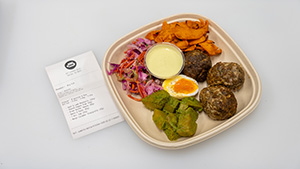 the concept to customers, the feedback we got was that the software was awesome, but they wanted to try the food now,” Pisker said.
As a result, efforts focused on a kitchen to test how well StarAI could convert data into custom meals and how the concept would operate in real-world restaurant kitchens. Pisker and partners chose Venice Beach for its health-conscious population and proximity to fitness facilities. In February 2026, the company opened the kitchen, and added Nick Atkinson as a line cook to assist Rudoy with meal preparation.
At this time, the kitchen operates four hours a day, five days a week. Given the limited schedule, Summits’ immediate focus is refining the platform rather than generating revenue.
Still, user interest is growing. About 70 people logged onto the app in February. By March, that number had climbed to 250, with a goal of reaching 500 by the end of April. Pisker said the number of log-ons could reach into the thousands by the end of the year.
The concept has also drawn attention from industry observers. Fitness and wellness publication Fitt/Insider recently named Summits one of its Top 50 most interesting early-stage health and wellness startups.
How StarAI operates
Customers begin their personalized menu journeys by downloading the app, which they can find on the company’s website (https://www.ordersummits.com/) or by looking up “SUMMITS Technologies” on the Apple App/Google Play Store.
Once the app is set up, customers can communicate with StarAI for food recommendations that meet macronutrient requirements based on wearable data, personal goals — such as weight loss or an energy boost — and upcoming activities like a golf game or workout recovery. The AI generates suggested menus that users may adjust based on their tastes or preferences. Once the order is confirmed, it’s sent to the Summits kitchen, where meals are cooked, assembled and then held in hot or cold wells until pickup.
Meals range from 400 to 1,500 calories and cost between $13 and $30 depending on the recipe and portion size.
Ingredients come from several suppliers, including Los Angeles-based Community Provisions for produce, Chef’s Warehouse for dry goods and Premiere Meat and Seafood in Vernon, California, for proteins. The company also plans to source ingredients from the Santa Monica Farmers Market.
Summits will soon add robotics to the food assembly process, both for the current test kitchen and future restaurant clients. This leaves the chefs and cooks to spend more time on food preparation and menu upgrades.
“The robotic assembly technology is already available; it’s becoming a commodity at this point,” Dijamco told Fast Casual. Fast-casual brands including Chipotle, Cava and Sweetgreen have invested tens of millions of dollars into their own robotic assembly lines.
Pisker said that the robotics envisioned for Summits’ operations can prepare 200 meals an hour.
“We can create larger catering orders for corporate offices or Division I schools that want to feed their athletes precise meals,” he said.
Another benefit is that other restaurants can immediately implement the robotics, with minimal required configuration.
“We’ve engineered it so the complexity lives on our side, rather than the restaurants thst are onboarding the technology,” Dijamco explained.
Customer feedback trains the platform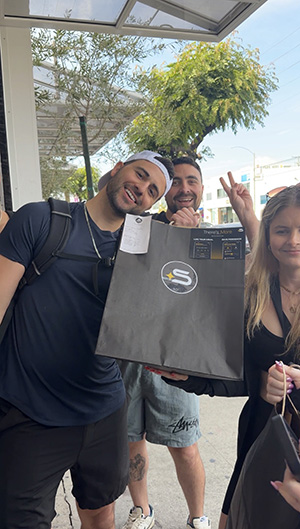
Customer response so far has been largely positive, though some users have raised concerns about portion sizes and flavor preferences. In response, the team continues refining the platform’s machine learning to pinpoint customer preferences and nutritional needs.
Data privacy has also surfaced as a concern. Pisker said Summits takes the issue seriously, noting that user data is pseudonymized to mask identities. The company is also working toward HIPAA compliance to protect health information. The company is also working toward SOC 2 compliance through the American Institute of Certified Public Accountants. SOC 2 ensures a stringent level of data security and confidentiality.
Expanding awareness
Summits’ immediate focus is expanding awareness. The kitchen uses Uber for deliveries within a 5-mile radius and lists some menu items on DoorDash.
“We have marketing materials in the bag about our app to expose people to our concept,” Pisker said.
Long-term, the company plans to expand ghost kitchens into high-traffic metro areas, including Austin, Miami and New York City.
The team also hopes to get back to its original goal of licensing the technology to restaurants. Under that model, Summits would handle personalization, nutrition analysis and machine learning, while restaurant partners prepare the meals according to standardized portions.
Raising funds
Summits has raised $250,000 so far (with approximately $50,000 contributed by the founders) and is is seeking investors to accomplish its expansion goals. It’s in conversation with venture capitalists, but those who are interested may get in touch with Dijamco (kyle@ordersummits.com) or Pisker (sam@ordersummits.com).
Looking further ahead, Pisker believes AI will eventually close the gap between nutritional recommendations and the meals people actually eat.
“In the future, we see a world where food will be automatically delivered to you,” he said. “You won’t even need to push a button.”
Dijamco agreed, adding that the technology will also help drive food consistency, transparency and quality. “People want to feel better and live longer, and that comes with what you should be eating,” he said. “They also want things done just for them. AI will help them with all of that.”
About Amy Sorter

Amy W. Sorter is an award-winning journalist, copywriter and content producer. Sorter has generated quality articles, blogs and thought leadership pieces for multiple industries during her many decades as a writer. Her byline has appeared in local and national publications including the American Business Journal, Connect CRE, Bankrate, CURE Magazine and the Dallas Morning News.
Connect with Amy:

