The grill at Graciela.
Photo: Karissa Ong
Eighteen years ago, two brothers from New York, Adam and Alex Saper, met an Italian businessman named Oscar Farinetti, who had turned an old vermouth factory in Turin into the high-end food market Eataly. Convinced the concept would work in New York, the Sapers partnered with Farinetti (and, at the outset, Mario Batali) and opened their very own version of Eataly across the street from the Flatiron Building in 2010. The Sapers, it turns out, have a knack for finding businesses that work in translation. They have since sold their stake in Eataly to a British private-equity firm in a $200 million deal and are betting their eye for cultural import has remained sharp. Next week, they’ll open Graciela, a 120-seat “Argentine tavern” in the West Village, with their newest partner, Pablo Rivero. Back home, he runs Don Julio, a parrilla — a grill — that has found a great deal of critical acclaim (it’s been called the best steakhouse in the world) and owes at least some of its legend to the fact that Messi likes it.
A month before opening in New York, Rivero, a trim 47-year-old who looks a little like a human bullet, greeted me at the threshold of the restaurant on Bank and Greenwich Avenue. The space, comprising a large bar area and an expansive dining room plus a barrel-vaulted cellar, was still largely free of tables. The straw-colored walls, rough-hewn reclaimed-wood ceiling — “from someplace upstate,” said Rivero — and the hardwood floors gave the feel of a very well-curated estancia. Rivero is warm and welcoming and immediately led me to the grill (multiple grills, actually) that will be the heart of the restaurant; they occupy the entire length of one side of the front room. Ben Eisendrath, a grill fabricator from Grillworks, had recently installed the eight-foot-long, four-foot-high custom parrilla with adjustable surface flanking a 21-inch firebox next to a Josper charcoal oven. Above them, an expansive hood waits like a spaceship to suck up any smoke. The thing is massive, at least 12 feet long. Alex, the younger of the Saper brothers, told me, “We think this is the largest grill in the city.”
From the grill’s ridged surface will come roasted piquillo peppers, charred trumpet mushrooms, and caramelized onions, as well as, of course, rib eyes, skirt steaks, and short ribs; chicken, trout, and sausages. The fire will be fueled with the dense charcoal of the quebracho tree — native to the lowland plains of South America’s Chaco region — which is famous for its high, steady heat. The parrillero, or grill master, will tend both the flame before him and the flock arriving to be fed. “The unique star of asado is the parrillero,” says Rivero. “He needs to be in the center and to be seen because he is cooking for someone. He is not an anonymous cook in the kitchen.”
The dance of a parrillero is like that of a toreador: a game of centimeters, one learned at high cost over many years. To that end, Rivero has moved six of his employees from Buenos Aires — including the grill master from Don Julio, Nicolás Stadnitchi; and the chef from his other restaurant, El Preferido, Victoria Degiorgio — to help launch the restaurant, his only expansion outside Argentina.
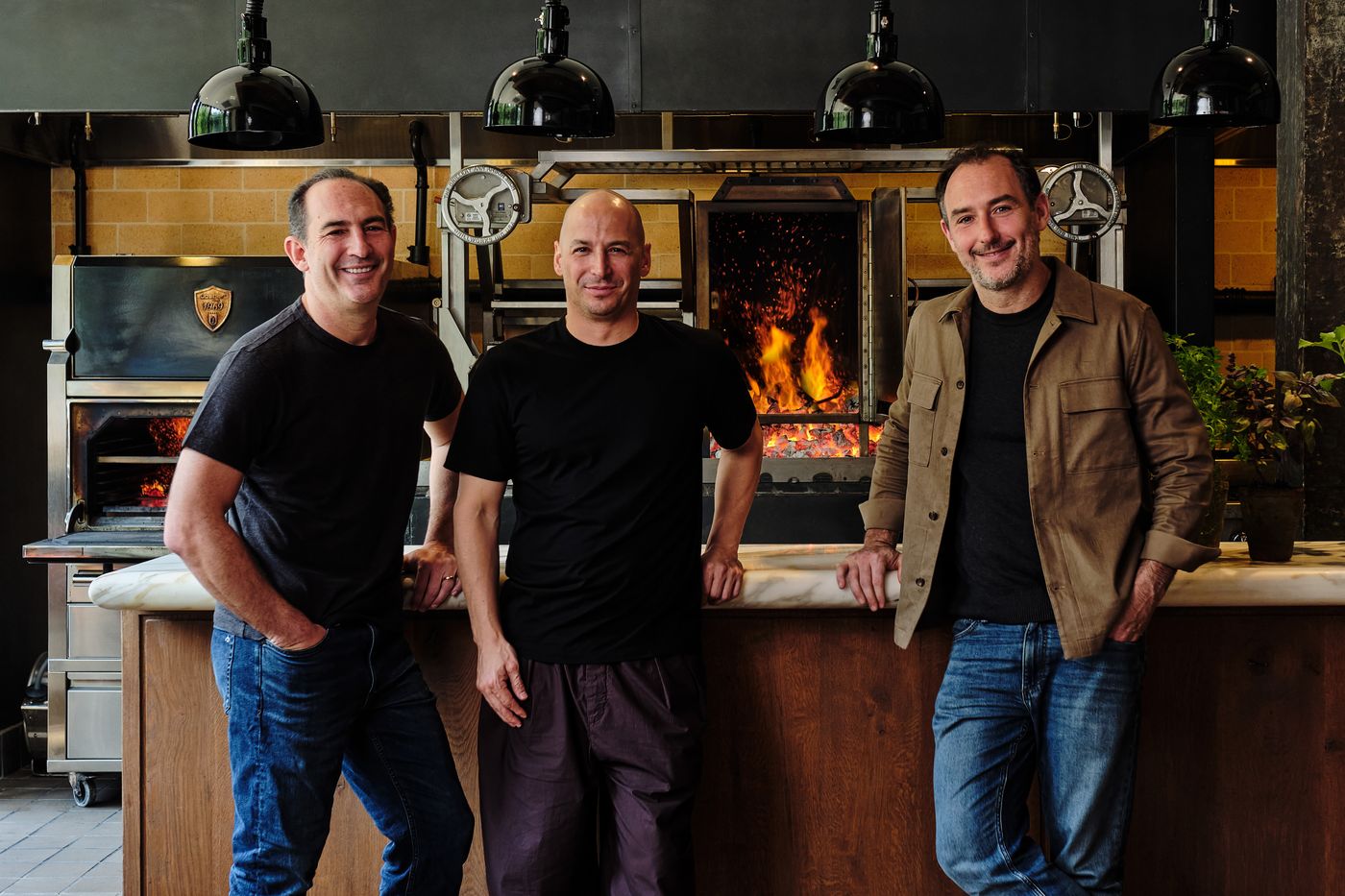
Adam Saper, Pablo Rivero, and Alex Saper.
Photo: Nico Schinco
Rivero grew up in a town called Villa Bosch, just outside Buenos Aires, where his mother, Graciela, ran a small convenience store that served milanesa sandwiches, cannelloni, and savory pies to students at a nearby school. Rivero often helped in the kitchen. As a young man, he lived in the swampy Palermo district of Buenos Aires, above a bar called Los Barrellitos, where the barrio’s drug dealers, petty criminals, and thieves used to gather to deal and drink. “It was a dangerous place,” says Rivero. When one of the partners of Los Barellitos went to jail, Rivero made an offer. “I said, ‘Look, you are only serving two tables a night anyway — just sell the thing to me.’” A family friend, the titular Don Julio, furnished the initial investment for the purchase.
To everyone’s surprise, the owner agreed. Rivero, who at 20 years old suddenly found himself an owner, quickly hired Pepe Sotelo, a now-legendary parrillero, and began to learn. “The most important thing about a parrillero,” Rivero told me, “is that they have a relationship with fire.” Soon, word of a new parrilla spread, one whose grass-fed steaks were charred perfectly, whose 15,000-bottle cellar was the best in the country, and whose hospitality felt natural — reasonable, even. Global accolades poured in, and now Don Julio does 700 covers a night. “We go through six tons of meat every week,” says Rivero. There’s a permanent line out the door, and Rivero frequently offers the patient and hopeful flutes of Champagne and fresh empanadas while they wait.
Rivero has expanded his empire — when El Preferido, a 66-year-old restaurant on the other corner of the block, was going out of business, Rivero offered to take it over “to help keep the legacy alive” — but it was a visit to Don Julio that first intrigued the Sapers. “The amount of vegetables on the menu, the technique, the product that he is using, the simplicity — that is extremely translatable to what we eat here,” Adam explains. “We wanted to get his expression of Argentine culture.” He called Alex, who soon flew to Buenos Aires, and the brothers befriended Rivero, convinced that his hospitality could find purchase in their hometown.
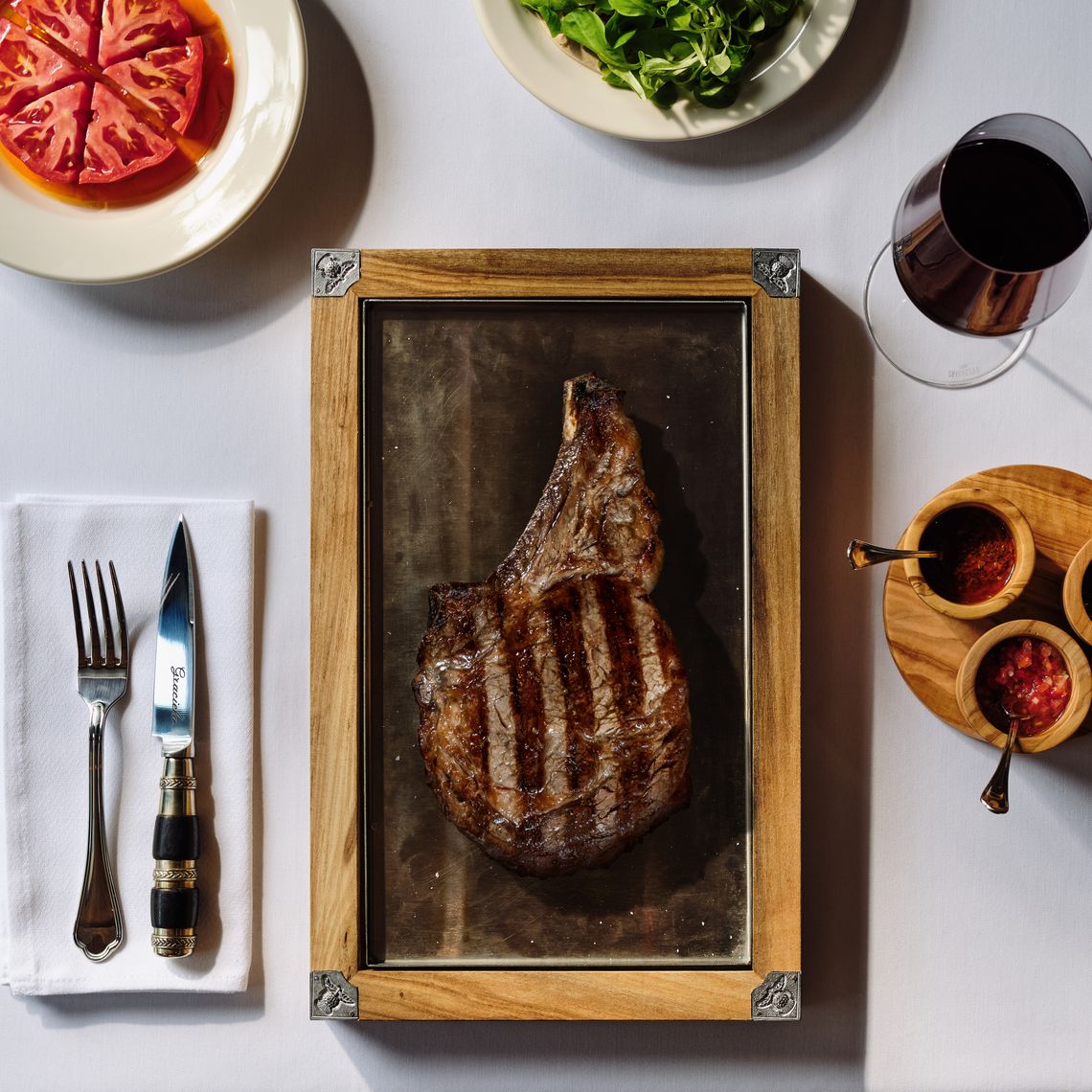
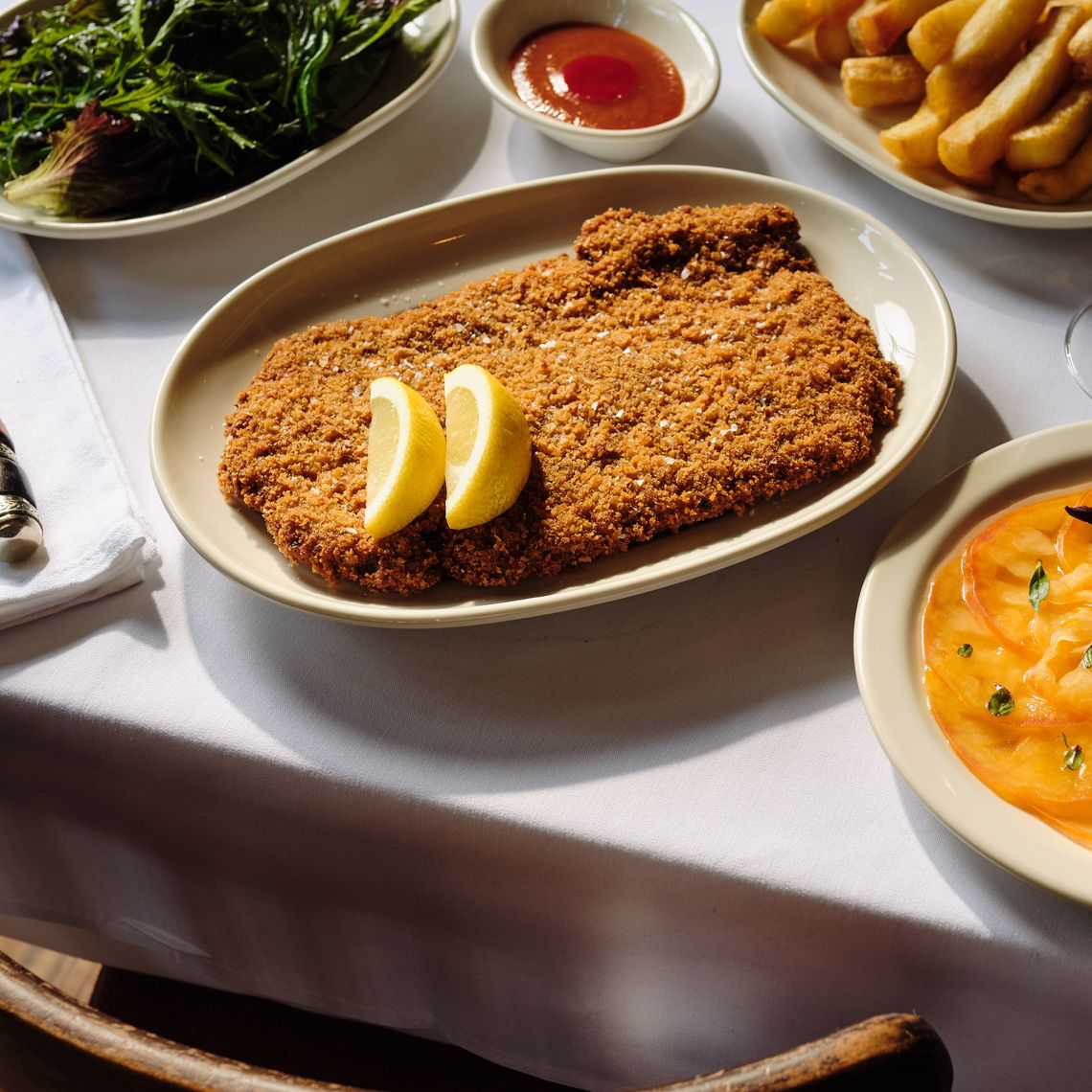
The menu features plenty of grilled beef, as well as specialities including New York strip milanesa. Nico Schinco.
The menu features plenty of grilled beef, as well as specialities including New York strip milanesa. Nico Schinco.
The three men grew close. Over Christmas in 2024, at Rivero’s 568-acre regenerative farm 50 miles northwest of Buenos Aires, they began discussing the restaurant. It was the Peruvian chef Gastón Acurio who suggested they name it Graciela after Rivero’s mother. “None of my career would have happened without her,” he says, “so it’s a way to put pressure on myself.” Though his mother, who is a frequent presence in his Buenos Aires restaurants, won’t be making the move to New York, Graciela is nevertheless a family affair. Rivero’s 21-year-old son, Facundo, a student at the Culinary Institute of America, will take the train down each weekend to work.
Graciela falls somewhere between a parrilla and a bodegón, a uniquely Argentinian institution born of the heavy Italian and Spanish immigration of the early 20th century, like Argentina’s version of a red-sauce joint evolved to suit the local palate. Aside from grilled meats and vegetables, the menu includes canonical bodegón dishes like steak milanesa; bacalao guisado con marisco, a saffron-tinged cod stew; and osso-bucco empanadas. Charcuterie is a collaboration with Ends Meat, employing Rivero’s original Don Julio recipes.
The food is serious (so is the expansive wine cellar), but Rivero shrugs and tells me, “The food is not important. What is important is what we can make our guests to feel better. The cuisine is only a pretext.” Rivero is what you might call a proponent of reasonable hospitality: The spirit of a bodegón, he explains, is built over years of regulars. At El Preferido, many of the customers have been coming for decades. At Graciela, he says, the staff will be encouraged to send extra dishes out or offer cellar tours or bites of salumi or vegetables to single diners at the bar. “Maybe ten years ago, people wanted other things, but today,” says Rivero, “the people want cariño” — care.
“Of course,” Adam admits, “we can’t serve Champagne on the street and would get in trouble if we were giving away empanadas.” But, Rivero says, “We’ll find a way.”
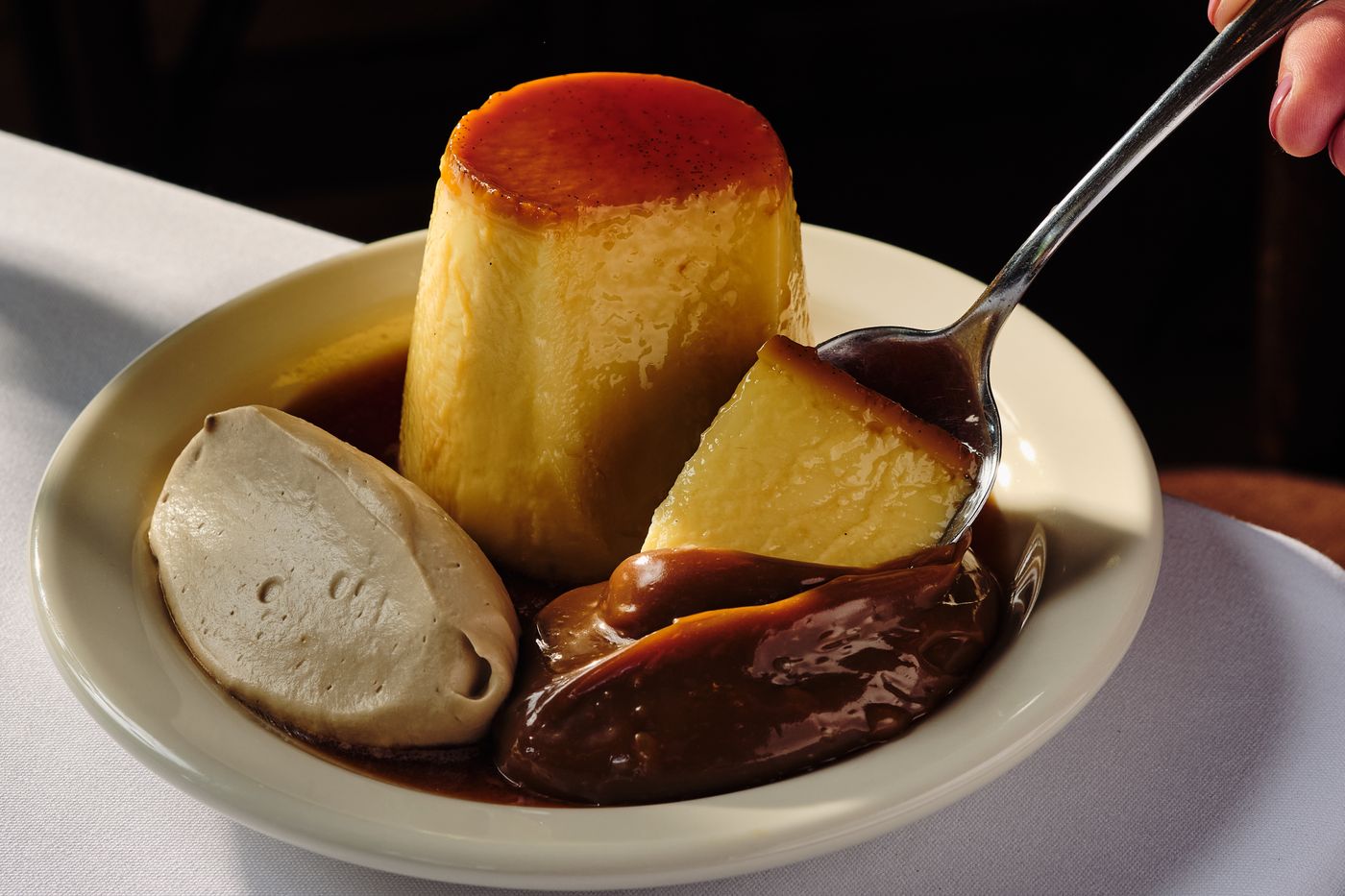
Flan with dulce de leche.
Photo: Nico Schinco
See All

