Canada’s Porter Airlines is on a growth tear.
For most of its two-decade existence, the sleepy regional carrier focused on offering service a step better than its competitors on a fleet of de Havilland Dash 8-Q400 turboprops flying from Toronto’s downtown-adjacent Billy Bishop Toronto City Airport (YTZ) to destinations within about 1,000 miles.
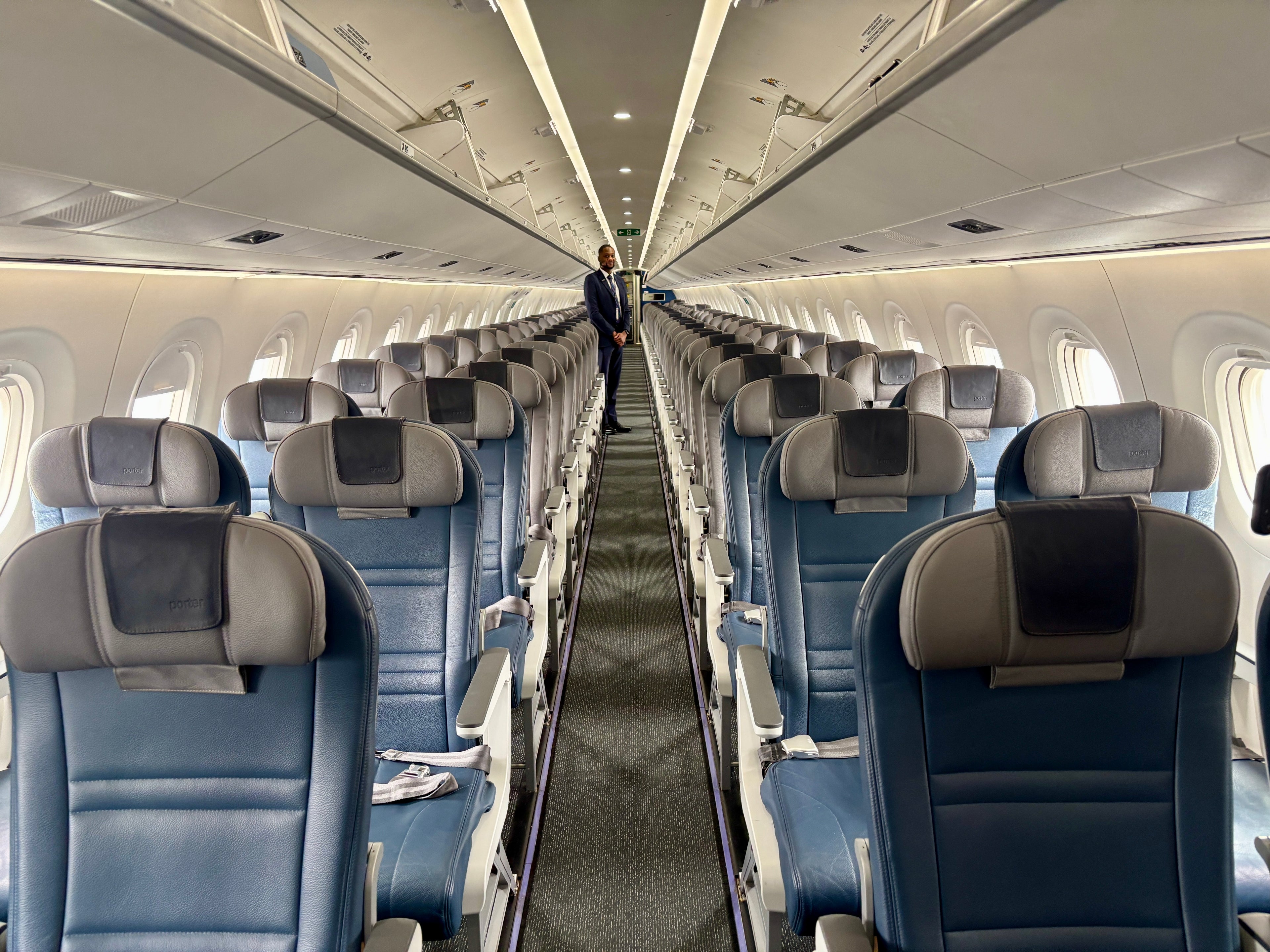
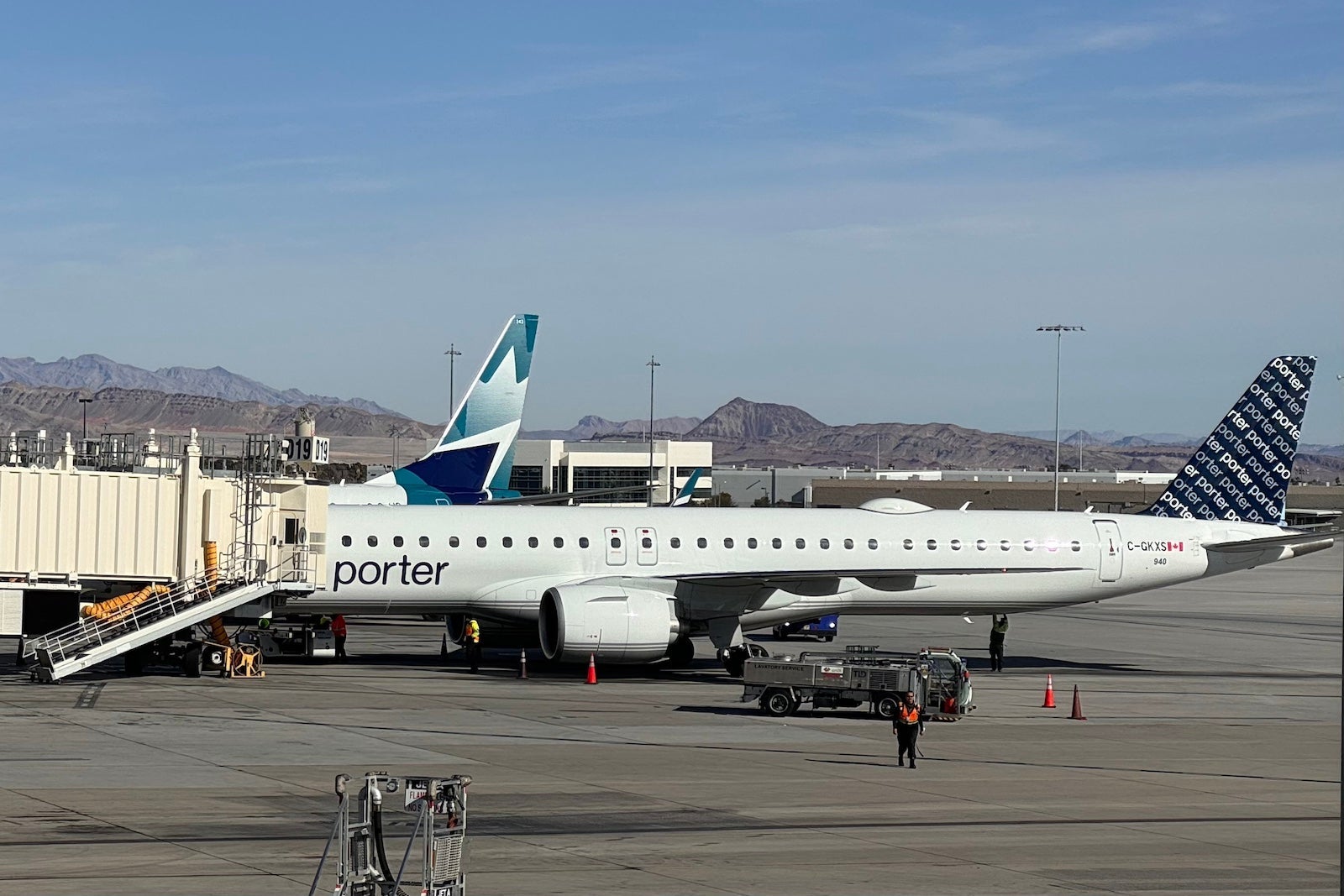
In 2023, Porter introduced its first Embraer E195-E2 jet with 132 seats, and then, the world — or at least North and Central America — opened up. The airline has extended its map to destinations in Costa Rica, Mexico and Western Canada from a new base at Toronto Pearson International Airport (YYZ).
It’s also added significant U.S. service, including a handful of flights to the West Coast. Porter has also entered into loyalty partnerships with a pair of U.S. carriers.
“We’re really excited at where we’re at,” Porter CEO Michael Deluce said last week while celebrating the opening of the new MET-Montreal Metropolitan Airport (YHU).
“We’re now going from hyper growth to something that’s more a sustained pace,” Deluce added. “That is a much more manageable pace of growth.”
Just how fast has Porter grown?
In 2025, the carrier offered 183% more seats than in 2022, the year before the E-Jets arrived, according to schedule data from aviation analytics firm Cirium. The airline is on track to increase its seat capacity by another 16% this year compared to last.
Austin Bergstrom International Airport (AUS) and Nashville International Airport (BNA) are Porter’s latest U.S. additions with flights from Toronto Pearson and Billy Bishop, respectively.
Reward your inbox with the TPG Daily newsletter
Join over 700,000 readers for breaking news, in-depth guides and exclusive deals from TPG’s experts
A ‘strategic’ move in Montreal
The opening of the smaller MET-Montreal Metropolitan Airport is the latest example of Porter’s growth phase. The airline will anchor the airport where it invested an undisclosed sum in building the $322 million (CAD $450 million) terminal.
Previously a general aviation airport, YHU is roughly 11 miles east of downtown Montreal on the south side of the St. Lawrence River.

Porter inaugurated YHU with flights to three destinations: St. John’s International Airport (YYT), Billy Bishop Toronto City Airport (YTZ) and Vancouver International Airport (YVR). It plans to operate 11 routes and 138 weekly flights — nearly 20 per day — from the new Montreal gateway by July.
“The opening of Montreal is strategic,” John Gradek, a faculty lecturer at McGill University who specializes in aviation and supply chain management, said. The opening of YHU, he said, is “opportune” for Porter as the city’s main airport, Montreal-Trudeau International Airport (YUL), is in the throes of a years-long renovation and expansion.
Porter cannot add flights to the U.S. or anywhere else outside Canada from YHU due to an exclusivity agreement that bars any airport in the Montreal area other than YUL from handling international flights.
With growth comes risk
Porter’s rapid growth carries potential financial risks. The new Embraer E195-E2 jets that are fueling the airline’s growth cost $88 million each at list price. Adding more than 50 of them to its fleet in such a short period cost a pretty penny.
Competitors are not sitting idly, either. Air Canada responded to Porter’s recent expansion with flights from Porter’s Billy Bishop base to the U.S. that began in March.
But Porter is also benefiting from moves by its competitors.
For instance, the carrier has seized opportunities in eastern Canada following the 2022 decision by the country’s second-largest airline, WestJet, to focus more on the west.
Porter, in addition to its growth, has added a new loyalty partnership with American Airlines that includes more flights to the U.S. carrier’s hubs. (Air Canada has a close partnership with United Airlines and WestJet a tie-up with Delta Air Lines.)
But the history of meteoric airline rises is littered with failures. For example, discount carriers Canada Jetlines and Lynx Air both collapsed in 2024 after growing rapidly following the COVID-19 pandemic.
“The impression I get is that Porter is an organization that understands the path that ought to be followed to build critical mass and scale in North America,” Gradek said. He described the airline’s leadership team as “professionals” who “know the business.”
This, however, does not guarantee profits, Gradek added.
Privately held Porter does not disclose revenue or profitability.
“We’re very clearly at an investment stage,” Deluce said when asked if Porter was profitable. “No one grows at this pace and expects profitability at day one but we’re quickly moving to that place of profitability and seeing incredible RASM [revenue per seat mile flown], load factor and average fare growth.”
Related reading:

