Spirit Airlines is no more.
The budget carrier said early Saturday that it would cease all service immediately after running out of cash amid a surge in fuel costs and failing to secure either a government bailout, or a loan from creditors to keep it afloat.
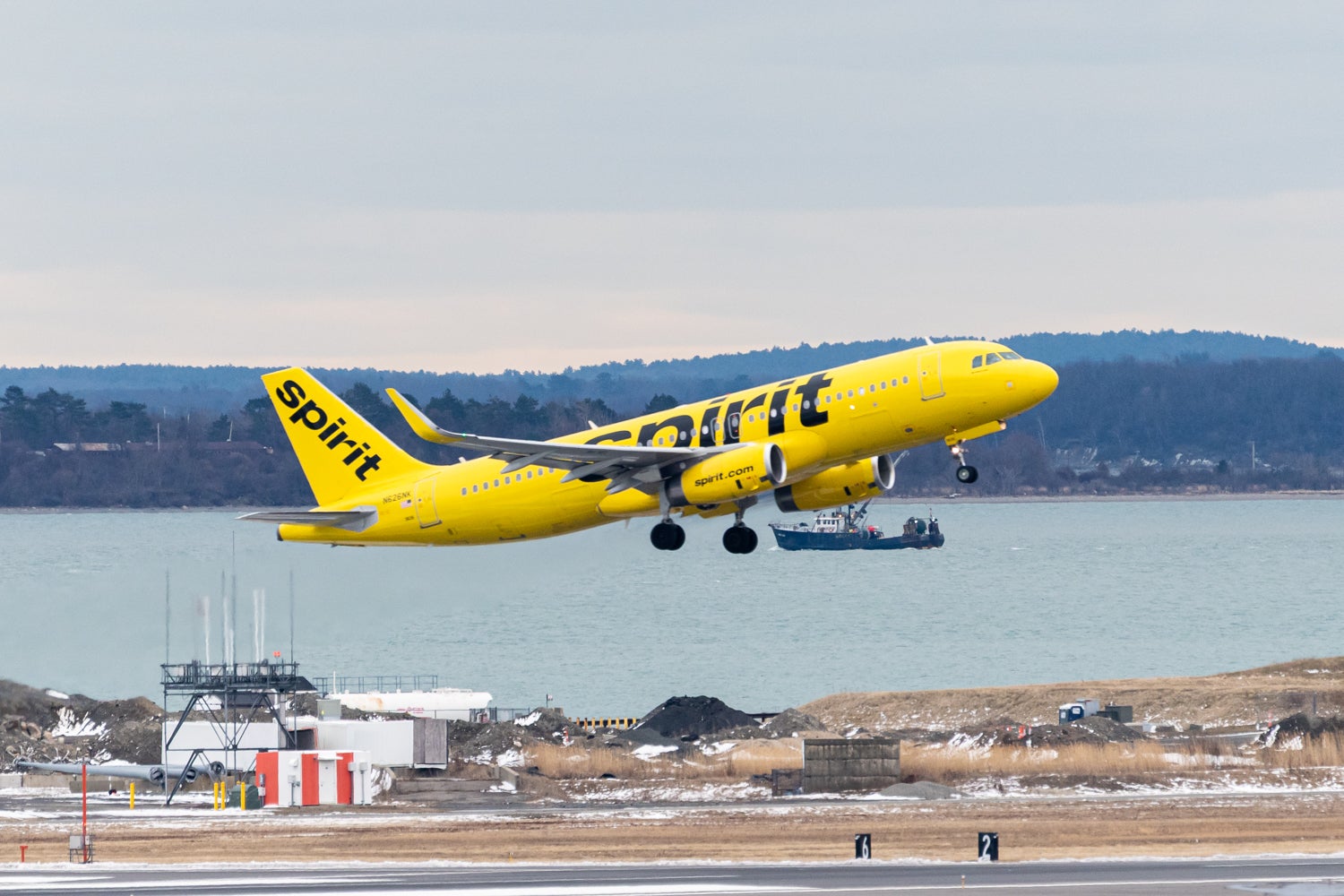
It was a disappointing but seemingly inevitable end for the famed budget airline, known for its big bright yellow planes and ultra-cheap fares (but add-on fees for almost everything else).
The airline had filed for bankruptcy twice since late 2024 — including most recently last August.
Spirit had hoped to exit bankruptcy as a restructured airline this summer, but an 80% increase in the price of jet fuel since the start of the U.S. war in Iran meant that even if it managed to exit bankruptcy, the revamped Spirit still likely would have been unable to turn a profit.
The sudden shutdown left thousands of travelers stranded across the country this weekend, and left thousands more scrambling to try and salvage shattered travel plans.
Beyond that, Spirit has roughly 9,500 employees, according to a source familiar with the matter, although that number increases to 17,000 when including contractors, who are now left without jobs.
The Department of Transportation, in a statement issued around 3 a.m. EDT, said a number of big airlines had agreed “to a series of actions … to support Spirit ticketholders, the general flying public, and airline employees impacted by Spirit ceasing operations.”
Among those were the availability of reduced and “rescue” fares by former rivals on routes Spirit flew, with details varying by carrier. The DOT also said most major airlines were extending travel privileges to former Spirit employees and that they would receive “preferential employment interviews to ensure they jump the queue.”
Reward your inbox with the TPG Daily newsletter
Join over 700,000 readers for breaking news, in-depth guides and exclusive deals from TPG’s experts
TPG’s coverage of Spirit’s shutdown:
Months of uncertainty
Spirit’s shutdown comes after months of uncertainty and speculation that the end of the carrier’s operations could be near.
The airline was close to running out of cash during the holiday travel season, but managed to secure a last-minute infusion from its creditors. Several weeks ago, further reports suggested the airline was days or weeks away from being forced to shutter and liquidate.
While Spirit had approached the federal government about a $500 million bailout, some of Spirit’s creditors opposed such a deal, which would see the government take up to a 90% equity stake in Spirit, while some other airline executives and politicians also opposed such a deal.
It also wasn’t clear whether a bailout would actually help turn things around, or whether it would just delay the inevitable.
A long financial struggle
Spirit has been cutting routes and staff for months as it has tried to stem its losses, and closes as a much smaller airline than it was in its heyday.
The airline struggled to return to profitability following the pandemic, even as competitors were able to harness travel demand coming out of lockdowns and remain successful since. One major headwind was an ongoing issue with the Pratt & Whitney engines that powered the airline’s fleet of A320neo-family jets, which has left dozens of the airline’s jets grounded. While the airline received compensation, it was not enough to make up for the grounding.
In 2022, Frontier and Spirit announced plans to merge, before JetBlue made a higher offer to acquire Spirit which was accepted by shareholders. The Biden Administration sued the airlines to try and block the merger, claiming that it would be anticompetitive and lead to higher prices for consumers.
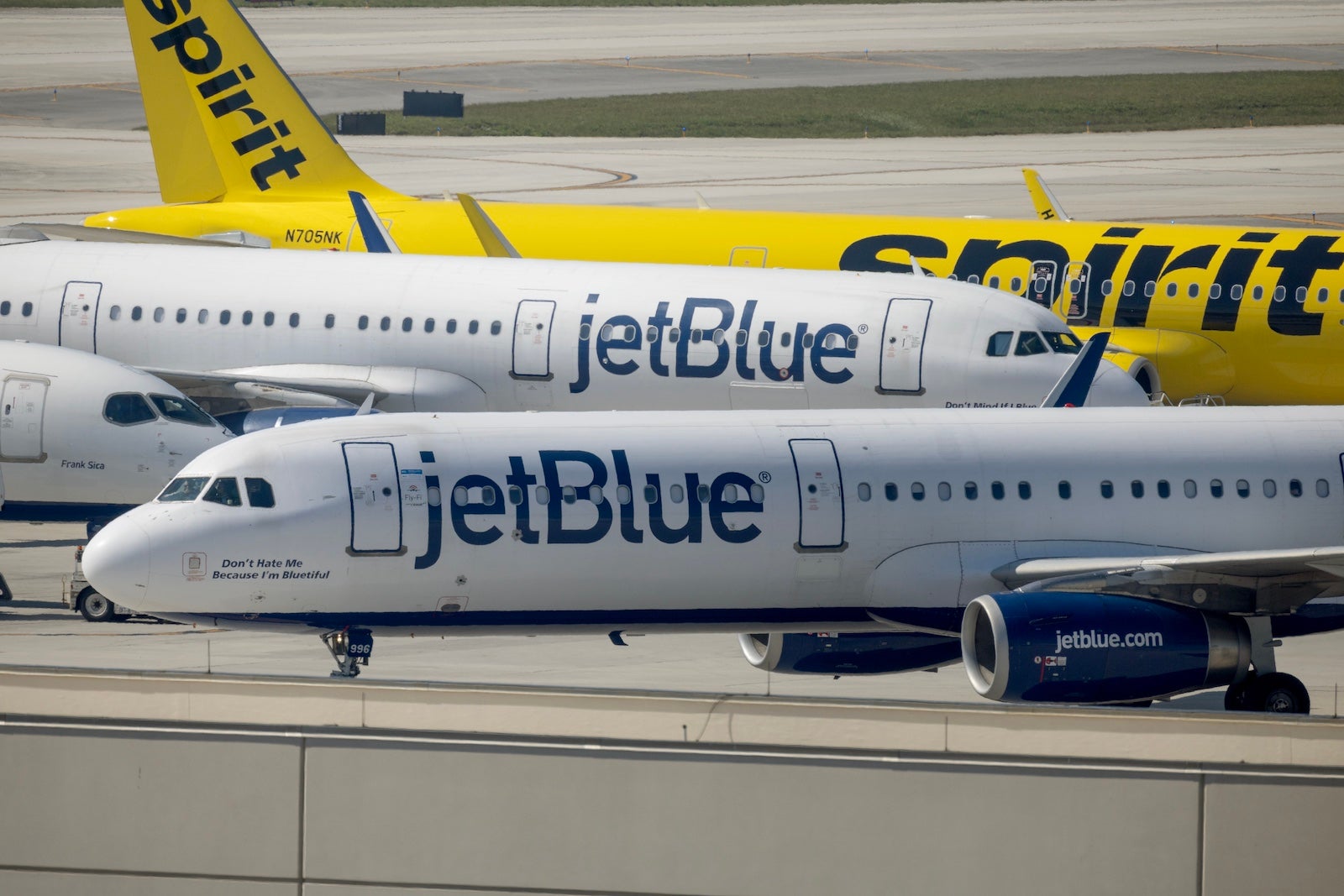
During a four-week trial in federal court in Boston, which TPG covered extensively, Spirit argued that it likely could not survive without some sort of merger, while JetBlue argued that by joining, the combined airline could compete more effectively with the four major U.S. airlines — American Airlines, Delta Air Lines, Southwest Airlines and United Airlines — that together control about 80% of the U.S. air travel market.
The merger was blocked by Judge William G. Young, an appointee of President Ronald Reagan, who wrote that under the Clayton Act of 1914, the merger was anticompetitive.
“Spirit is a small airline. But there are those who love it,” Judge Young wrote in the decision.
“To those dedicated customers of Spirit, this one’s for you,” he added.
In its Saturday statement, the DOT took partisan aim at the previous administration for blocking the merger.
Spirit has spent the last year trying to reposition itself as a dynamic airline with both its famous low-cost base fares with a la carte pricing for add-ons, as well as things like packaged fares that include things like on-board snacks and even first-class seats, trying to take advantage of the post-pandemic finding that premium revenue is increasingly crucial for U.S. airlines.
However, it appears to have been too little, too late.
The end of the ‘bus with wings’
The death of Spirit represents an end to a storied budget airline that, for whatever complaints people may have had, offered cut-rate fares that made travel more accessible for more people.
Unbundled fares, with add-ons for everything from bags to seat selection, proved to be so competitive that it forced the legacy airlines to introduce basic economy. Spirit, for instance, was the first airline to begin charging for carry-on baggage.
Even so, you always knew what you were getting with Spirit. The airline was proud of its scrappy and frugal image, and rarely shied away from it. The carrier’s former CEO, the late Ben Baldanza, who pioneered the no-frills business model in the U.S. and transformed Spirit into the budget airline we all know today, famously referred to the airline as “a dollar store in the sky” and “busses with wings.”
And as recently as 2019, the model worked, with Spirit turning a profit going into the pandemic.
But the competition from bigger airlines’ basic economy fares, with more flights on the same routes, better reputations and tempting loyalty programs bolstering the bare-bones offering, turned out to be another blow to Spirit.
Spirit Airlines began as a charter airline in the 1980s, before changing its name to Spirit and beginning regular scheduled service in the early 1990s.
As for what happens next: Spirit’s creditors will liquidate the airline’s assets to recoup their costs, selling everything from airplanes and leases to gates and slots, ground equipment and even quotidian items like desktop computers and office furniture.
This is a developing story. Stay tuned to TPG for more information on what consumers affected by the shutdown can do, and for up-to-date news on Spirit’s shutdown.
Related reading:

