AI is reshaping how travelers discover hotels and resorts. Traditional search rankings still matter, but AI-powered answer engines and generative platforms are changing how visibility works.
For hospitality marketing leaders focused on increasing direct bookings, understanding the difference between AEO and GEO is no longer optional. It is foundational.
This guide explains how answer engine optimization and generative engine optimization differ, how they connect to hotel metasearch and Google hotel ads, and how hotels and resorts can apply both strategies without overcomplicating their tech stack.
What is AEO for hotels and resorts?
Answer engine optimization, or AEO, is the practice of structuring content so AI-powered answer engines can quickly interpret and surface it in direct responses.
When a traveler asks, “Which hotels in Denver have rooftop pools?” an AI tool scans structured, trusted sources to provide a concise answer. AEO ensures your property’s content is clear, factual, and formatted in a way that increases the likelihood of being referenced.
For hotels and resorts, AEO focuses on:
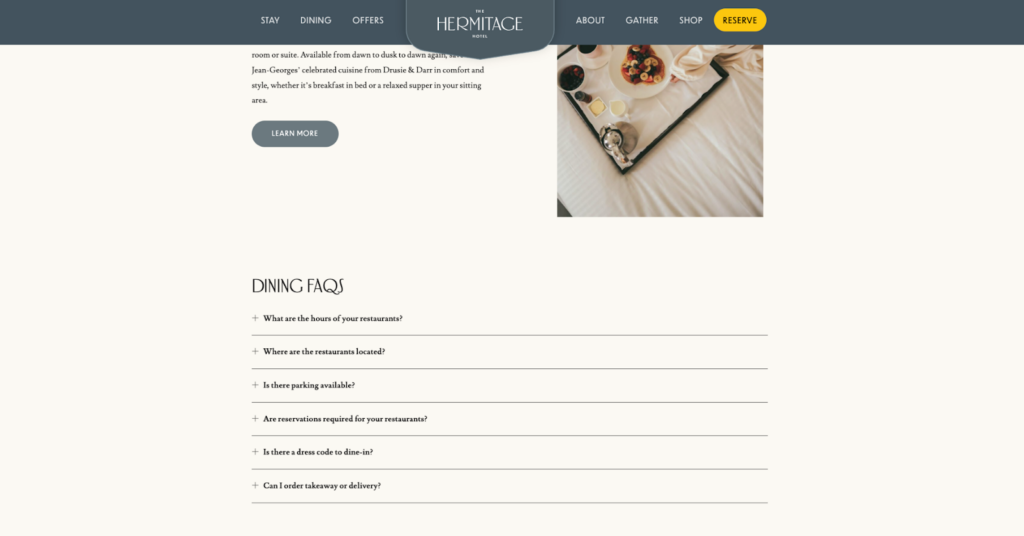
- Clear FAQ sections
- Structured property details and amenities
- Consistent descriptions across platforms
- Accurate location and policy information
AEO supports hospitality marketing by improving visibility in conversational and voice-based search experiences before the traveler ever clicks a traditional result.
What is GEO for hotels and resorts?
Generative engine optimization, or GEO, focuses on how AI models synthesize and regenerate information about your property.
Instead of pulling a short answer, generative engines create narrative responses such as:
“Top boutique hotels in Austin for couples include properties known for walkable locations, spa amenities, and curated dining experiences.”
GEO ensures your property’s value proposition, positioning, and differentiators are clearly written so generative AI tools can accurately represent them.
For hotels and resorts, GEO emphasizes:
- Clear positioning statements
- Context-rich descriptions
- Defined audience segments
- Structured storytelling grounded in factual data
GEO extends traditional SEO into AI-generated environments where content is summarized, blended, and rephrased.
AEO vs GEO: What is the core difference?
The difference comes down to retrieval vs regeneration
- AEO helps AI retrieve and display factual answers
- GEO helps AI generate accurate, narrative summaries
AEO supports discoverability in direct answer formats. GEO shapes how your property is described in broader AI-generated recommendations.
Both influence awareness. Both shape perception. And both ultimately support direct bookings and AI search visibility when executed strategically.
Why AEO and GEO matter for direct bookings
Direct bookings depend on visibility, trust, and clarity. AI-driven discovery now plays a role in all three.
When your property appears in AI-generated answers:
- Travelers gain confidence before comparing rates
- Branded search demand increases
- Hotel metasearch performance strengthens
- Google hotel ads benefit from improved engagement signals
AEO and GEO do not replace hotel metasearch or paid search. They influence the demand that later converts through those channels.
For hotels and resorts working with a hospitality marketing agency or digital marketing agency, integrating AI visibility strategies into broader hospitality marketing plans ensures alignment between discovery and conversion.
How AEO connects to hotel metasearch and Google hotel ads
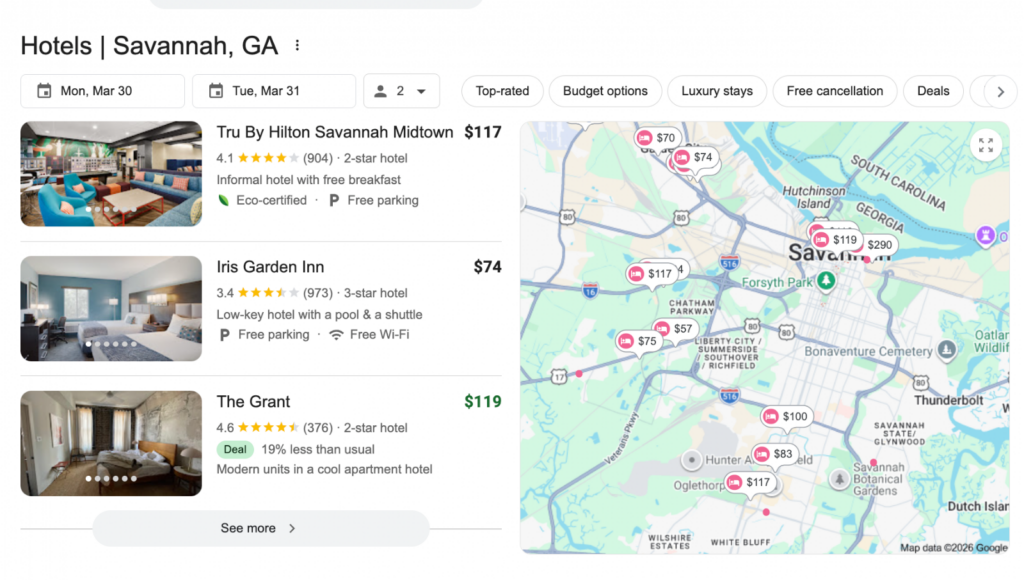
AEO operates at the top of the funnel. Hotel metasearch and Google hotel ads operate closer to conversion.
When AI tools confidently surface your property:
- Branded search demand increases
- Travelers search by property name
- Hotel metasearch listings receive higher intent traffic
- Google hotel ads capture conversion-ready users
The impact is indirect but measurable. Improved branded demand and engagement signals strengthen overall channel efficiency.
This is where data becomes critical. Centralized performance data enables hotels and resorts to connect AI-driven visibility with downstream revenue outcomes.
How GEO strengthens hospitality marketing strategy
GEO ensures that when AI tools summarize travel options, your property’s positioning remains accurate.
Without GEO:
- AI may default to third-party descriptions
- Outdated OTA copy may shape perception
- Differentiators may be diluted
With GEO:
- Your value proposition remains intact
- Amenities and experiences are clearly represented
- Audience targeting aligns with traveler intent
For a marketing agency for hotels and resorts, GEO becomes an extension of brand governance in AI environments.
Do hotels need separate teams for AEO and GEO?
No. AEO and GEO share the same foundation:
- Structured, centralized property data
- Clear, concise website content
- Performance accountability tied to revenue
- Consistency across digital marketing channels
Hotels and resorts do not need separate initiatives. They need an integrated hospitality marketing strategy supported by a reliable data infrastructure. Across the industry, many use the two acronyms (AEO and GEO) interchangeably, because there is a lot of overlap in approaches and essentially they are similar strategies.
As highlighted in our brand and data platform strategy, intelligence only creates value when connected to activation.
How to get started with AEO and GEO without overhauling your property website
Hotels can take practical steps immediately:
- Expand FAQ sections with concise answers
- Clarify property descriptions to reduce ambiguity
- Standardize amenity and policy language
- Align website messaging with paid search and hotel metasearch campaigns
- Connect booking data with marketing performance reporting
These updates improve AI visibility while reinforcing conversion performance across hotel metasearch and Google hotel ads.
No full redesign required. Just clarity, structure, and consistency.
Final perspective: AEO and GEO are not trends. They are visibility layers.
For hotels and resorts focused on increasing direct bookings, AEO and GEO represent new layers of digital marketing strategy.
They shape discovery before the click. They influence perception before comparison. They strengthen the channels that convert demand into revenue.
When grounded in structured data, integrated reporting, and performance accountability, AEO and GEO become strategic advantages, not marketing experiments. And for hospitality leaders, that clarity makes all the difference.
{
“@context”: “https://schema.org”,
“@type”: “FAQPage”,
“mainEntity”: [{
“@type”: “Question”,
“name”: “How can hotels measure the impact of AEO and GEO on digital marketing performance?”,
“acceptedAnswer”: {
“@type”: “Answer”,
“text”: “
Hotels can measure the impact of AEO and GEO by tracking increases in branded search demand, engagement rates, and conversions across hotel metasearch and Google hotel ads. When AI-driven visibility improves, properties often see higher click-through rates, stronger direct booking performance, and more efficient paid media spend.
”
}
}, {
“@type”: “Question”,
“name”: “What type of content supports both AEO and GEO strategies for hotels and resorts?”,
“acceptedAnswer”: {
“@type”: “Answer”,
“text”: “
Content that is clear, structured, and consistent performs best. FAQ sections, detailed property descriptions, and standardized amenity and policy pages help AEO, while storytelling, positioning, and audience-focused messaging strengthen GEO. Together, they create a unified hospitality marketing approach that supports both discovery and conversion.
”
}
}, {
“@type”: “Question”,
“name”: “Can independent hotels compete with large brands using AEO and GEO?”,
“acceptedAnswer”: {
“@type”: “Answer”,
“text”: “
Yes. AEO and GEO level the playing field by prioritizing clarity, relevance, and structured data over brand size. Independent hotels and resorts can improve visibility in AI-powered search by maintaining accurate information, aligning messaging across digital marketing channels, and leveraging hotel metasearch and Google hotel ads to capture demand once it’s generated.
”
}
}]
}
Frequently asked questions about AEO
Hotels can measure the impact of AEO and GEO by tracking increases in branded search demand, engagement rates, and conversions across hotel metasearch and Google hotel ads. When AI-driven visibility improves, properties often see higher click-through rates, stronger direct booking performance, and more efficient paid media spend.
Content that is clear, structured, and consistent performs best. FAQ sections, detailed property descriptions, and standardized amenity and policy pages help AEO, while storytelling, positioning, and audience-focused messaging strengthen GEO. Together, they create a unified hospitality marketing approach that supports both discovery and conversion.
Yes. AEO and GEO level the playing field by prioritizing clarity, relevance, and structured data over brand size. Independent hotels and resorts can improve visibility in AI-powered search by maintaining accurate information, aligning messaging across digital marketing channels, and leveraging hotel metasearch and Google hotel ads to capture demand once it’s generated.
The post AEO vs GEO for hotels and resorts: What’s the difference? appeared first on GCommerce Solutions.
