Cruise check-in can feel a little rushed. There’s luggage, documents, security lines, and that excited feeling that makes people forget to ask questions.
But this part of the day can actually be a great time to request a few helpful extras.
A lot of cruisers assume everything costs extra right from the start. That’s not always true.
There are some things cruise guests can ask for at check-in, or right after boarding, that are often completely free. Not guaranteed every single time, of course, but absolutely worth asking about.
Here are 10 free things you should keep in mind before heading onboard.
1. An earlier boarding time if space opens up
Sometimes cruisers arrive and realize they’re a bit early, or maybe they want to see if an earlier slot is possible.
It doesn’t always work, but some cruise terminals are more flexible than people think.
If the terminal is not too crowded and the process is moving smoothly, staff may allow guests to go through earlier than planned.
It usually depends on how busy the day is, but it never hurts to ask nicely.
Worst case, the answer is no. Best case, the vacation starts sooner.
2. Help linking reservations
This one is really useful for families or friends traveling together.
If separate cabins were booked under different reservations, check-in is a smart time to ask staff to confirm that everything is linked properly.
That can help with dining arrangements, boarding coordination, and sometimes even shore excursion timing. It’s one of those small things that can save a lot of confusion later on.
And honestly, it’s much easier to sort it out early than after everyone scatters around the ship.
3. A note for special occasions

Celebrating a birthday, anniversary, honeymoon, or something else special? Mentioning it at check-in can be worth it.
Cruise lines often handle celebrations differently, but staff may be able to add a note to the booking or direct guests to the right place onboard.
Sometimes that can lead to a little surprise later. Sometimes it just helps make sure the dining team knows.
Nothing huge maybe, but still nice. Cruises are kind of made for celebrations anyway.
4. Dietary needs added or confirmed
Guests with food allergies, intolerances, or special dietary requests should absolutely bring it up at check-in if there’s any doubt it was properly noted before sailing.
Even if it was entered online already, confirming it in person can bring some peace of mind.
Staff may advise the best next step, whether that means speaking to the dining room team, guest services, or a restaurant host once onboard.
5. A wheelchair or boarding assistance
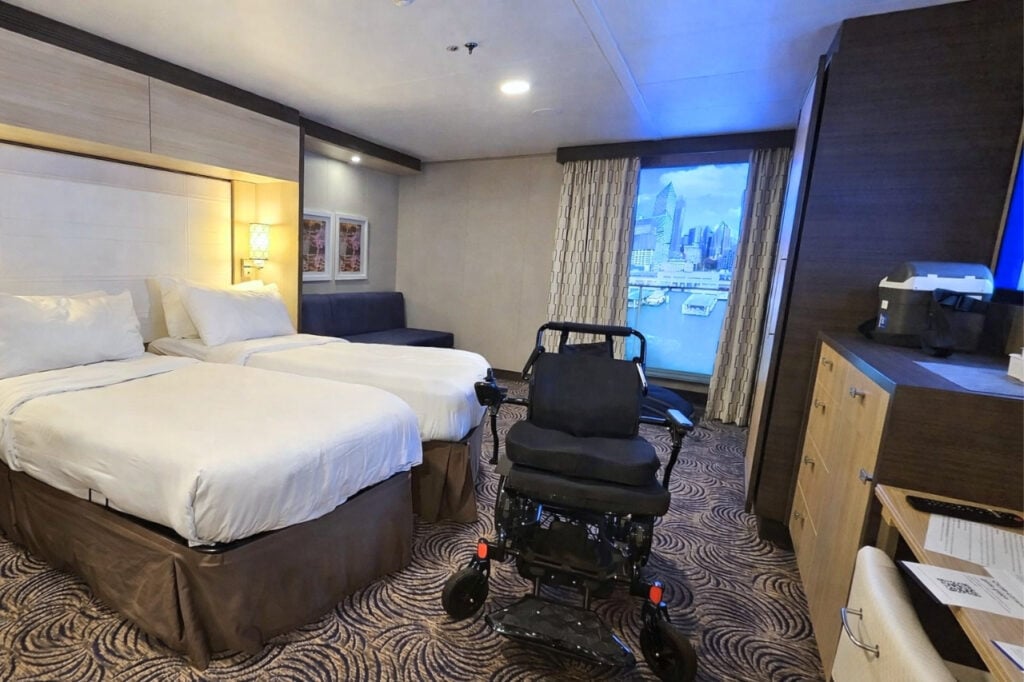
Some travelers hesitate to ask for mobility help because they think it has to be arranged far in advance.
That is ideal, yes, but check-in staff can sometimes still help with boarding assistance if needed.
This can be especially helpful for older travelers, people recovering from an injury, or anyone who just underestimated how long the walk through the terminal would be.
Cruise terminals can be bigger than expected and no one should feel awkward about asking.
6. Clarification on upgrade offers

This is not the same as getting a free upgrade on the spot, because that’s rare.
Still, check-in can be a good time to politely ask whether any upgrade opportunities are available or if the current assignment is final.
Sometimes there are last-minute changes. Sometimes there aren’t. But guests occasionally find out useful information, especially if cabins were reassigned or if there was a previous offer in the account.
7. Kids club details and registration info
Families boarding with children should ask about youth club registration, opening times, and any first-day sign-up steps.
On many ships this is free, but the process can vary quite a bit.
Some cruise lines require parents to complete registration early. Others make it simple, but still have limited hours on embarkation day.
Knowing the details right away can make the first afternoon much smoother.
8. A printed map or directions for embarkation day
Not every cruiser loves using the app for everything. Some just want a quick explanation of where to go first once onboard.
Check-in staff may be able to point guests toward lunch venues, muster stations, kids areas, or where to handle dining questions.
Sometimes a simple printed sheet or terminal handout is available too.
It sounds basic, but those first couple of hours onboard can feel weirdly chaotic.
9. Assistance with onboard account questions
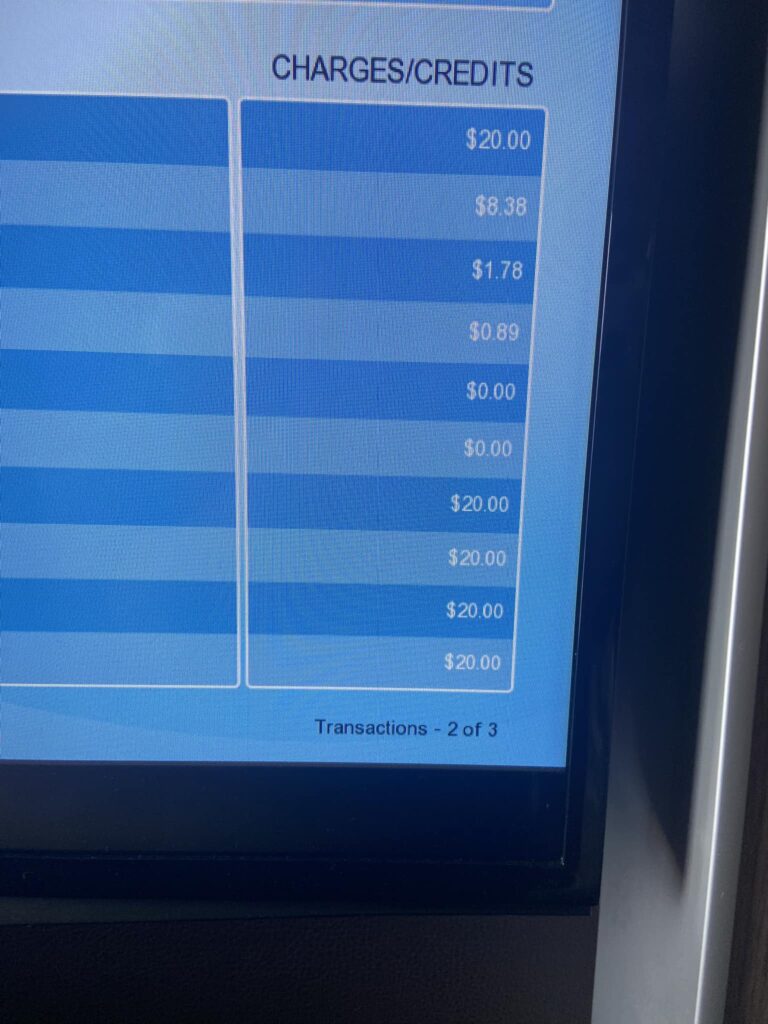
Before stepping onto the ship, it can be smart to ask about how the onboard account works, whether a credit card has been attached properly, and what to do if something looks wrong in the booking.
A lot of guests wait until later, then end up standing in a long guest services line.
Check-in staff may not be able to fix every account issue, but they can often explain what’s already set up and where to go if something needs attention.
10. Priority needs for the cabin
If there’s something important needed in the cabin right away, check-in can be a good moment to mention it.
Things like medical equipment access, a request for extra hangers, or a note about sleeping arrangements for the family.
Again, not everything is handled directly at the terminal, but staff can often point guests in the right direction early. On a busy embarkation day, getting ahead of these requests matters.
The earlier the crew knows, the easier things tend to be.
So remember, cruise check-in is not just about showing a passport and getting a key card.
It’s also a chance to ask for help, confirm details, and make the trip smoother before the ship even leaves port.
Some requests will depend on the cruise line, the ship, and how busy embarkation day is.
But polite questions can go a long way. A lot of cruisers miss out on helpful free things simply because they assume the answer will be no

