How would you feel if you paid $2,000 or more for a business-class ticket only to be charged an extra fee if you wanted a seat assignment in advance?
Some travelers on United Airlines will soon find out after the carrier announced on Friday a “new tiered fare structure” for its swankiest seats.
In other words, the basic economy concept has now come to the business-class cabin.
It’s part of United’s move to layer three fare types — Base, Standard and Flexible — across its existing Polaris and Premium Plus tickets. The latter two types largely mimic the premium fares United currently sells on its long-haul flights, but it’s the Base fares that are the big change. Just as airlines have done with their basic economy offerings in the back of the plane, United’s premium cabin Base fares will strip out many of the perks that have historically been included with the purchase.
Soon, customers who purchase the new Base business-class fare will have to pay extra to select a seat before check-in and will get only one checked bag for free instead of the usual two included on most premium cabin fares.
Base business-class passengers also will not get access to United’s Polaris lounge as part of their ticket, though they will be able to visit the standard United Club locations. The Base fare type will not be eligible for changes, refunds or travel credits for use on a new flight, either.
It’s not just the Polaris cabin that has gone basic. Included in the new tiered fare update is United’s Premium Plus (the carrier’s premium economy cabin), which includes recliner seats similar to those found in domestic first class.
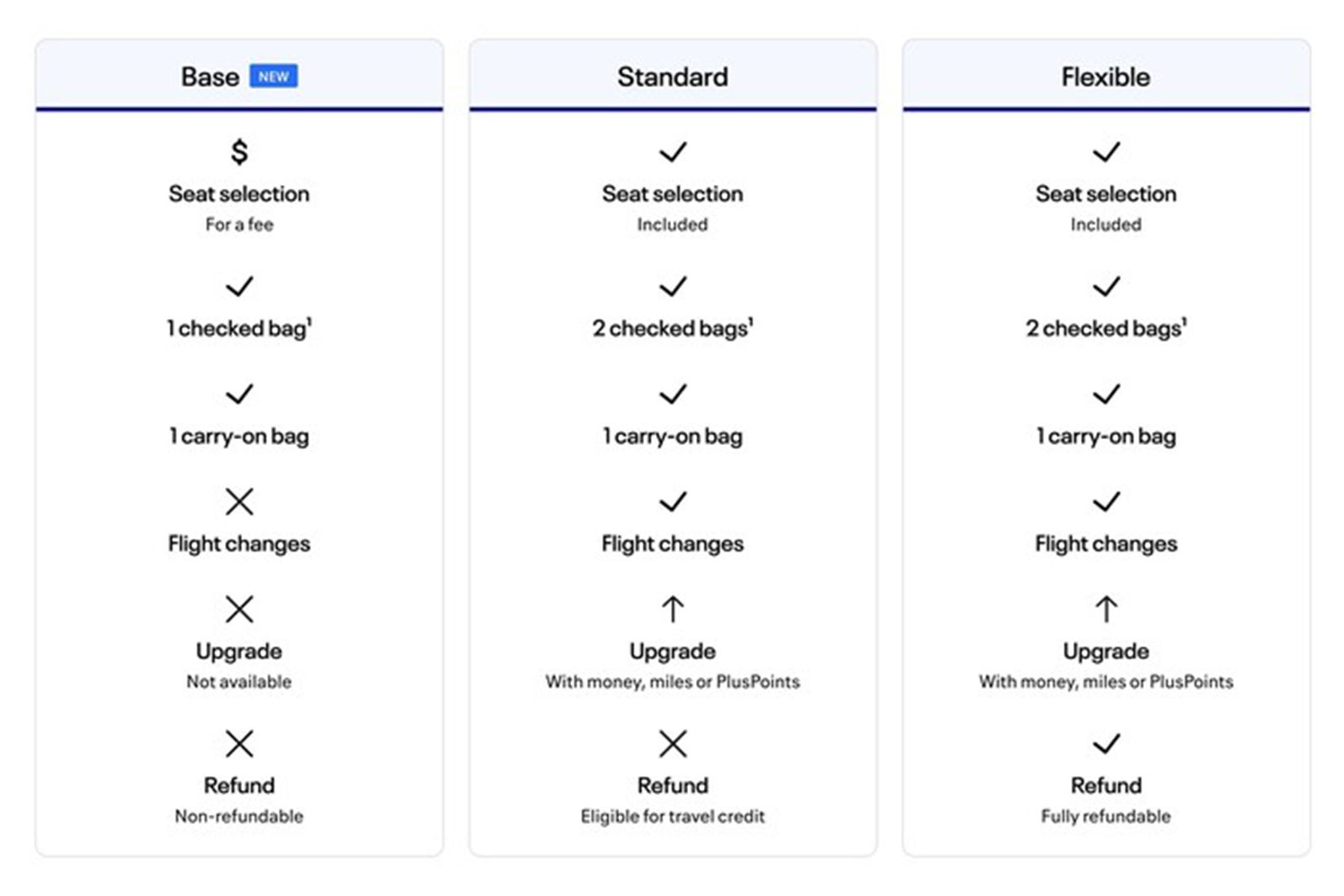
United’s new fare structure will roll out in “select markets this month,” according to the carrier, before expanding later in 2026 “to additional long-haul international, transcontinental U.S. and longer Hawaii flights.”
The tiered fare structure will eventually be available on every United plane with a Polaris business-class cabin. Those fly mostly on longer international flights, but — domestically — can also be found on certain transcontinental and Hawaii routes. The new fares are not planned to roll out to domestic and short international routes where United has only recliner premium seats that are sold under “first-class” branding.

Reward your inbox with the TPG Daily newsletter
Join over 700,000 readers for breaking news, in-depth guides and exclusive deals from TPG’s experts
For United, the new pricing strategy comes amid a broader overhaul of the carrier’s offerings.
Among the most recent, sweeping changes to United’s MileagePlus program that went into effect April 2 is an overhaul to how customers earn miles. Those who hold one of United’s cobranded credit cards were prioritized, while those who do not face drastically reduced earning levels.
The airline is also in the midst of a refresh of its plane interiors that it hopes will position it as a rival to Delta Air Lines in the premium market. United’s economy cabin will get an update, too, as the carrier continues its efforts to move upmarket relative to other U.S. rivals.
As for its new tiered premium fares, United is the first U.S. carrier to join what’s been a growing trend at airlines overseas. While U.S. travelers have groused about these types of restrictive rules added to pricey business-class tickets — early adopter British Airways has been a particular lightning rod on the topic, though other carriers like Air France and Lufthansa also have similar tiered fares in place — any backlash to the move has not been strong enough to get airlines to reconsider.
In fact, the topic has gained steam in the U.S. over the past few years, with Delta executives making little secret of their consideration of such a move.
Mimicking what airlines said when they first rolled out basic economy more than a decade ago, carriers say that adding fees to a basic fare type lets passengers avoid paying for perks they don’t care about via a watered-down ticket type.
In rolling out its premium fare update on Friday, Andrew Nocella, United’s chief commercial officer, said that “these new tiered options give customers more choice and make it easier to find a fare that includes the benefits they want most — whether that’s a great value, added perks, or maximum flexibility.”
How will U.S. flyers respond now that this shift in business-class pricing has arrived stateside? Only time will tell, but — for now — the momentum seems to be on the side of the airlines.
Stay tuned. …
Related reading:

