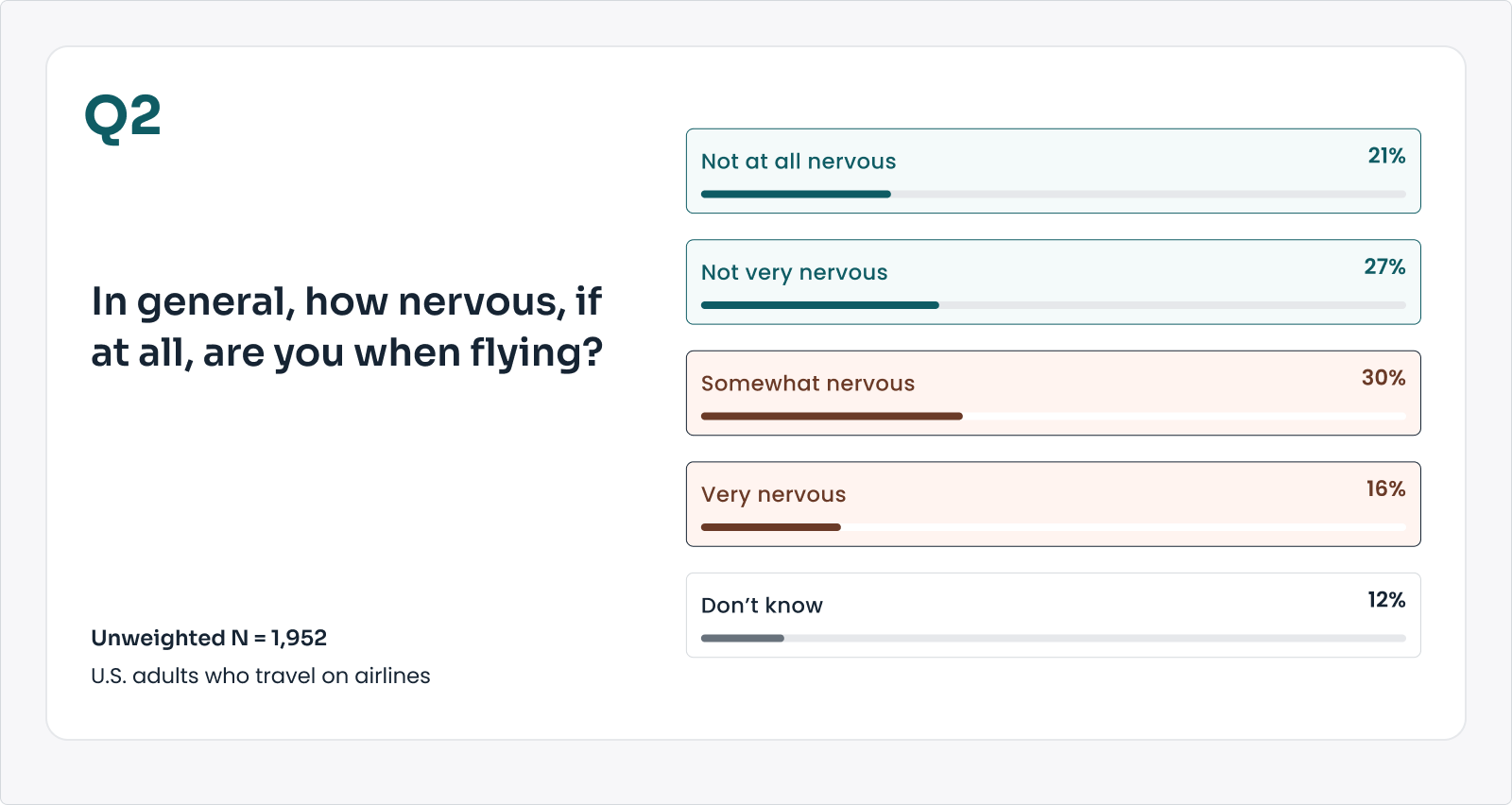
A year after a deadly collision in the sky above Washington, D.C., that killed 67 people, a new TPG/YouGov survey finds that even though a majority of U.S. air travelers think airline travel is generally safe, a whopping 74% admit to being not very, somewhat or very nervous when flying. Within that breakdown, 46% of flyers report being somewhat or very nervous when flying.
This is TPG’s second consecutive year commissioning this survey. We began the polling in light of a series of incidents that had some questioning airline safety, including that fatal midair collision last January, a Delta Air Lines regional flight that flipped over on landing in Toronto last February and a door plug blowout on an Alaska Airlines flight the year before. Those and other recent incidents understandably have some flyers nervous.
We wanted to know if Americans still feel that flying is safe.
Fear of flying
For the second year in a row, we asked respondents how safe they think flying is right now. Seventy-four percent of Americans think airline travel right now is either somewhat (36%) or very (37%) safe, while only 11% said flying was not safe at all or not very safe.
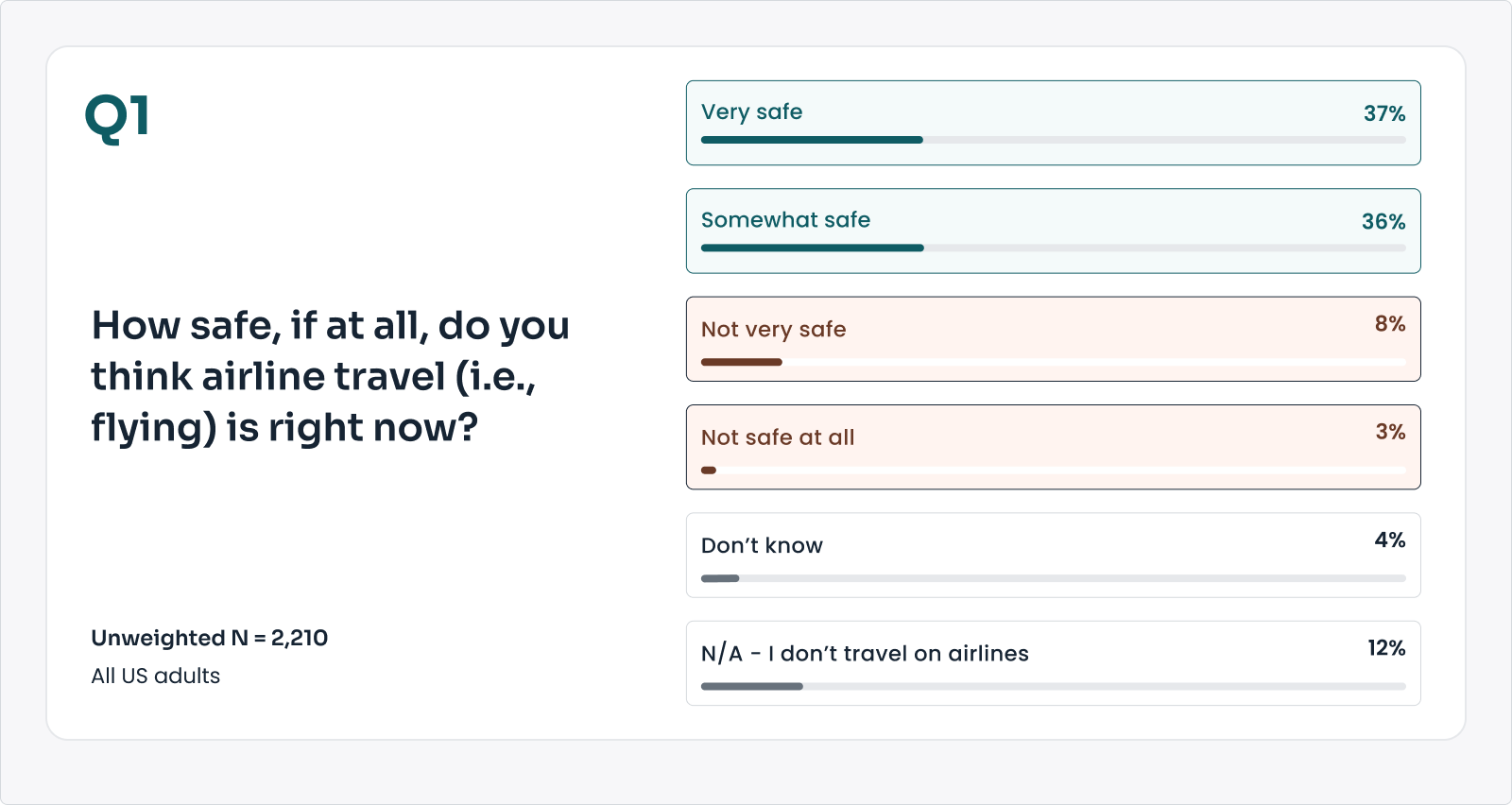
That’s a big improvement over last year, when only about one in four (27%) respondents said travel is “very safe” and a whopping 28% said they did not believe airline travel is safe at all. Last year’s poll was conducted by The Harris Poll — a different pollster — for TPG.
We also asked how nervous air travelers were, if at all, when flying. Twenty-one percent said they are not at all nervous when flying, but nerves abound otherwise. Twenty-seven percent said they were not very nervous, 30% said they were somewhat nervous and 16% said they were very nervous.
Impact on travel
While a fear of flying doesn’t tend to dissuade most folks from traveling altogether, it does change behavior.
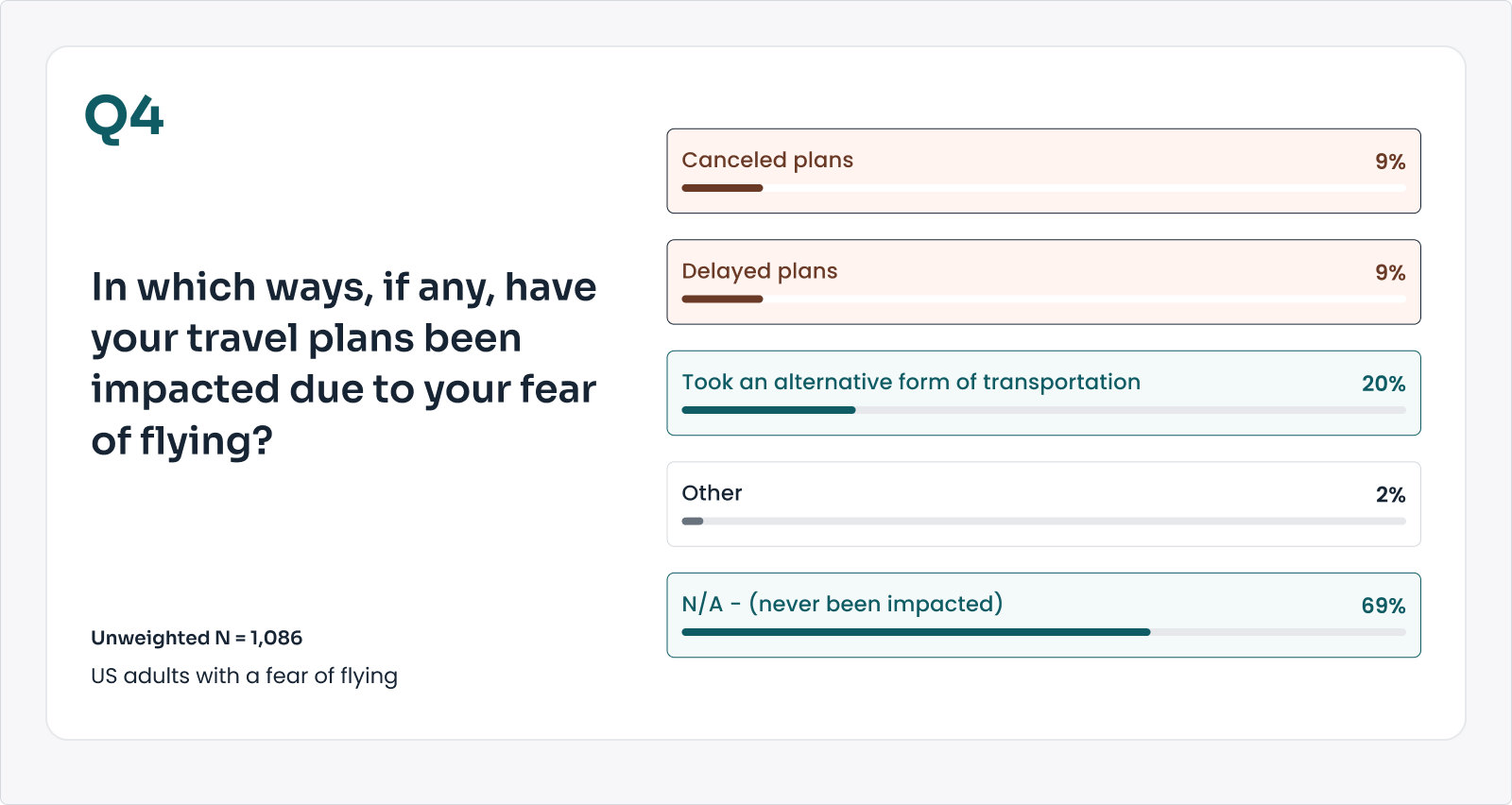
Thirty-eight percent of flyers with a fear of flying, whether slight or significant, said that this fear has led them to change their travel plans in some way. Roughly 9% of those flyers said they have delayed their plans, while another 9% have said they have canceled their plans. Another 20% of those respondents have found alternative forms of transportation.
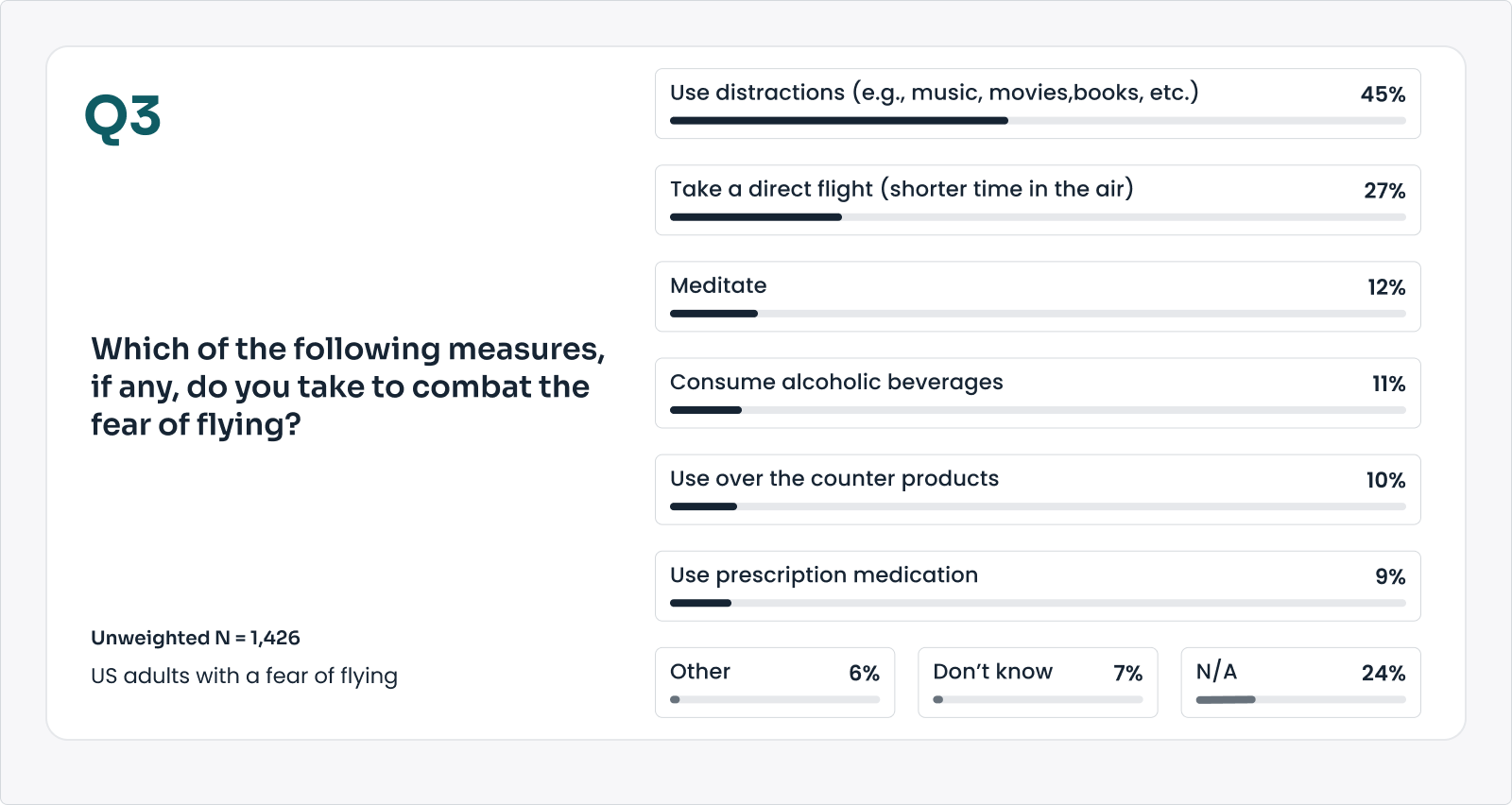
Among U.S. adults who are nervous flyers, 45% use distractions like music, movies, games and books to combat their fear of flying. Nine percent of those use prescription medication (like Xanax), while another 10% take over-the-counter medications, 11% consume alcohol and 12% meditate.

Reward your inbox with the TPG Daily newsletter
Join over 700,000 readers for breaking news, in-depth guides and exclusive deals from TPG’s experts
We also asked respondents about the impact of recent airline safety incidents. Thirty-nine percent of flyers reported no change in their level of nervousness in light of recent airline safety incidents. Still, 46% said they are somewhat or much more nervous.
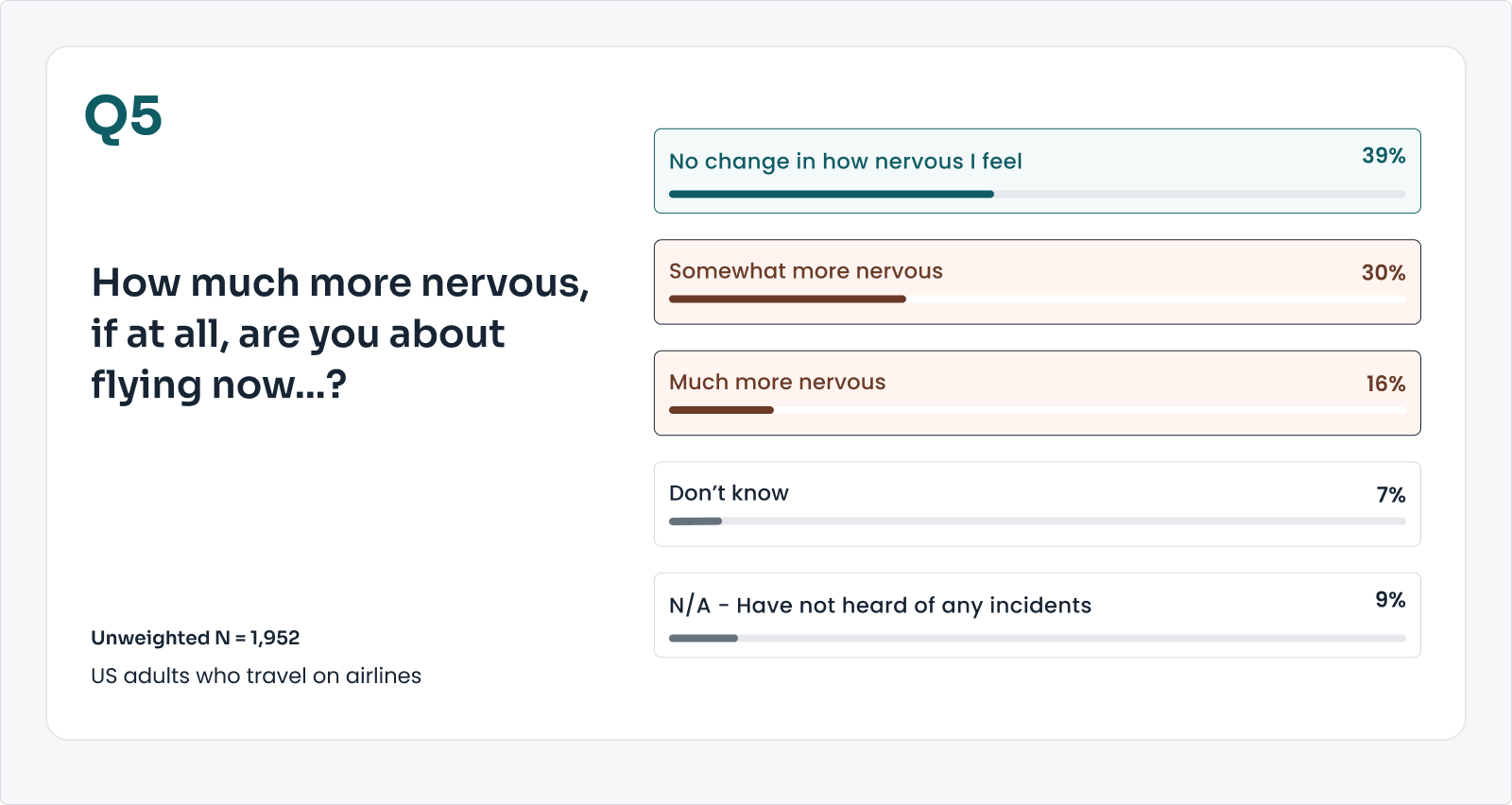
Still, that added nervousness didn’t have a major impact on planning; only 3% of those aware of past safety incidents in the past few years said they are canceling travel plans, and 5% said they are delaying them.
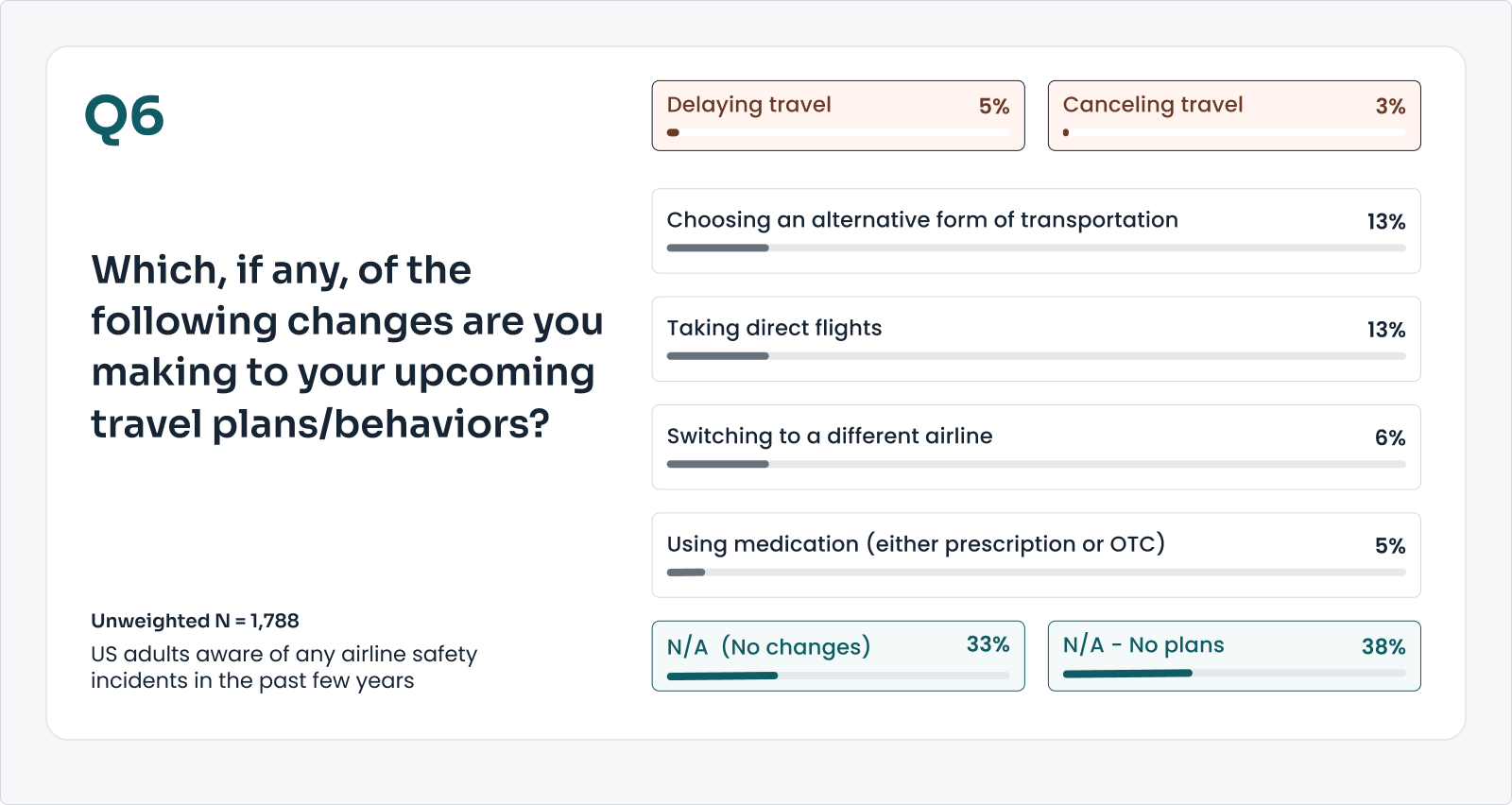
Another 13% said they are taking direct flights so they have less time in the air, and 13% said they are choosing an alternate form of transportation.
Bottom line
A large number of Americans are still nervous about flying, according to YouGov in a new survey commissioned by TPG. And even though some time has passed since the airline chaos of early 2025, 45% of flyers still said they are more nervous about flying after airline safety incidents in the past few years.
Related reading:
The Points Guy commissioned YouGov Plc to conduct the survey. All figures, unless otherwise stated, are from YouGov Plc. The total sample size was 2,210 U.S. adults, among whom 1,952 are flyers. Fieldwork was undertaken between Feb. 17 and 19, 2026. The survey was carried out online and meets rigorous quality standards. It gathered a nonprobability-based sample and employed demographic quotas and weights to better align the survey sample with the broader U.S. population.

