One of the dining rooms in the multilevel space.
Photo: Michael Kleinberg Studio
Jyotin Sethi first thought about building a restaurant in New York more than a decade ago, after Gymkhana opened in London in 2013 and became a hit. He flew to New York in 2015 to see about transplanting that success here. “But we felt that New York wasn’t ready,” he says, “and New Yorkers weren’t overly familiar with the cuisine.” The pandemic only slowed things further. Sethi’s company, JKS Restaurants, runs 35 establishments around the globe, including Trishna, Hoppers, and Sabor. He credits the wave of Indian restaurants that have come up in the past five years, such as Dhamaka and Semma, for laying some groundwork here. “New York does Italian, Japanese, Korean, and steakhouses amazingly well,” he says, “but with other cuisines, there’s an opportunity for people like us to come in and broaden out what’s already a really great foundation.”
Sethi is doing that with Ambassadors Clubhouse, the spectacular Punjabi spot that shares an address with A24’s Manhattan headquarters and will open its doors next week. In its ambition, size, and theatricality, it calls to mind the grand midtown spectacles of a previous era — Joe Baum’s Four Seasons and Forum of the Twelve Caesars, the Russian Tea Room — as well as this city’s history of Indian fine-dining spots, like Nirvana, which sat 16 stories above Times Square in the 1970s, or Madhur Jaffrey’s Dawat during Reagan’s second term. But while Indian cooking is more creative than ever in New York, and regional cooking shines, Punjabi restaurants remain rare.
“Other Indian restaurants are great with food and beverage,” says Karam Sethi, Jyotin’s brother, co-founder, and the K in JKS (Sunaina Sethi, their sister, is the S). He believes ambience sets his restaurant apart, and the interior, spread over two floors, is a vision of generational wealth in the subcontinent. The siblings re-created elements of their grandfather’s 1960s summer house, with some furniture and other fixings shipped from India. A velveteen paisley carpet runs across two floors. A silver bar is modeled after the owners’ grandparents’ Delhi home. Fabric resembling Kashmiri cashmere lines the walls, and the flatware is silver-plated brass imported directly from, yes, India.
In true Punjabi fashion, “abundance” influences everything. Of the few hundred staff, many of them local, everyone is trained to remember whether regulars prefer still or sparkling water. “In London, staff meetings start at 9:30 a.m.” Sunaina says. “In New York, people showed up at 8:15, excited to get going.” They also brought two full-time halwais — generational sweet-makers who usually work within families — over to Manhattan.
The sprawling menu is filled with regional specialties, including satpura, an accordion-shaped, seven-layer pastry stuffed with samosa filling, and butter chicken chops evoke the famous Aslam Chicken shop in Old Delhi. All of the cooking is inspired by recipes from the palaces of Punjab, dhabas, home recipes, and street food. (The setup involves two charcoal tandoors and traditional sigdis for bread and kebabs. “It took us nine months to get the licensing for the tandoors,” Karam says, noting that those will be used for breads.)
Each set meal begins with a rainbow assortment of papad, or crackers, the team buys from a 200-year-old shop in Amritsar, Punjab, with an array of chutneys. Here chef Karan Mittal spotlights lesser-known produce of Punjab’s winters like methi, or fenugreek, with plump red shrimp, or a mooli, or radish salad with a grilled whole turbot. There’s also an achaari (pickle-spiced) duck over matthi, a savory shortbreadlike biscuit, and a zingy chicken-tikka-filled taro basket, a take on raj kachori, or the “king of chaat.”
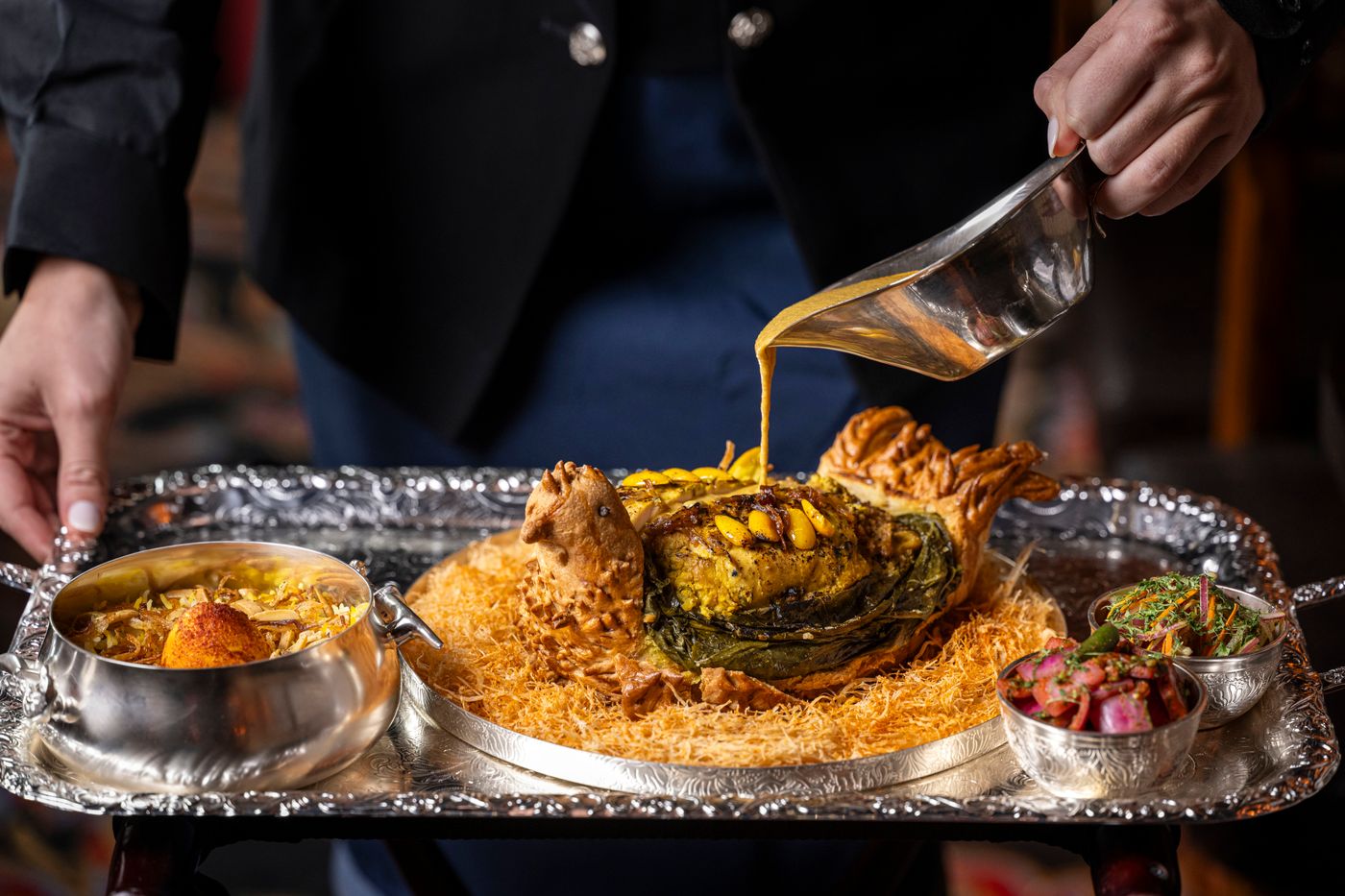
Atta chicken.
Photo: Evan Sung
As in Punjab, barbecue is a big deal here. New York exclusives include a lamb seekh kebab wrapped in gauzy warqi paratha and a lush veal-cheek korma perfumed with saffron. “These are Punjabi dishes guests might have eaten hundreds of times,” Karam says. “Here, they’re served in their highest, most delicious form.” The big-ticket items at Ambassadors include raan, a roasted whole leg of lamb that’s hard to come by in the U.S. Atta chicken, meanwhile, is often a rustic dish of whole chicken encased and cooked in wheat dough. The Ambassadors’s version stuffs a heritage poussin and covers it in a bird-shaped, edible pastry shell, which arrives with a sidecar of almond curry and egg pilau.
Everything is operating at a similarly high level of showmanship. One private-dining space, the Jungli Room, draws from India’s hunting culture; it seats 14 and has animal-print curtains to demarcate it. A second PDR, named the Raja Rani Room (“King and Queen”), feels more formal, studded with blue Jaipuri tiles. They’re both in the lower-ground floor, which can seat 75 more or be converted to its own party room. Throughout, a playlist of Punjabi hits, from Panjabi MC’s 2002 hit “Beware of the Boys” to songs by newer artists like Yung Singh, thumps. “We’ve got a DJ patch,” Karam says. “We can fly out Panjabi MC, ready to go, if you want.”
The siblings have been doing a lot of flying on their own these days. The trio opened Gymkhana at the Aria Resort & Casino in Las Vegas in December (Teyana Taylor and Brooklyn Beckham were in attendance). They have been making weekly trips back and forth to the States in shifts ahead of the launch. The way they break up their responsibilities, Sunaina explains, reflects the way they grew up: “Karam in the kitchen, Jyotin doing the schmoozing,” she says, “and me running around, making drinks.”
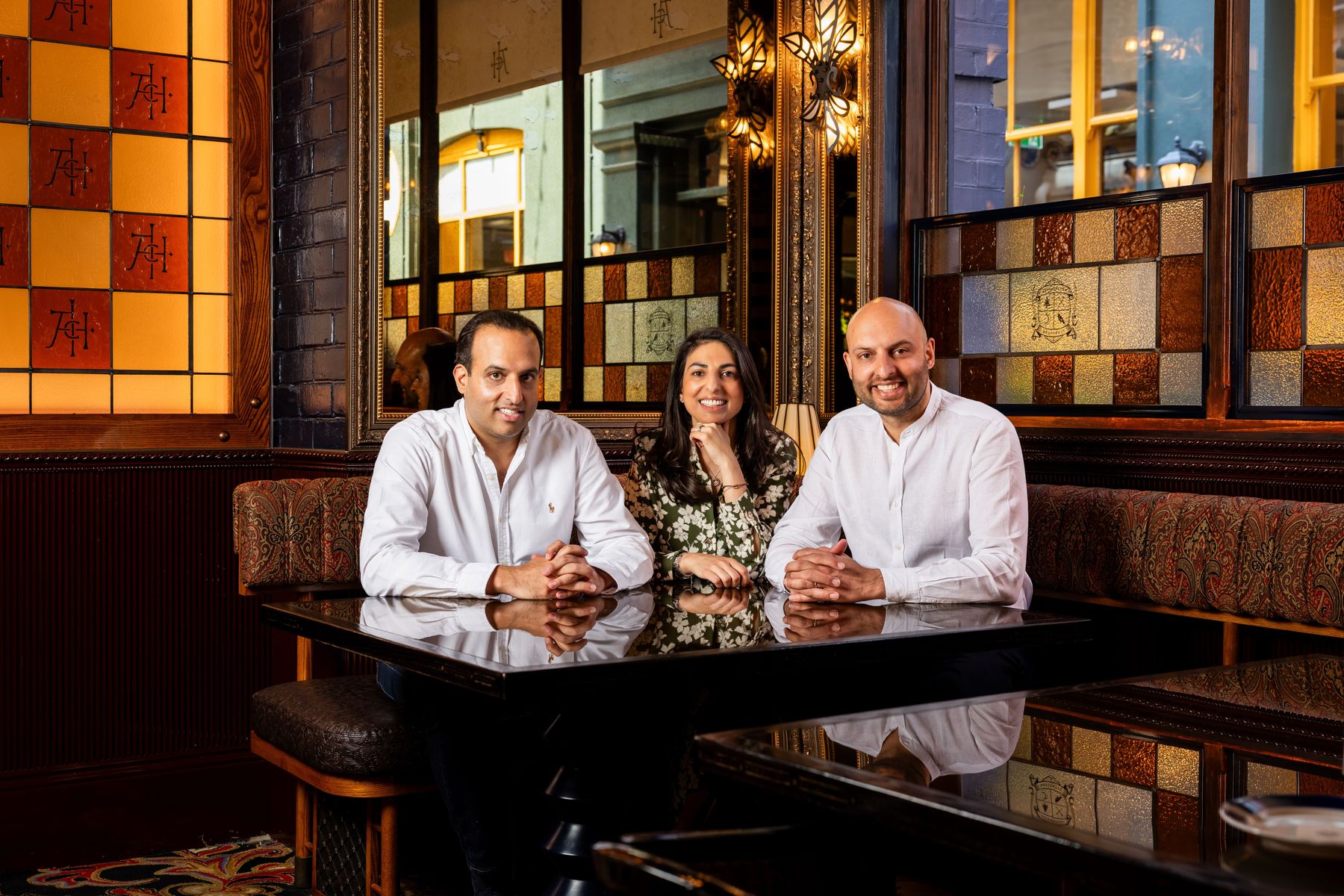
Siblings Karam, Sunaina, and Jyotin Sethi.
Photo: JKS Restaurants
See All

