Shot over a whopping 91 days, Christopher Nolan’s critical and commercial behemoth The Odyssey lives up to more than its legendary namesake. But Matt Damon et al didn’t just have the one film studio in which to shoot. Famous for his love of practical effects over CGI and real locations, in true G Adventures fashion, Nolan and his cast and crew travelled all over the world to shoot their adaptation of Homer’s epic. So, without further ado, here are eight far-flung locations where The Odyssey was filmed:
The burning streets of Troy: Aït Benhaddou, Morocco
Forget green screens. When Nolan wanted to show the colossal, fiery downfall of ancient Troy, he took the production straight to the magnificent red clay fortress of Aït Benhaddou in Morocco. This iconic, UNESCO-listed earthen village was completely transformed by the crew into the legendary besieged city — just like Gladiator, The Mummy and Lawrence of Arabia before it.
Flashbacks throughout the film show Matt Damon’s war-weary Odysseus navigating the chaotic, smoke-filled clay alleyways as the city literally falls and catches fire around him. The ancient mud-brick walls provided the perfect dusty, sun-baked grandeur for the start of our hero’s epic troubles.
Explore it on: Morocco Kasbahs & Desert
The entry of the Trojan Horse: Essaouira, Morocco
Before the long voyage home could begin, the Greeks had to pull off history’s most famous sneak attack. The massive, action-heavy sequence featuring the towering Trojan Horse was filmed right against the dramatic, ocean-facing sea walls of Essaouira, Morocco.
The city’s historic stone ramparts and crashing Atlantic waves perfectly simulated the impregnable defensive walls of Troy, and hundreds of local extras joined the primary cast on the battlements to film the deceptive victory celebrations.
In a somewhat striking, poetic visual, Nolan insisted on a sequence showing the massive wooden Trojan Horse partially buried in the windswept sands of the Moroccan coast after the city’s destruction. This specific image was actually something Nolan had dreamed of bringing to life since 2003, back when he was briefly in the running to direct Warner Bros.’ Troy before Wolfgang Petersen took the helm.
Visit it on: Highlights of Morocco
The lair of the Cyclops: Nestor’s Cave, Pylos, Greece
For the terrifying, high-stakes encounter with Polyphemus the Cyclops, the crew headed straight to a spot with genuine mythological pedigree: Nestor’s Cave in Pylos, Greece. Perched high up above the golden sands of the stunning Voidokilia Beach, this massive cavern stood in for the giant’s lair.
This is where Odysseus and his terrified crew find themselves trapped by the one-eyed monster, who is all too happy to munch on a few wandering soldiers as and when they are captured as they try to flee. The raw, jagged interior of the atmospheric cave required practically zero digital touching up, giving the horrifying sequence a grounded, claustrophobic reality.
Discover mainland Greek sites nearby on: Journeys: Discover Mainland Greece
Circe’s island stronghold: Findlater Castle, Moray Firth, Scotland
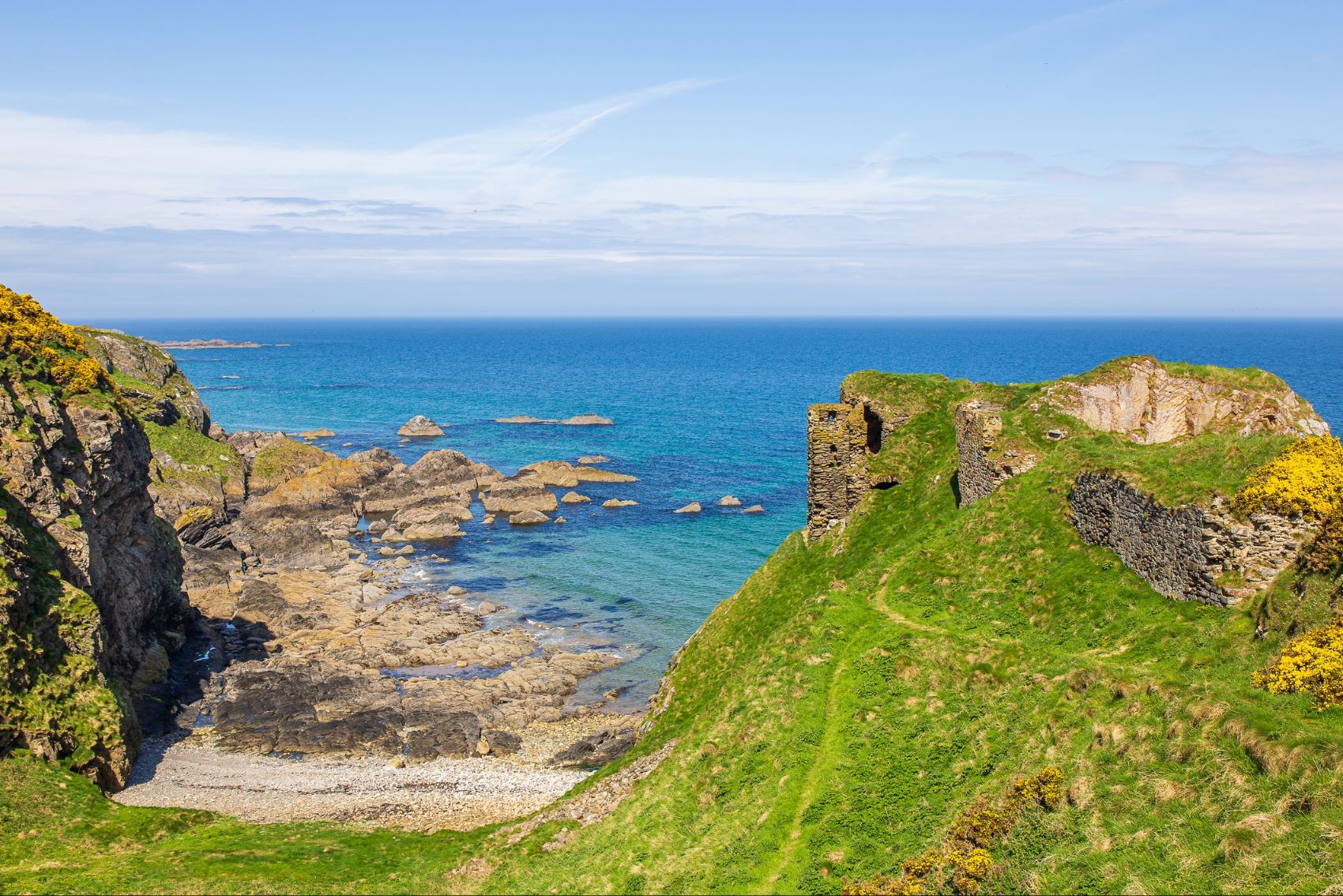
To capture the eerie, mystical atmosphere of Aeaea — AKA the island of the sorceress Circe — Nolan bypassed sunny Mediterranean climates and headed to the moody, wind-swept coast of the Moray Firth in Scotland, north of the Highlands. The deeply unsettling and grotesque scene featuring Circe (played with chilling intensity by Samantha Morton) turning desperate soldiers into pigs was filmed right at the dramatic ruins of Findlater Castle.
Perched precariously on a cliff overlooking the crashing waves of the North Sea below, the crumbling stone walls provided the ultimate raw, isolated backdrop for this mythic transformation. No wonder this setting and her incredible performance have become standouts for critics and audiences alike.
See Moray Firth from Inverness on: Highlights of Scotland
The terrifying giant ambush: Culbin Forest, Scotland
Scotland pulled double duty for Nolan’s epic! Set just an hour’s drive away from Circe’s castle ruins, the production crew moved into the dense pine woodlands of Culbin Forest along the Moray coastline.
This atmospheric, shadowed forest played host to the terrifying army of Laestrygonians; the gigantic cannibals who ambush Odysseus’s scouts. Matt Damon and the crew spent days sprinting through the towering pines, utilising the natural, eerie light filtering through the canopy to create a sequence filled with pure, heart-pounding tension.
The bleak gates of Hades: Hjörleifshöfði, Iceland
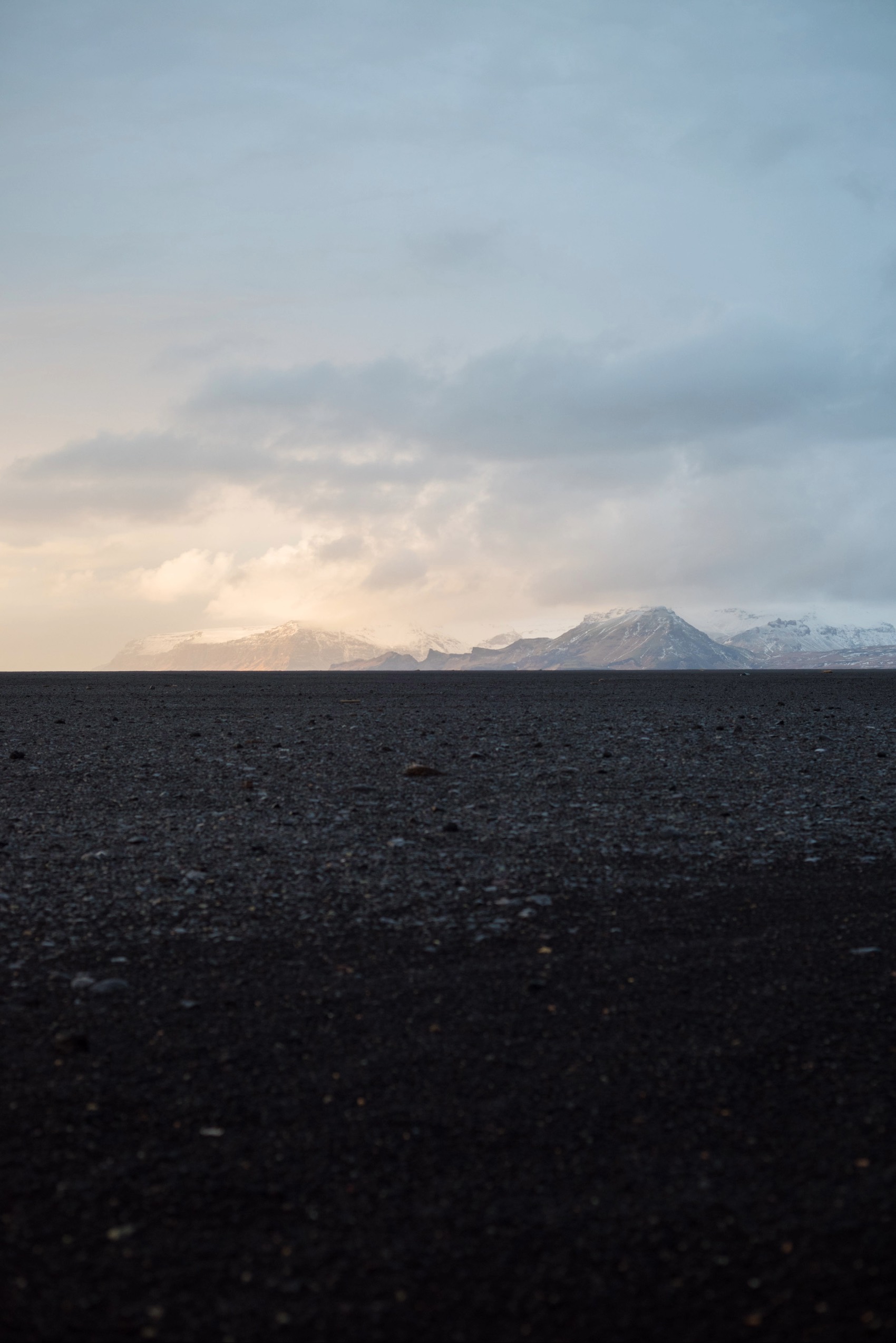
When you need to film Odysseus descending into the actual Underworld to speak with the dead, you go to a place that looks like the dawn of time. Nolan headed back to his favorite cinematic playground of Iceland (also featured prominently in Interstellar), taking a crew of a thousand people to the dramatic black sands of Hjörleifshöfði on the southern coast.
Filmed in the hazy, endless perma-daylight of the Icelandic summer midnight sun, the desolate volcanic landscape stood in for the bleak threshold of Hades. Matt Damon and Elliot Page playing Sinon braved the freezing winds on these striking volcanic shores, resulting in a creepy, ethereal sequence that feels completely, well, not of this world.
Head to the south coast of Iceland on: Best of Iceland
The home of the winds: The Aeolian Islands, Italy
To capture the mythical realm of Aeolus — the keeper of the winds who gifts Odysseus a bag of trapped tempests — Nolan bypassed studio water tanks and took his crew to the volatile Aeolian Islands just north of Sicily. The production leaned heavily into the raw, volcanic textures of the archipelago, setting scenes against the backdrop of the continuously active and mighty volcano on Stromboli.
Filming the tumultuous naval maneuvers here meant the production team had to contend with actual choppy seas and jagged volcanic coastlines. To keep things entirely authentic, Nolan imported the Draken Harald Hårfagre —a real, 35m (115 ft) wooden longship built in Norway — casting it as Odysseus’s main vessel. Matt Damon and the cast spent days aboard the massive Norwegian ship, battling real-world currents to mirror the unpredictability of the ocean gods.
The islands also provided one of the most magical, unscripted moments of the entire mammoth shoot: during a wide aerial sequence of the ship traversing the deep blue Tyrrhenian Sea, a pod of wild dolphins began jumping alongside the vessel. Nolan’s cameras kept rolling, and the stunning, completely real shot of the dolphins swimming made the film’s final cut.
See where the cast sailed on: Northern Sicily: Islands & Volcanoes
The palace overrun by suitors: Favignana, Sicily, Italy
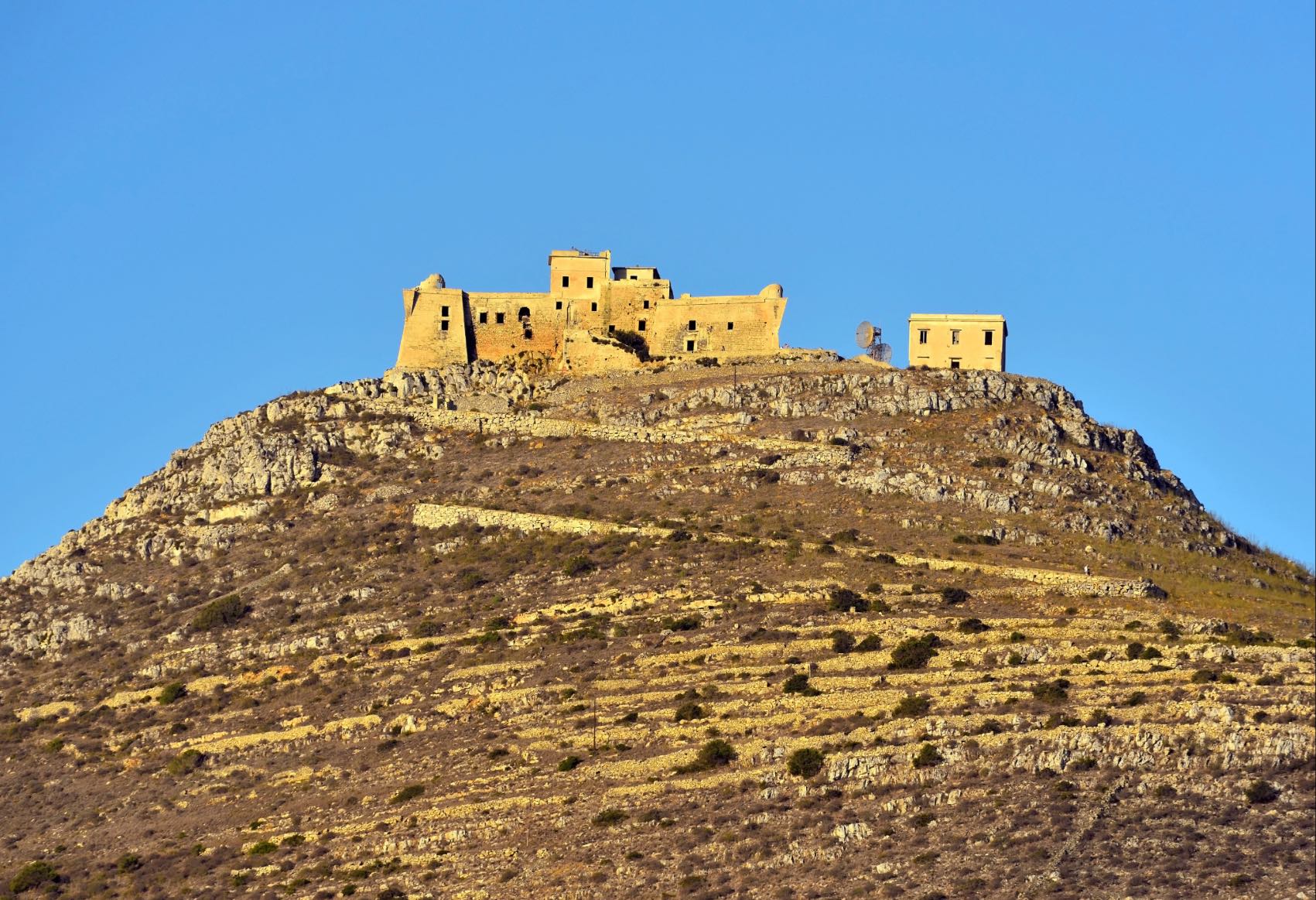
For Ithaca, Odysseus’ long-sought homeland where his palace has been overrun by sleazy suitors (hello Robert Pattinson) courting his beloved wife Penelope (Anne Hathaway), Nolan chose the sun-baked, rugged landscape of Favignana, a tiny, picturesque island tucked just off the west coast of Sicily in Italy.
The absolute centerpiece of the shoot was the historic Castello di Santa Caterina, crowning the island’s tallest hill.
Because the fortress is entirely unreachable by vehicles, Nolan’s legendary dedication to practical filmmaking meant the entire cast and crew had to hike 274m (900 ft) up the steep, winding mountain paths on foot every single morning for three full weeks. The sheer physical exhaustion of the team added a layer of gritty reality to the island scenes, making the hero’s ultimate homecoming feel completely earned.
Read more:
Queer movie filming locations around the world well worth travelling for
Lochs and legends: best of Scotland’s activities and outdoors
Isle be there: Greece’s must-visit Islands

