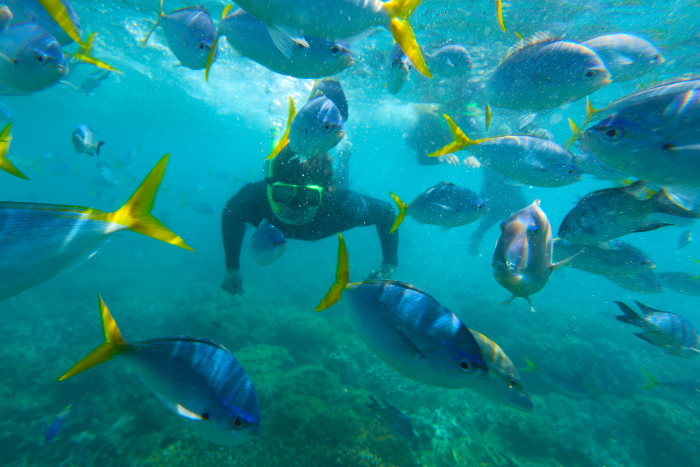
In honour of World Oceans Day on June 8, we’re celebrating the ocean’s greatest characters. Some are absolutely enormous. Some are tiny but mighty — we’re looking at you mr clownfish… Some look like they belong on another planet. And one can change colour and disappear right in front of your eyes…
From gliding past golden jellyfish in Palau to playing hide and seek with octopuses in Greece to swimming with giant sperm whales off the coast of Dominica, these are the marine encounters that turn an ordinary snorkel stop into the story you’ll still be telling years later. Mask on. Snorkel in mouth. Head underwater. Your adventure starts here…
Golden jellyfish
Where: Palau
Most people spend their lives trying to avoid jellyfish. In Palau, travellers fly halfway around the world to swim with them.
Jellyfish Lake is one of those magical places that sounds completely made up until you’re floating in it. Hidden among Palau’s jungle-covered Rock Islands, this emerald green marine lake is home to thousands of golden jellyfish that drift through the water like living confetti.
Separated from the ocean for thousands of years, they’ve evolved differently from their sea-going relatives in that they lack a sting and tentacles due to the lack of predators — creating one of the most unusual snorkelling experiences on the planet. One minute you’re paddling through crystal-clear water, the next you’re surrounded by a golden cloud of thousands of gently pulsing jellyfish.
For World Oceans Day, it’s the perfect reminder that some of the ocean’s most extraordinary wildlife encounters happen in the places you’d least expect.
Sperm whale
Where: Dominica
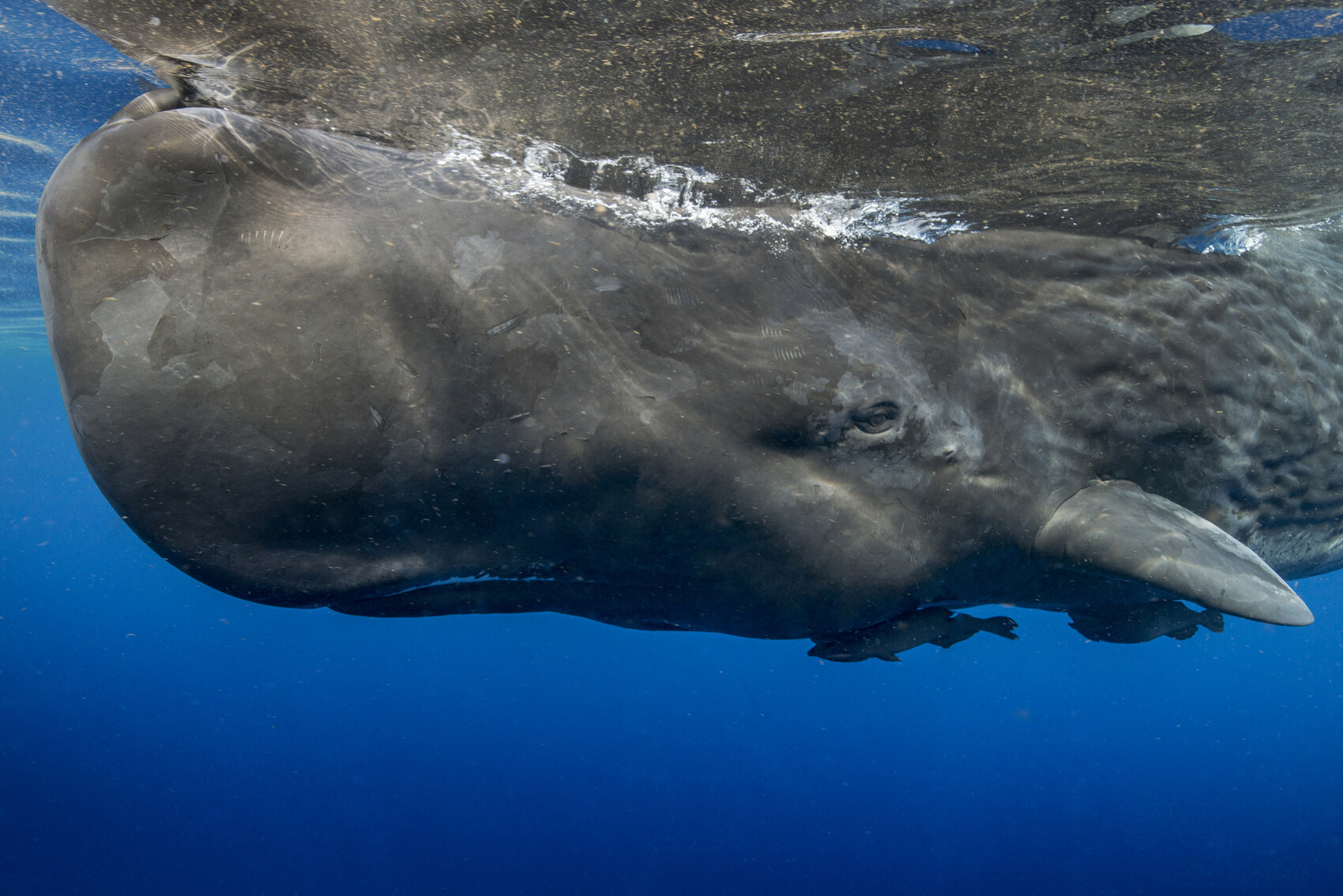
Some wildlife encounters make for a good photo. But swimming alongside a sperm whale? Now that’s the kind of experience that will have everyone forgetting to take one.
Dominica, the ‘Nature Island’, is the whale-watching capital of the Caribbean and home to around 200 resident sperm whales that stick around all year — the only place in the world where they do so. Thanks to the island’s steep underwater drop-offs, these deep-diving behemoths have everything they need right on their doorstep, including plenty of giant squid.
Seeing a sperm whale from the boat is one thing. Sharing the water with one is another. Watching one drift effortlessly through the deep blue — or hover vertically beneath the surface like it’s deep in thought — is a pretty good reminder that you’re just a guest in their world.
Napoleon wrasse
Where: El Nido, Philippines
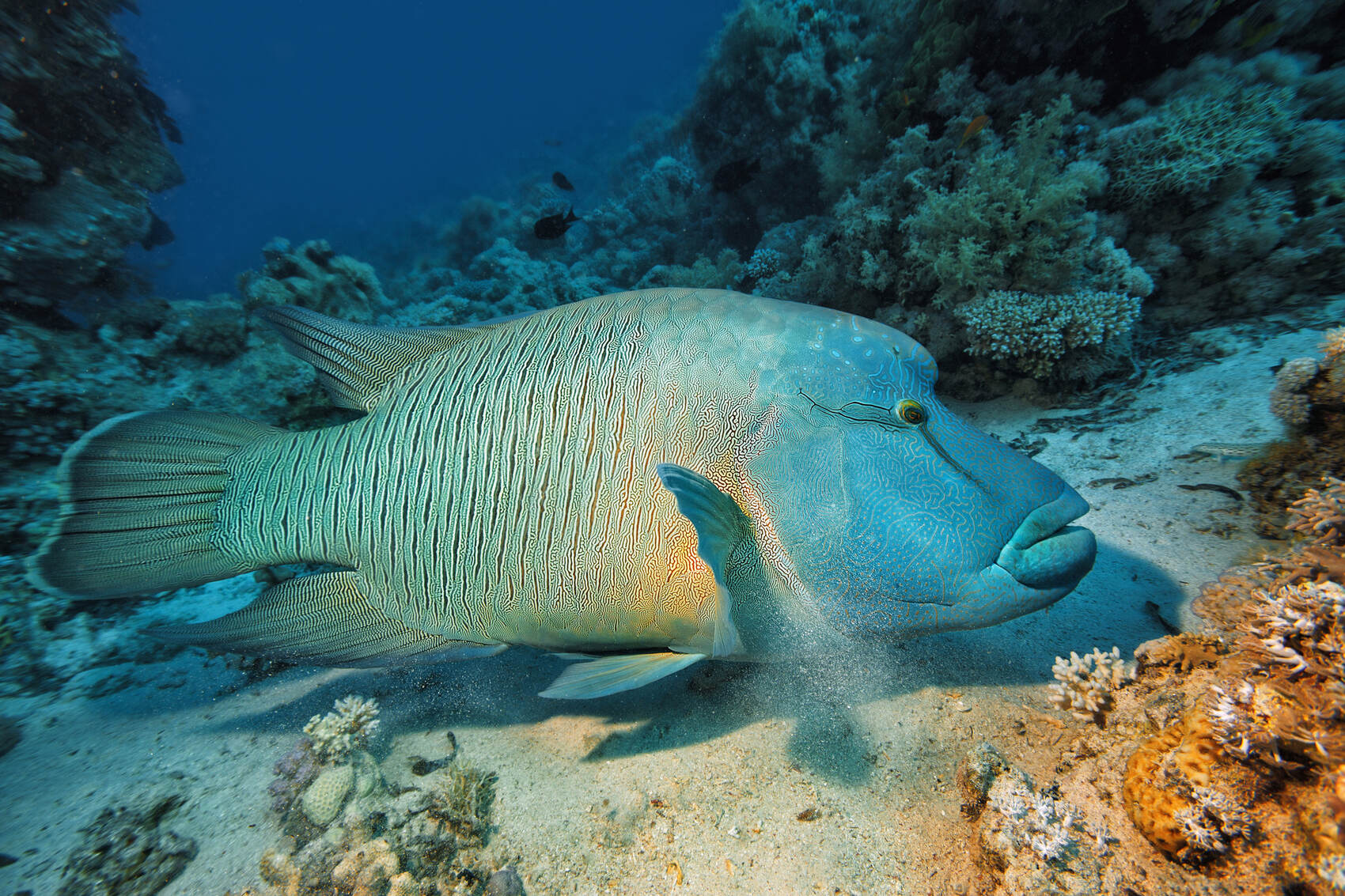
The waters around El Nido in the Philippines are famous for their hidden lagoons, towering limestone cliffs, and impossibly blue water, but the real action starts once you slip beneath the surface. Here, kaleidoscopic coral gardens teeming with marine life, and if you’re lucky, you might spot one of the largest reef fish in the world cruising past.
With its prominent forehead and hefty frame (up to two metres long), the Napoleon wrasse has the build of an underwater bouncer. Except this gentle giant is more interested in cruising coral gardens than checking guest lists.
Despite their size, the incredibly-vivid Napoleon wrasse are surprisingly calm characters. Rather than darting around the reef, they move with an easy confidence that makes them hard to miss — and even harder to forget.
Octopus
Where: Mykonos, Greece
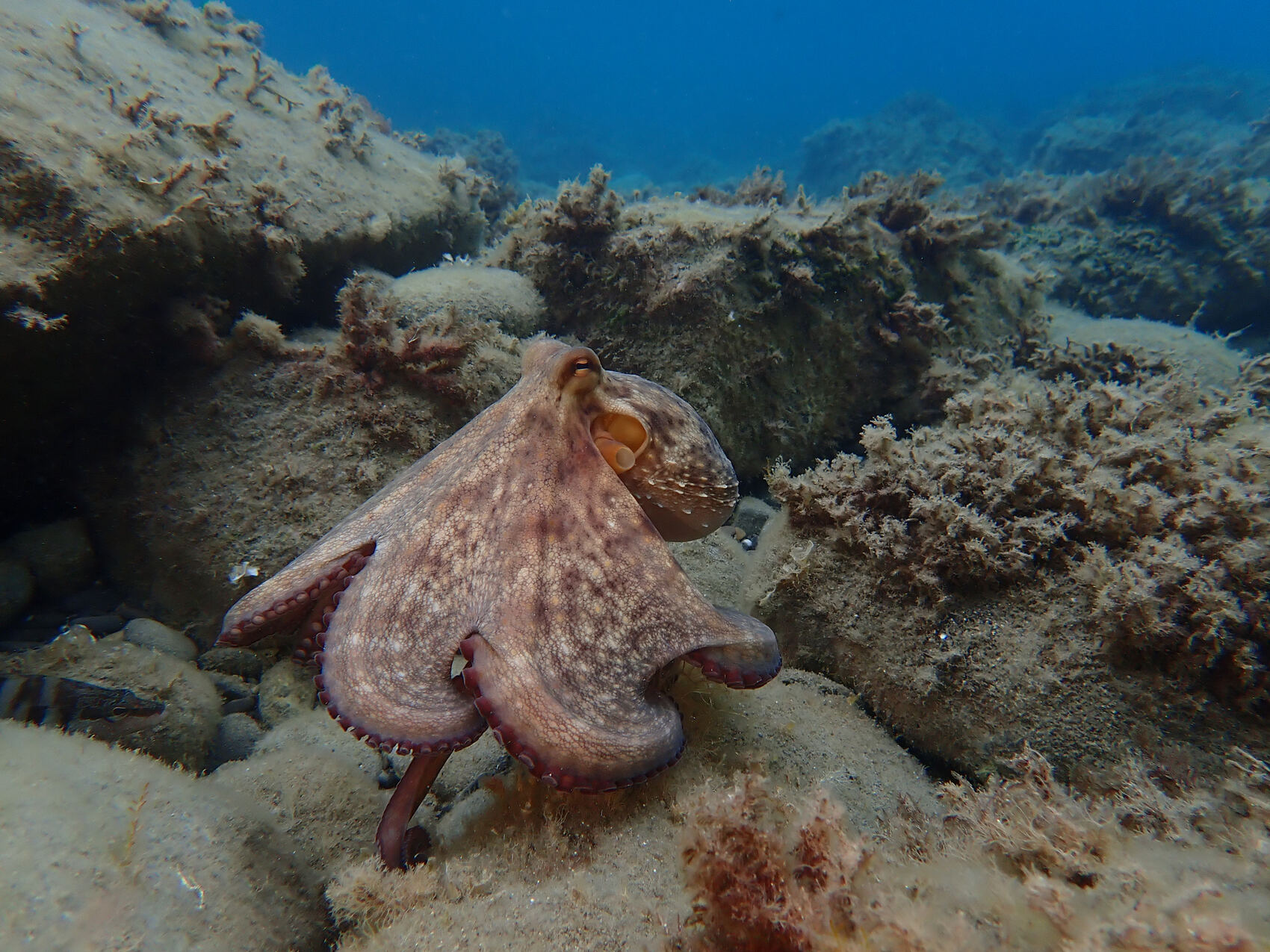
Spotting an octopus around Mykonos — or any of Greece’s beautiful islands to be fair — is basically a game of underwater Where’s Wally? These absolute masters of disguise can change colour, texture, and even shape so effectively that they seem to disappear in plain sight. You can stare directly at one and still swim right past without noticing.
Need a top tip? Look out for the painted comber fish, otherwise known as ‘the snitch’ or ‘the cop’. If a group seems unusually interested in a particular rock or a patch of seabed, there’s a decent chance that an octopus is hiding there and actively hunting. Needless to say; the fish are hoping to reap their scraps as a reward.
Unlike some visitors to Mykonos, these sneaky cephalopods aren’t interested in being the centre of attention. While the island’s famous beach clubs and sunset parties are happening above the waves, they’re busy showing off their own tricks below the surface — squeezing through impossibly tiny gaps, solving problems, and generally being far cleverer than seems entirely reasonable. Finding one takes patience. And potting one before it spots you? Now that’s the real achievement.
Seahorse
Where: Cala di Mitigliano, Amalfi Coast, Italy
The Amalfi Coast is well-known for its colourful villages clinging precariously to cliffs, glamorous yachts, and enough lemon-flavoured everything to keep an entire country happy. But just beneath the surface at Cala di Mitigliano, a different kind of icon steals the spotlight.
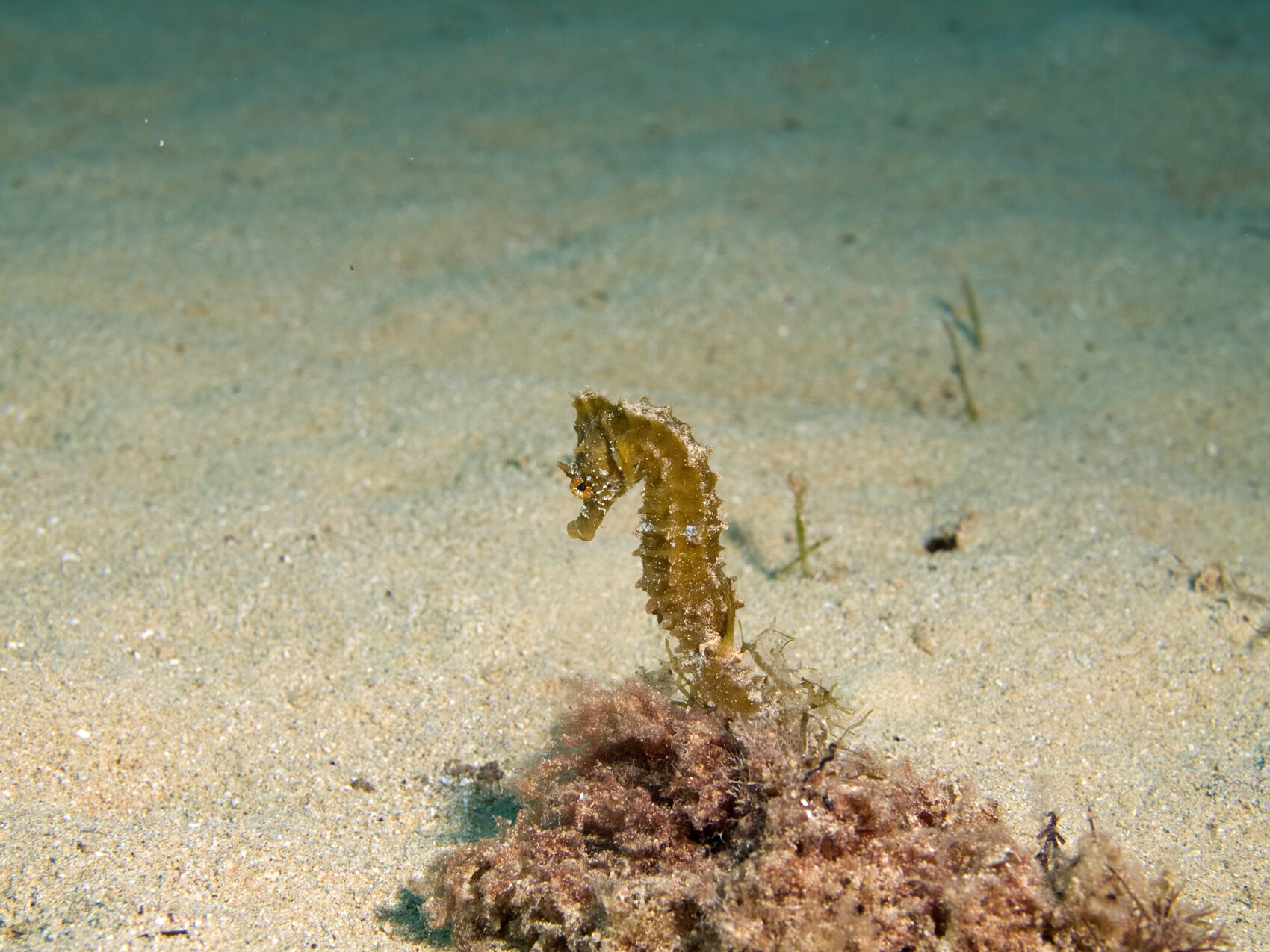
Seahorses may well be tiny, but spotting one feels like finding hidden treasure. Blending perfectly into the surrounding seagrass, they’re like their octopus pals — masters of camouflage and often go unnoticed by anyone swimming too fast.
Which is fitting, really. The best way to experience this quieter corner of the Amalfi Coast is to really slow it down. Take your time, explore the rocky coves and azure Mediterranean waters, and keep your eyes peeled. You never know when a seahorse might decide to reveal itself. And unlike most animal encounters, this is one where the dads carry the babies. About bloomin’ time hey girls?
Clownfish
Where: Southern Thailand
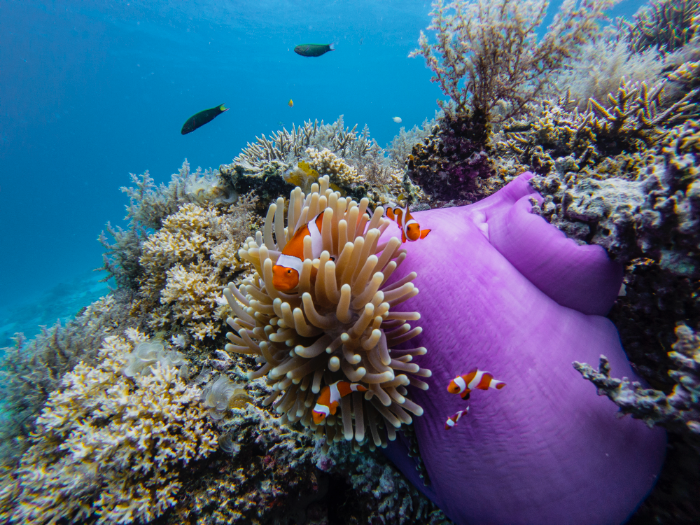
If you’ve seen Finding Nemo, you’re already familiar with charismatic clownfish. These bright orange swimmers are small, omnivorous fish that live in colonies. In their coral reef homes in places like the island of Ko Phi Phi, they form symbiotic relationships with sea anemones who let them live among their tentacles.
Anemones generally don’t sting their tiny roommates but clownfish have a thick protective mucous layer in case they do. In return for safe lodging, the clownfish feed on algae and bacteria to keep the anemones clean. Also, did you know that unlike our friend Nemo, clownfish aren’t always bright orange? Some are black, yellow or even muted shades of pink. Fun!
Dusky dolphin
Where: New Zealand
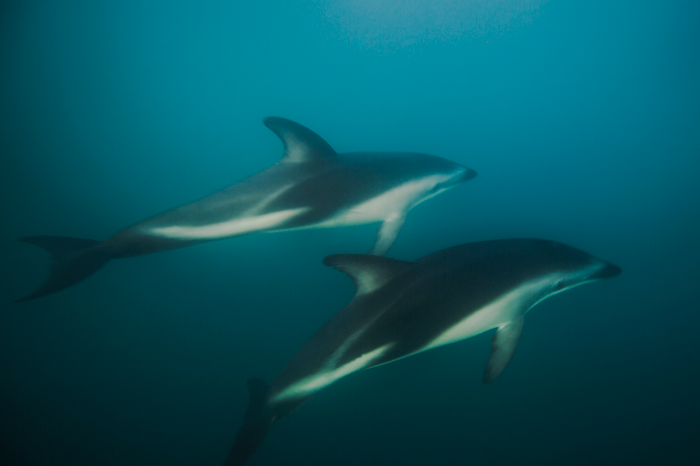
Known as one of the best places in the world to see wild dolphins, the coastal town of Kaikoura is located on New Zealand’s South Island. The dusky is very common here, especially in the summer months from October to April. As highly social creatures, they live in pods that can range from 100 dolphins to over 1,000. These large families help keep them safe from other predators like sharks and killer whales. Dusky are playful creatures and frequently flip and somersault over the waves which makes them especially fun to watch.
Nurse shark
Where: Belize
Thanks to the enduring impression left by Jaws, swimming with sharks sounds terrifying to many. The fact is that most of these large fish aren’t nearly as fearsome as portrayed on screen. In the waters off Caye Caulker in Belize, you can happily swim and snorkel with nurse sharks. These slow-moving smoothies cruise the ocean floor, where they feed on small fish, shrimp, and squid. Although they’re generally docile, they still have a mouth full of serrated teeth. As with all marine life, keeping your hands to yourself is a good rule of thumb and often the law.
Sea lion
Where: Galápagos Islands
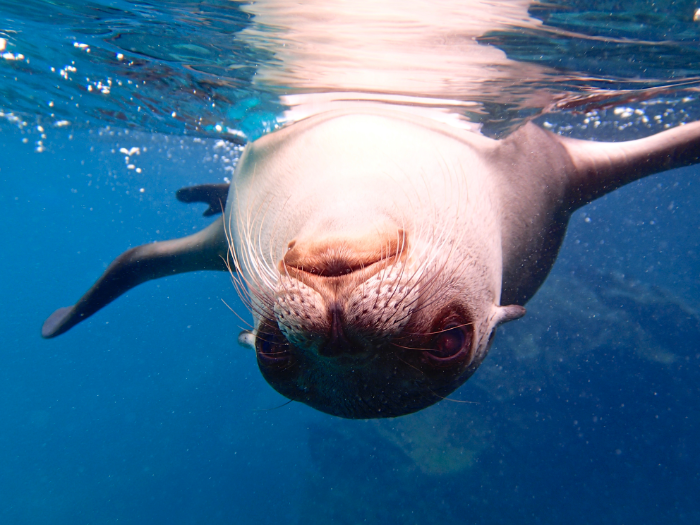
On land and sea, these flippered friends are really fun to watch. While sea lions can be seen in many places throughout the world, Galápagos sea lions are a special treat. They have no evolutionary fear of humans and are comfortable being with people on and off the beach. Super playful and curious, they’ll swim right alongside you in crystal clear waters. They’re so at home here that you’ll even see them hauled out and snoozing on benches in town.
Manta ray
Where: Australia
Manta rays are so captivating that they’re on Queenland’s Great Eight list of must-see marine animals in the region. (In case you’re curious, the other seven are clownfish, giant clams, maori wrasse, potato cod, reef sharks, turtles and whales.) Depending on the time of year and location, snorkellers have a good chance of swimming with these gentle giants doing underwater ballet. They glide through the water with seemingly little effort — sometimes at very high speeds — and occasionally leap out and fall back into the waves with a loud slap. Unlike sting rays, mantas don’t have a sharp barb at the end of their tails. Together with their toothless mouths this makes them very safe snorkelling companions.