The Capital One Venture Business is part of the expanding Venture card family. It’s designed for business owners who want to earn rewards without having to think too much about how they spend.
With a straightforward earning structure, a handful of useful credits and a reasonable $95 annual fee, this card is easy to justify year after year. However, you’ll want to make sure it fits your rewards strategy, as there are business cards with richer perks or more rewarding bonus categories out there.
Card rating*: ⭐⭐⭐⭐
*Card rating is based on the opinion of TPG’s editors and is not influenced by the card issuer.
Capital One Venture Business: The basics
If you’re considering this card, here’s what you need to know at a glance.
The Venture Business has a $95 annual fee and offers a tiered welcome bonus of up to 150,000 miles: Earn 75,000 miles after spending $7,500 on purchases in the first three months from account opening, plus an additional 75,000 bonus miles after spending $30,000 on purchases in the first six months from account opening.
In terms of earning, you’ll earn 5 miles per dollar spent on hotels, vacation rentals and rental cars booked through the Capital One Business Travel portal, along with 2 miles per dollar spent on all other purchases.
You’ll also receive a $50 annual credit for Capital One Business Travel bookings and up to $50 per year for qualifying advertising and software purchases.
Additional perks include a $120 Global Entry/TSA PreCheck credit every four years, Five Star status in the Hertz Gold+ program*, no foreign transaction fees and free employee cards.

Reward your inbox with the TPG Daily newsletter
Join over 700,000 readers for breaking news, in-depth guides and exclusive deals from TPG’s experts
Overall, this is a travel rewards card that prioritizes simplicity over complexity.
*Upon enrollment, accessible through the Capital One website or mobile app, eligible cardholders will remain at that status level through the duration of the offer. Please note, enrolling through the normal Hertz Gold+ Rewards enrollment process (e.g. at Hertz.com) will not automatically detect a cardholder as being eligible for the program and cardholders will not be automatically upgraded to the applicable status tier. Additional terms apply.
Capital One Venture Business pros and cons
| Pros | Cons |
|---|---|
|
|
Capital One Venture Business benefits
The Venture Business doesn’t try to overwhelm you with perks, but it offers enough to make the annual fee feel reasonable.
Credits that are easy to use
The card includes up to $100 in annual credits, split between travel and business expenses.
You’ll get a $50 credit for bookings made through Capital One Business Travel, plus up to $50 annually for qualifying advertising and software purchases. Individually, these credits aren’t especially compelling, but I like that they’re easy to use and don’t require much effort to extract value.
If you can use both each year, you’re already coming out ahead relative to the $95 annual fee.
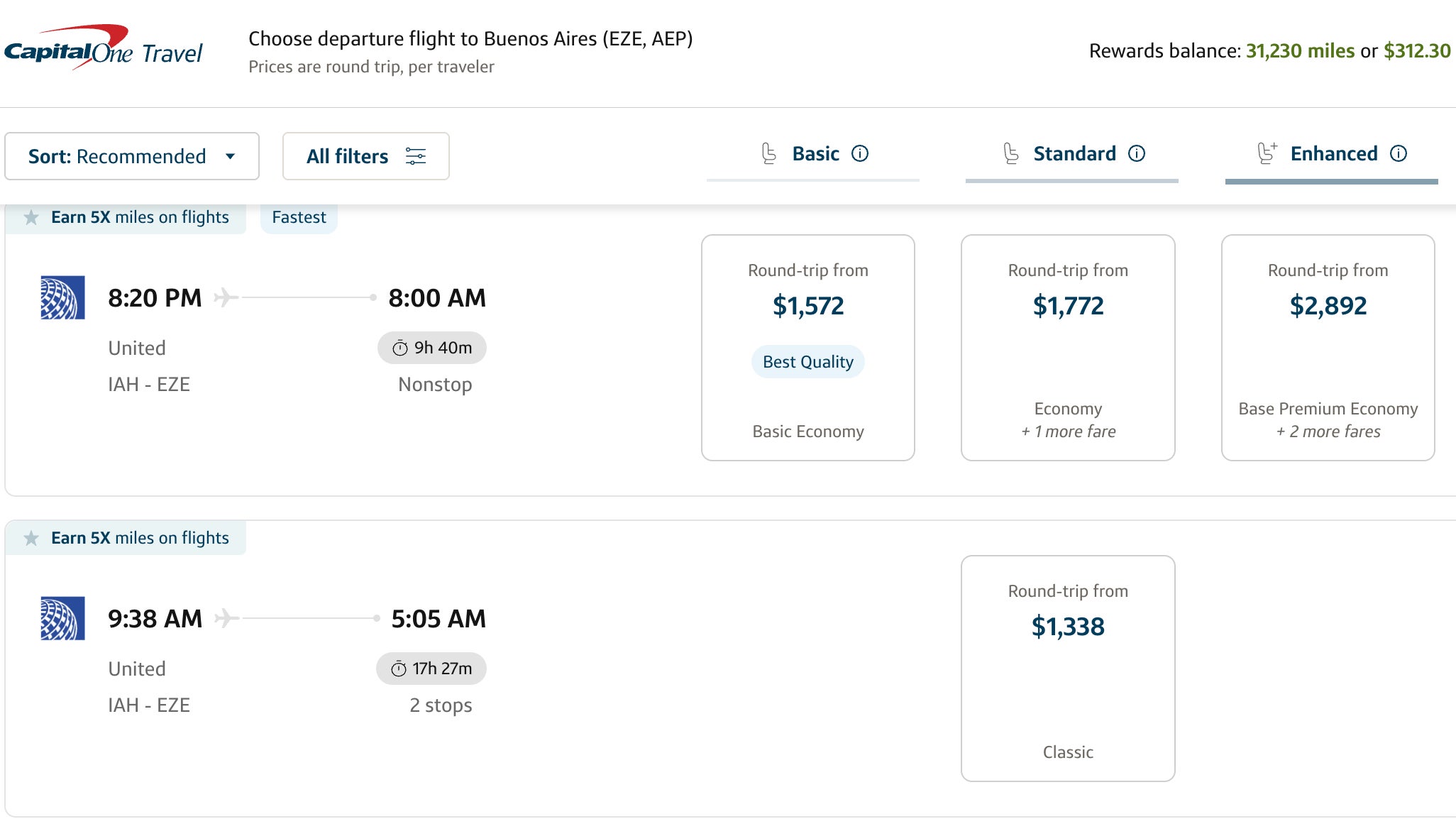
Capital One Travel was named the Best Credit Card Travel Portal at the 2026 TPG Awards, and our analysis shows that flight prices through this portal (and its business counterpart) are typically less than 1% more expensive than booking directly, making it one of the most competitive options available.
You’ll also get up to $120 in Global Entry or TSA PreCheck credits every four years, which is standard for a card in this tier. I always like to point out that you can use this benefit for someone else, whether that’s an employee or a loved one.
Related: 5 smart ways TPG staffers use Capital One Travel credits in the portal
Travel perks
While this isn’t a premium travel card, it still includes a few helpful benefits for frequent travelers.
You’ll receive Hertz Five Star status*, which is mid-tier status that can get you space-available upgrades and a smoother rental experience. It’s not top-tier, but it can still be useful when renting cars regularly.
You’ll also have access to the Capital One Lifestyle Collection, which includes a $50 experience credit on eligible hotel stays.
Business features
Beyond travel, the card includes a range of features that make it practical for everyday business use.
You can issue free employee cards and track spending across your team, and Capital One provides tools to help manage expenses and download purchase records. These aren’t flashy benefits, but they’re important for keeping your business organized as it grows.
How to earn and use your rewards
The Venture Business is at its best when you lean into its simplicity.
Earning miles
You’ll earn:
- 5 miles per dollar spent on hotels, vacation rentals and rental cars booked through Capital One Business Travel
- 2 miles per dollar spent on all other purchases
Based on TPG’s April 2026 valuations, these earning rates represent a solid return of 9.3% and 3.7%, respectively.

What I like here is that you don’t need to think about where your spending falls. If your business expenses are spread across a wide range of categories, this setup makes it easy to consistently earn rewards without tracking bonus categories or caps.
However, if you spend a lot on, say, gas or shipping, it may be worth getting a business card that maximizes those categories.
Redeeming miles
When it comes to redeeming your miles, you have a lot of flexibility.
If you want maximum value, transferring to airline and hotel partners is usually the best option. Personally, I’ve had great success transferring Capital One miles to Choice Privileges, which I think is an underutilized hotel program.
I’ve used Choice points for stays in expensive Nordic markets like Finland, where cash rates can be high and the value can be excellent. For example, I redeemed 15,000 Choice points per night to stay at Hotel Lilla Roberts in central Helsinki last summer.
I also like transferring to Air France-KLM Flying Blue, especially when I need to top up my balance for a business-class flight between the U.S. and Europe.

If you prefer simplicity, you can redeem your miles at a fixed value of 1 cent each through Capital One Business Travel or use them to cover recent travel purchases within 90 days. I find this especially useful for things like ride-hailing or smaller travel expenses that you can’t transfer miles for.
Downsides to consider for the Capital One Venture Business
While the Venture Business gets the basics right, there are a few limitations worth keeping in mind.
The welcome bonus structure is one of them. The first 75,000-mile bonus tier is solid, but the $7,500 spending requirement is on the higher end. The second tier, which requires $30,000 in total spending within six months, feels much harder to justify for the additional miles. Plus, sole proprietors and smaller businesses may struggle to meet this spending requirement.
Another drawback is the lack of strong travel protections compared to some competitors. If those benefits are important to you, this card may fall short.
Finally, this card isn’t ideal for maximizing category bonuses. If your business spends heavily in specific areas like shipping, advertising and travel, you may be able to earn more with a different card.
Venture Business vs. Venture X Business
The Capital One Venture X Business is the more premium sibling in Capital One’s lineup, and the differences between the two cards are quite clear.
The Venture X Business is better if:
- You want a card with no preset spending limit
- You want lounge access (Priority Pass and Capital One lounges)
- Your business spends a lot and can meet the welcome bonus spending requirement
- You can take advantage of the $300 Capital One Business Travel credit and the 10,000 bonus anniversary miles
The Venture Business is better if:
- You may not be able to meet the higher spending thresholds on the Venture X Business
- You prefer simplicity over premium perks
- You want a lower annual fee
Is the Capital One Venture Business worth it?
I think the Capital One Venture Business makes the most sense for business owners who want a simple, reliable way to earn travel rewards without tracking categories or juggling multiple cards. The combination of at least 2 miles per dollar spent on everything and easy-to-use credits makes it a low-maintenance option that’s easy to keep in the long term.

In my view, the real strength of this card is how little effort it requires to consistently generate value. That said, if you’re willing to put in more effort to maximize rewards or want premium perks like lounge access, you’ll likely get more value from a different card.
When to apply for the Capital One Venture Business
The current welcome offer on the Venture Business is solid, but timing your application comes down to your ability to meet the spending requirements.
If your business can comfortably spend $7,500 in the first three months, the initial bonus is worth going for. I’d be more cautious about factoring in the second tier — $30,000 in six months — unless you already have that level of spending planned.
And, even if you do, it may be worth spreading that amount of spending across several cards to earn multiple welcome bonuses.
Other cards to consider if you don’t want the Capital One Venture Business
If the Venture Business doesn’t quite fit your needs, there are three strong alternatives to consider:
- Ink Business Preferred® Credit Card (see rates and fees): This is a better option if your business spends heavily in specific categories like travel, shipping and advertising. You’ll need to keep track of bonus categories, but the potential upside is higher. To learn more, check out our full review of the Ink Business Preferred.
- The Blue Business® Plus Credit Card from American Express: If you don’t want to pay an annual fee (see rates and fees), this card earns 2 points per dollar spent on all purchases (on up to $50,000 per year, then 1 point per dollar thereafter). Compared to the Venture Business, it offers similar simplicity but with a cap, which makes it better suited for lower-spending businesses. To learn more, check out our full review of the Blue Business Plus.
- Capital One Spark Cash Plus: If you prefer cash back over travel rewards, this card offers a straightforward earning structure with no preset spending limit. It’s a strong alternative for businesses that value simplicity but don’t need transferable rewards. To learn more, check out our full review of the Spark Cash Plus.
For additional options, check out our picks for the best business credit cards.
Bottom line
The Capital One Venture Business is a solid choice for business owners who want simple, consistent rewards with minimal effort. It delivers straightforward value with a flat earning rate and easy-to-use credits that help offset the annual fee.
While the card doesn’t offer standout perks or category bonuses, it succeeds by being straightforward and reliable.
If you value ease of use over maximizing every dollar spent, this card is a strong long-term fit.
Learn more: Capital One Venture Business
For rates and fees of the Blue Business Plus, click here.

