Adventurous Kate contains affiliate links. If you make a purchase through these links, I will earn a commission at no extra cost to you. Thanks!
We ended up in Curaçao on a whim — and it ended up being one of our favorite islands in the Caribbean.
Between an incredibly cool capital city, some of the bluest water I’ve ever seen, and iguanas everywhere, Curaçao is a destination like no other!
So how do you end up ANYWHERE in the Caribbean on a whim? My husband Charlie and I knew we had to be in Barbados in early December for our Star Clippers cruise, but we wanted to fly KLM business class if we could, and pick up some KLM houses for our collection.
Well, KLM flies to Curaçao. Boom. Booked!
We didn’t go in completely clueless. Some of my friends really love Curaçao, and I knew that it was one of the most photogenic Caribbean islands, with gorgeous, colorful architecture and beaches with clear, gorgeous water.
Before our trip, I reached out to the Curaçao Tourist Board and they offered to provide us a rental car with Plusify Rentals, a boat trip to Klein Curaçao with Mermaid Boat Trips, and a day with a cabana and massage at Mondi City Beach Club. Everything else we paid for ourselves, including our hotel, food, and activities.
And then we got to Curaçao — and discovered this might be the most “us” Caribbean island there was. A place that couldn’t be easier to explore independently. An island that wasn’t overdeveloped. Landscapes with cacti and iguanas. Cliffs overlooking the brightest turquoise water.
We had a blast. And now I’m trying to convince my friends to go to Curaçao, too. So if you want to know more, this post is a great place to start!
This post was published in January 2026.
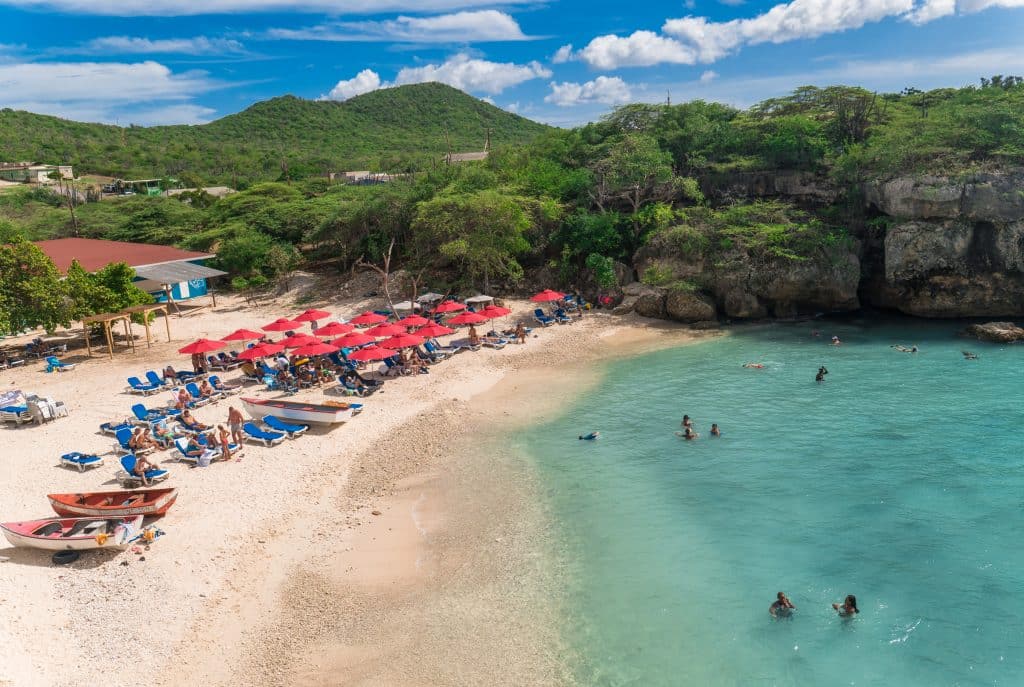
Tell me about Curaçao!
Curaçao is a small island off the coast of Venezuela in the southern Caribbean, close to the islands of Aruba and Bonaire, as well as the coast of Venezuela.
These three islands are called the ABC islands, and Curaçao is the largest and most populated of the three.
Is Curaçao a country?
It’s technically a country within the Kingdom of the Netherlands (along with Aruba, Bonaire, St. Maarten, St. Eustacius, and Saba).
These five islands were known as the Netherlands Antilles until 2010, when the NA dissolved and each island became an independent country within the Netherlands. You can refer to these islands as the Dutch Caribbean today.
Curaçao is kind of like Scotland or Wales in that they’re a country within a larger country, but they play in the World Cup under their own flag. In fact, in 2025 Curaçao became the smallest country to ever qualify for the World Cup!
Then there’s the Olympics. Curaçao competed under the Netherlands Antilles flag until 2008, and today they compete under the Netherlands flag.
What about language, money, and phone plans?
Several languages are spoken in Curaçao, including English, Dutch, Spanish, and Papiamento, a local Creole language. You can get by with English just fine. When shopping in stores, locals would often speak Spanish to me.
Despite being part of the European Union, Curaçao doesn’t use euros and your EU phone plan will not work here.
Instead, Curaçao uses the Caribbean Guilder (XCG) for their currency, though US dollars are usually accepted. St. Maarten also uses the Caribbean Guilder; Aruba and Bonaire do not.
You can use cards for almost all of your purchases on Curaçao, but I recommend carrying around enough currency for a day’s expenses. There was a big power outage when we were visiting the west of the island, and many places were only taking cash.
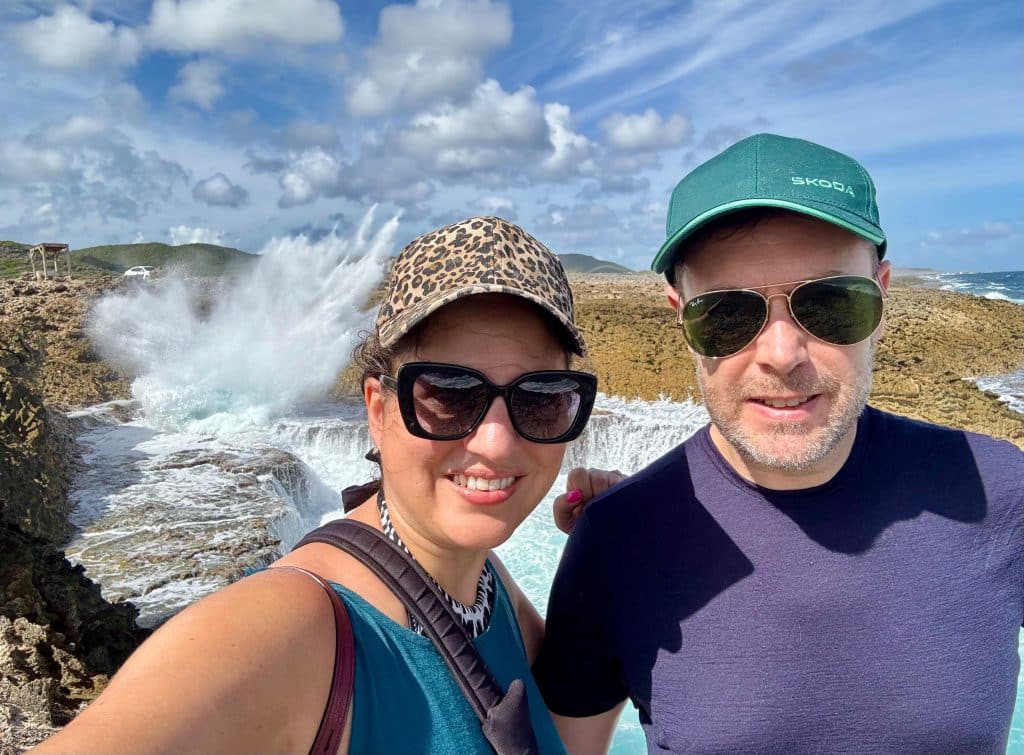
Curaçao is so easy to explore independently.
What I loved most about Curaçao is that it was so easy to explore as an independent traveler. For two big reasons: it’s a reasonable size, and the driving conditions are quite comfortable.
From Willemstad, the capital, to the beaches in the west of the island, it’s about a 50-minute drive. From Jan Thiel, the neighborhood east of Willemstad that is home to many resorts, it’s about an hourlong drive to the western beaches. Quite reasonable!
And the roads are great. Roads are in good condition for the most part, there are never any super-steep or calamitous driving areas, there aren’t any complicated or confusing intersections, and the drivers are quite reasonable (though some will definitely tailgate if you’re going below the speed limit).
After visiting around 15 or so Caribbean islands, I can attest that Curaçao is one of the best places to explore by car on your own. It’s a far cry from the high speed drivers of Barbados, the curvy nausea-inducing roads of St. Lucia, or the pothole-covered streets of Dominica.
Curaçao is also an incredibly safe island to visit, and you don’t need to take precautions beyond basic travel safety.
On some islands, it feels like you need to take tours in order to actually explore the island, which ends up costing more money than you may want to spend. Not so on Curaçao. Go wherever you want. Explore what you want to explore. Drive yourself there. Leave whenever you want. This is YOUR vacation.
In short, driving in Curaçao is easy and joyful, and I highly recommend you rent a car. Just keep in mind that Google Maps is not always 100% accurate. It frequently wanted us to bang a u-ey where there were signs reading “NO U-TURNS.”
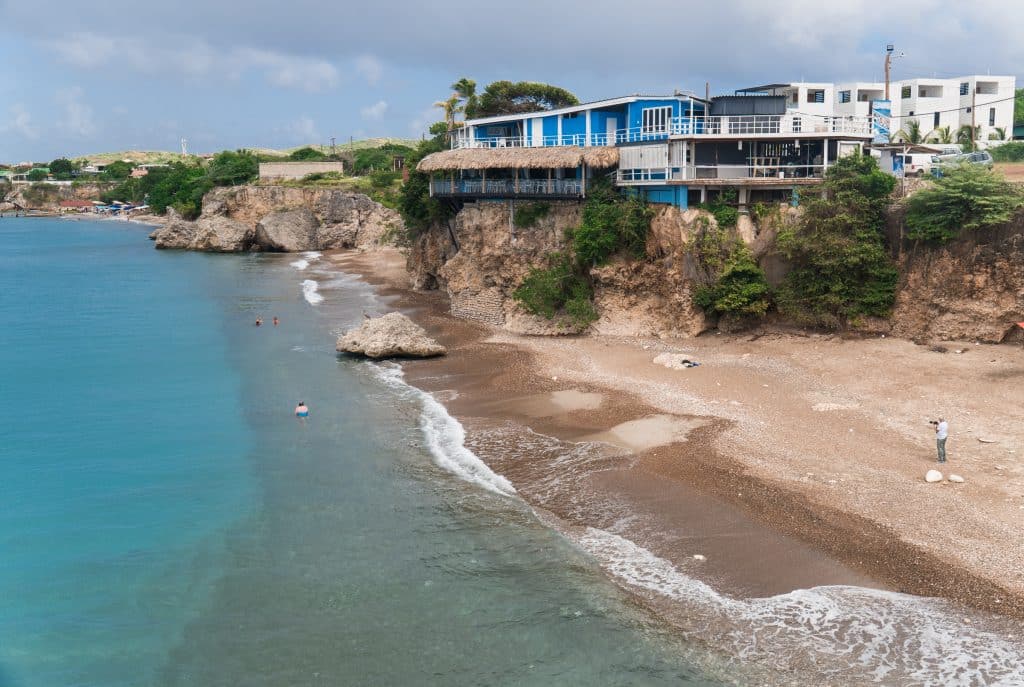
I also feel like Curaçao is developed the perfect amount. There are hotels and resorts, yes, and at various price points, but it’s not end-to-end resorts here like on some Caribbean islands. As you drive around the island, especially more rural areas, you see lots of small and colorful homes where locals live.
While tourism is a huge part of Curaçao’s income, it feels like the island hasn’t completely given over to tourism. Locals are valued here.
On top of that, Curaçao never felt crowded at all (with the exception of Willemstad when two big cruise ships were in town). Even at the beginning of high season, it was always easy to find a parking spot at the beaches. It wasn’t hard getting seated at restaurants, either.
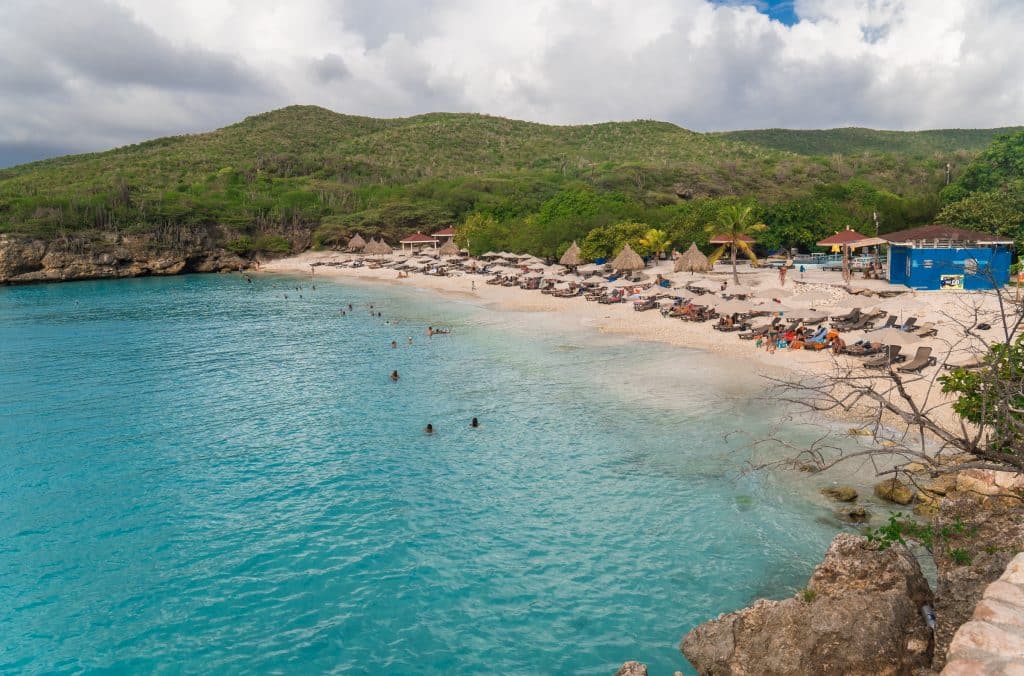
Curaçao has the clearest, bluest water.
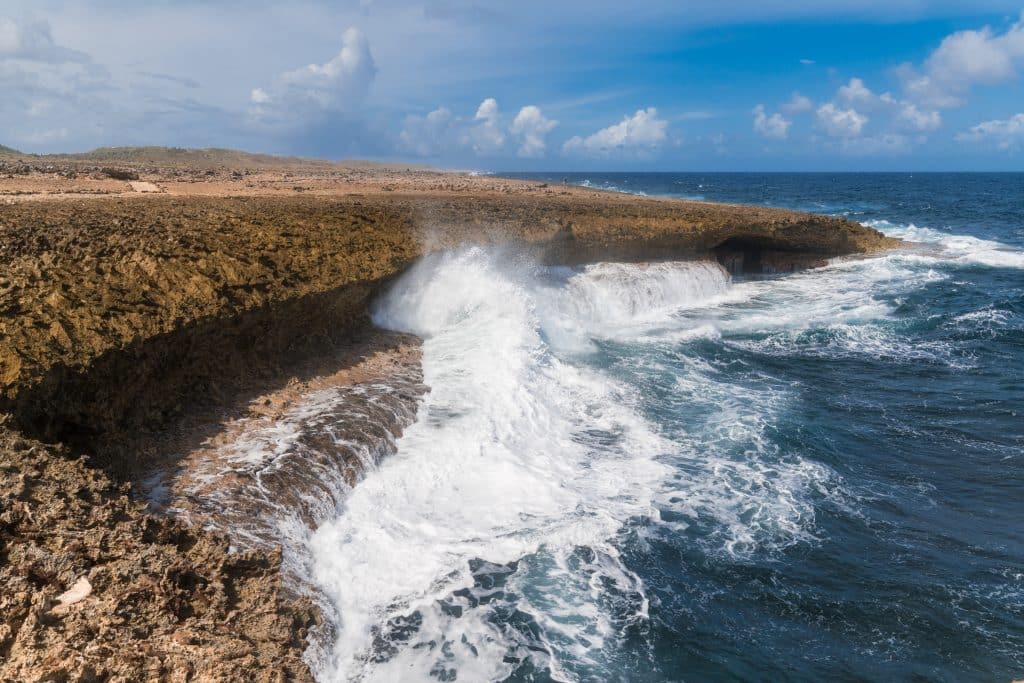
The one thing many people know about Curaçao is the existence of Blue Curaçao, the bright turquoise liqueur that brings to mind the Caribbean. And honestly, we’ll get to the liqueur later — but everything about the color of the water is absolutely true.
Curaçao has an abundance of swimming spots with bright blue water. Here are a few of them:
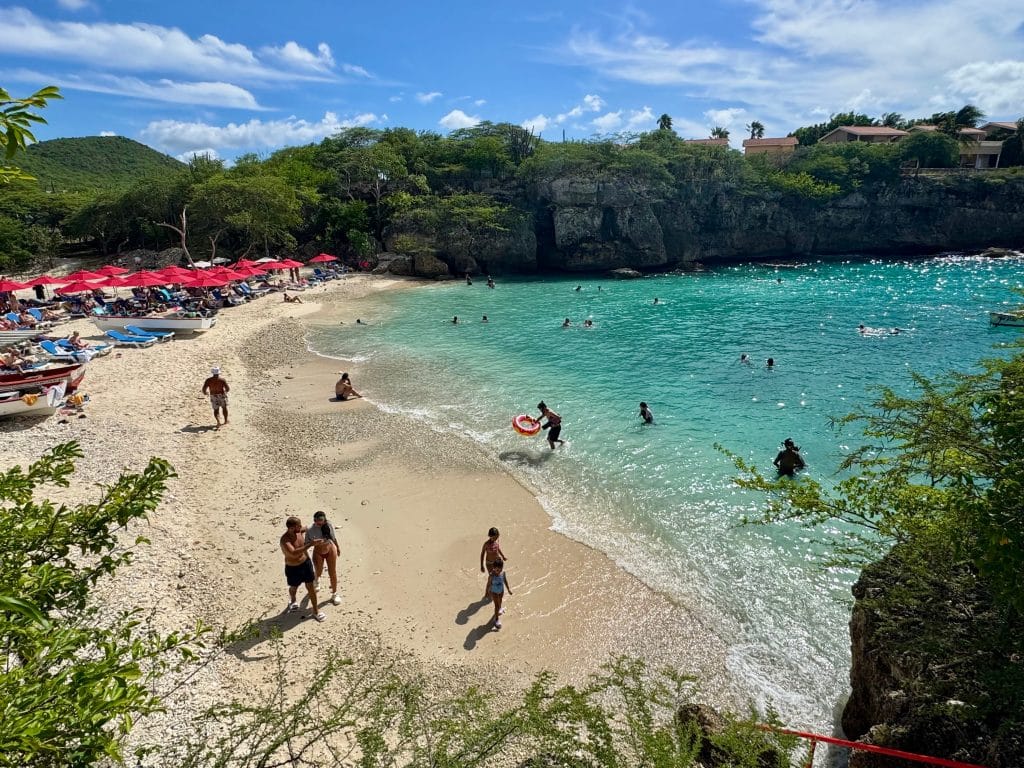
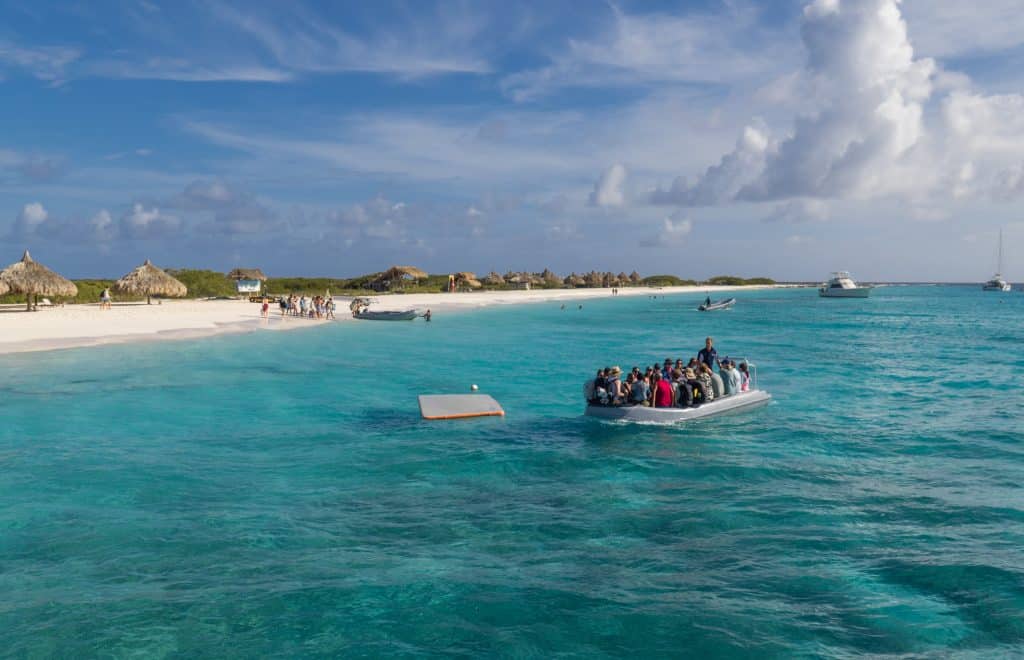
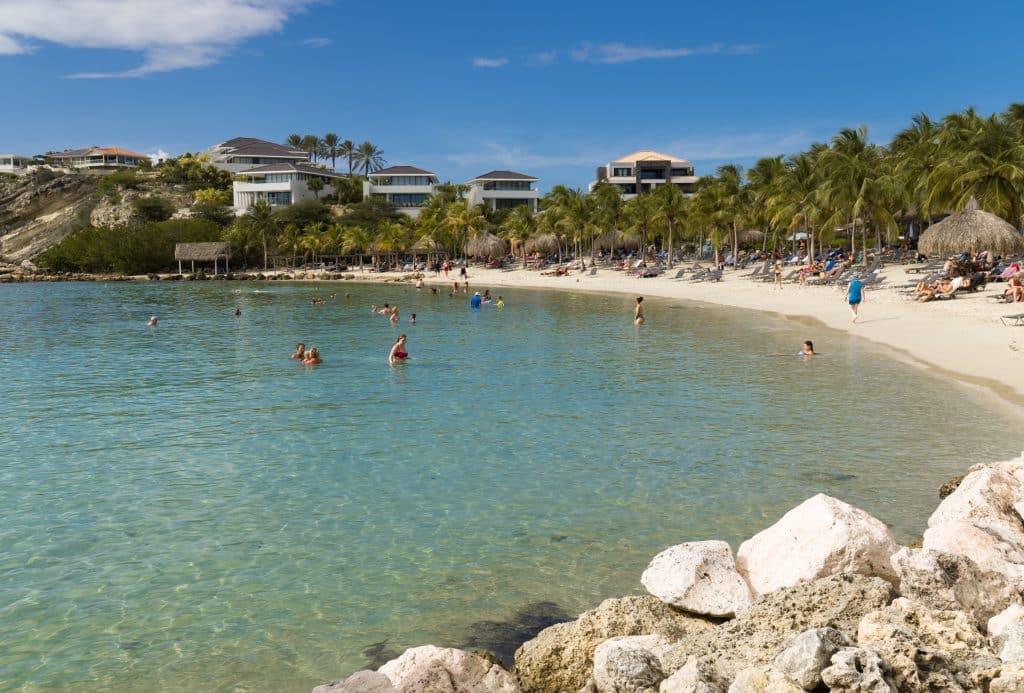
So if nice photos and videos with bright blue water is a priority of yours, you should absolutely consider Curaçao!
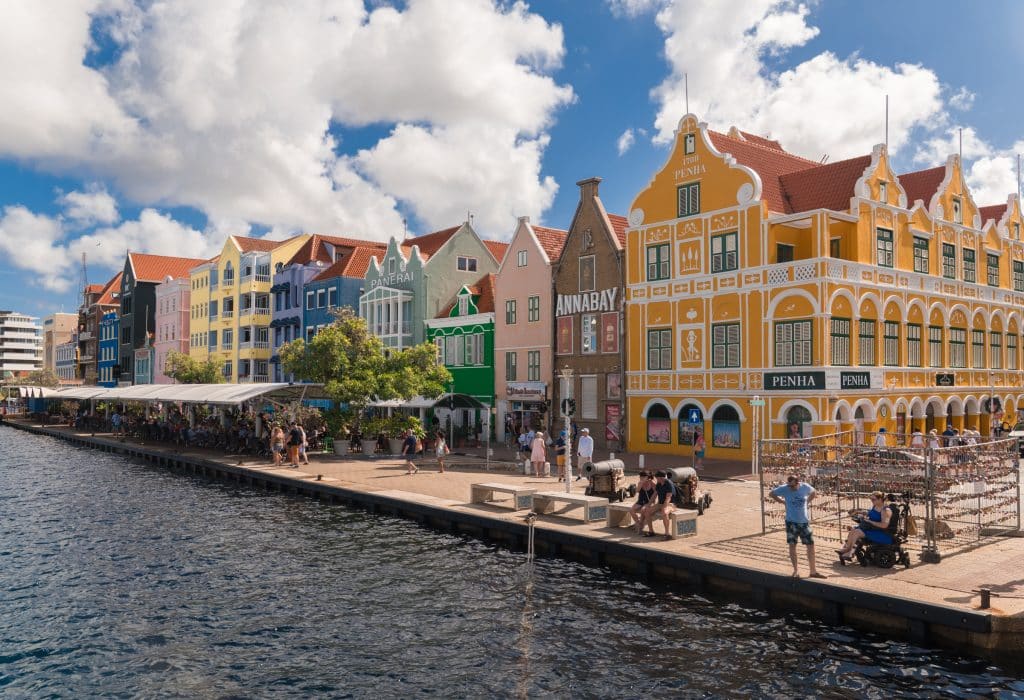
Willemstad is a wonderful city.
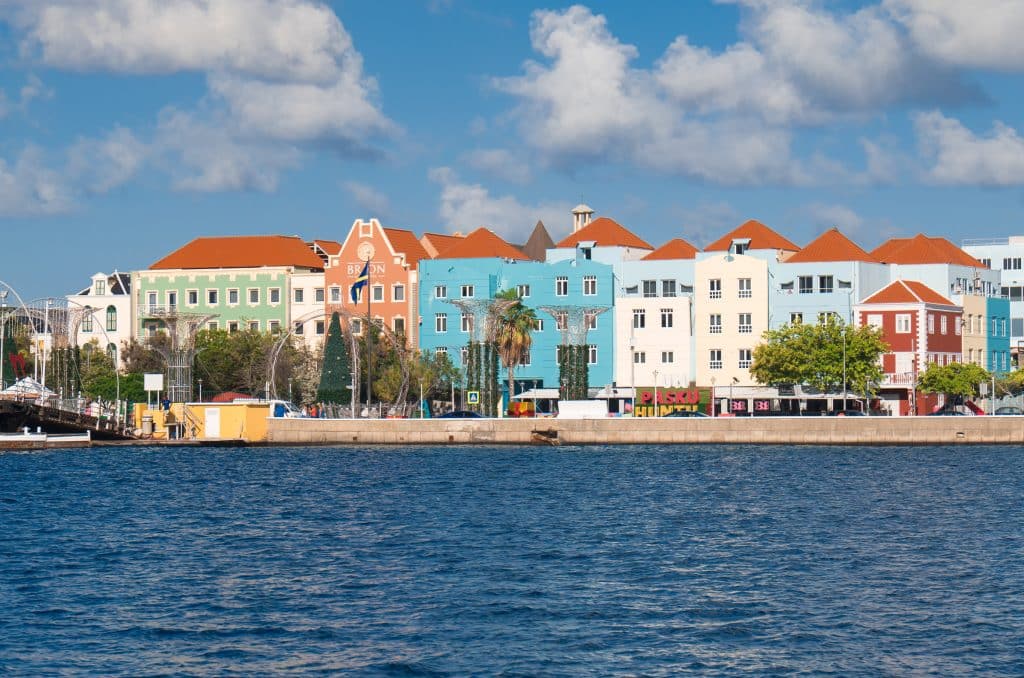
Willemstad is a delight of a city, filled with beautiful architecture, colorful murals, and lots of nice restaurants. Willemstad quickly became one of my favorite Caribbean cities I’ve ever visited (along with San Juan, Puerto Rico, and Fort-de-France, Martinique — though I think Willemstad is the prettiest of all of them).
And Willemstad is very safe and easy to explore on your own.
The one thing I should warn you about is that Willemstad sometimes gets overloaded with cruise ship visitors, which can be a bit annoying.
It’s always a good idea to look at the local cruise ship schedule and plan your Willemstad exploration when the fewest cruise passengers are in town. (I do this in every cruise port I visit, from Dubrovnik to Alghero.)
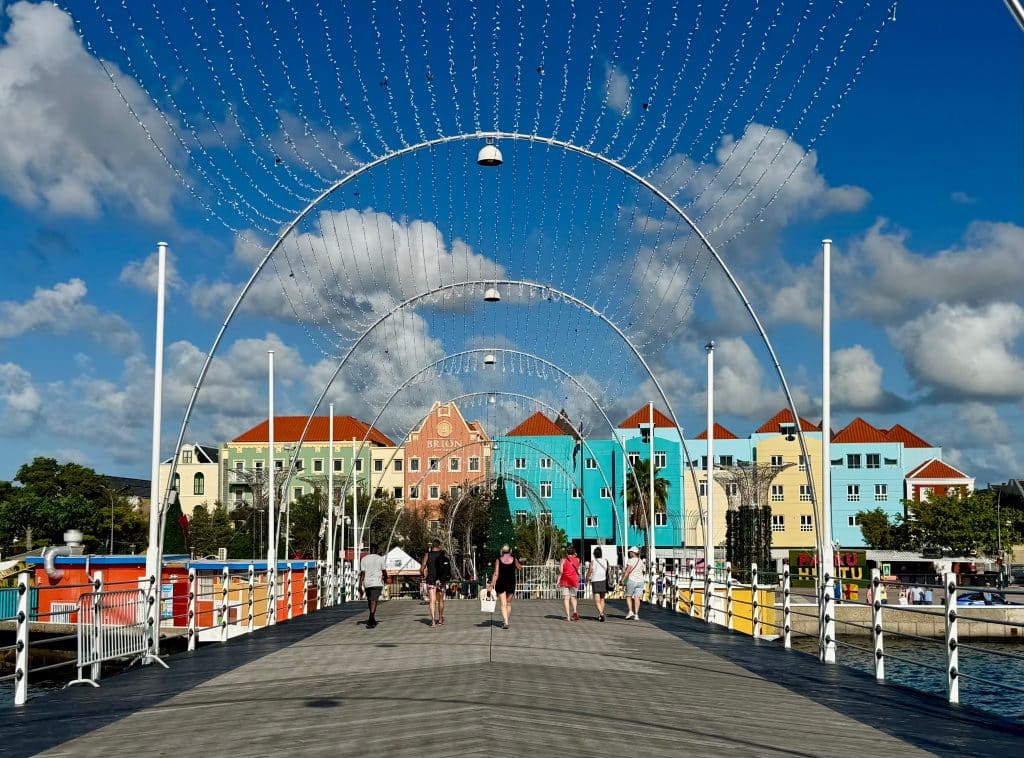
One thing not to miss is the Queen Emma Bridge. This pedestrian-only bridge connects the Punda and Otrabanda sides of Willemstad, and it actually swings out when it needs to accommodate large ships!
Most of the time, it only swings out a little bit to accommodate speedboats. But if you’re there when it swings ALL the way out, it’s a treat to watch! Just know that if the horn goes off when you’re on it, get yourself to the other side quickly.
For me, the biggest joy of Willemstad was just walking around, taking photos, and admiring the scenery.
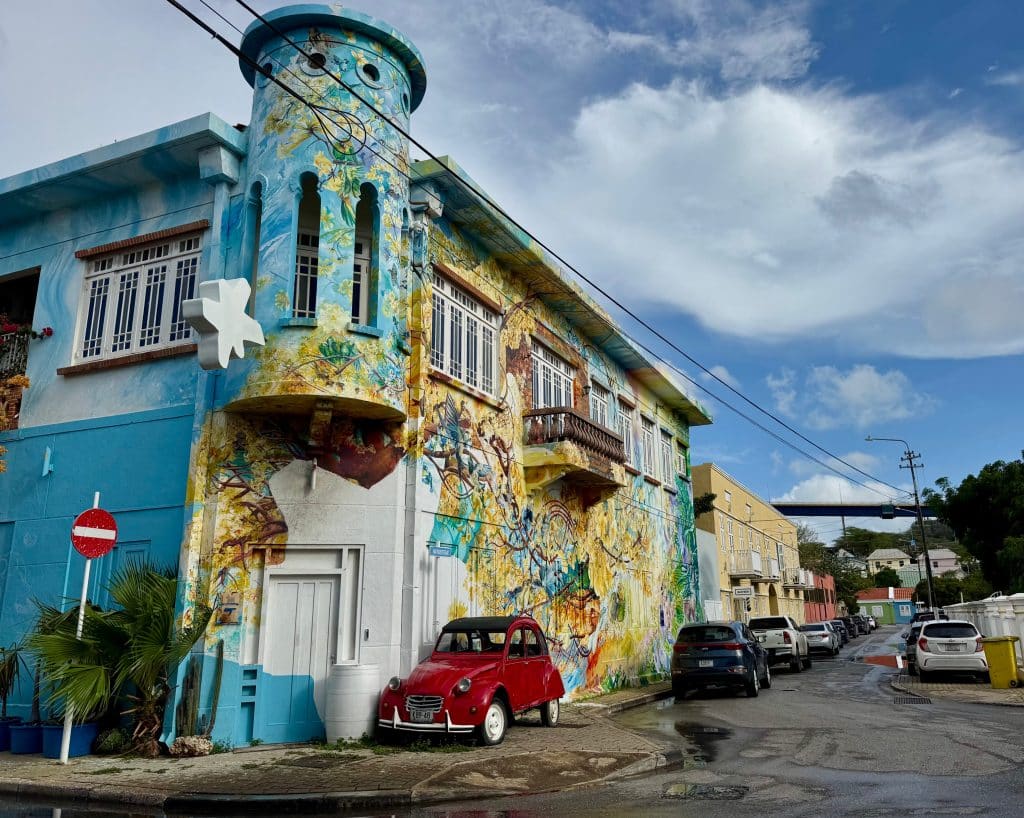
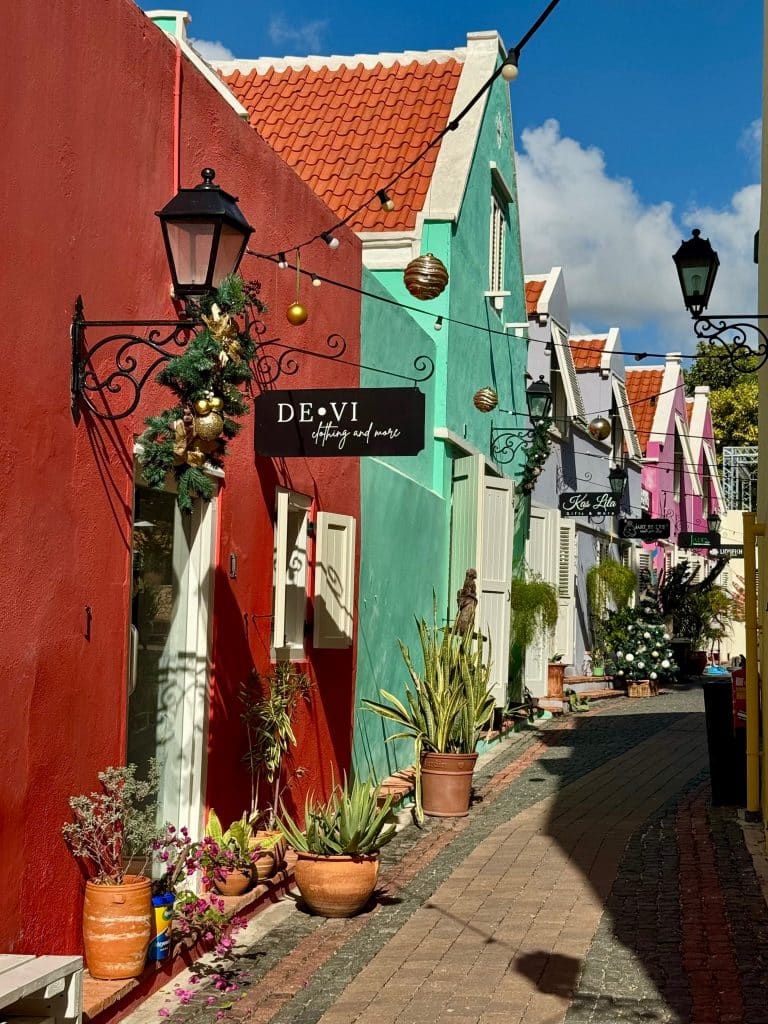
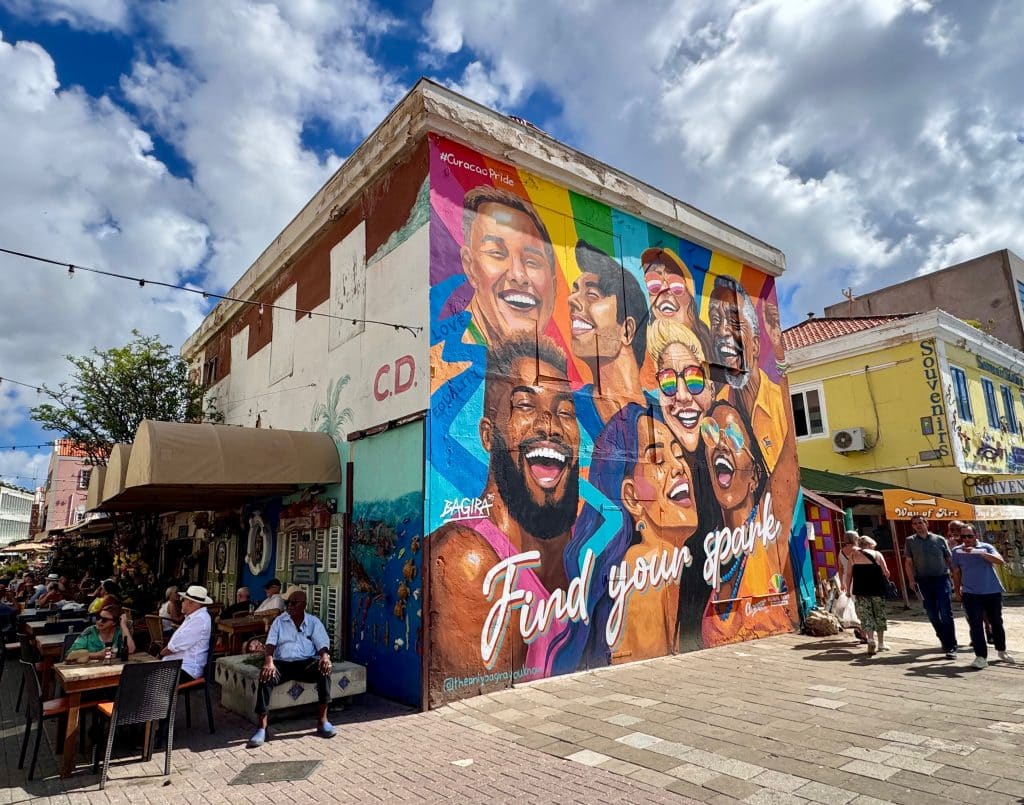
But if you want to do more sightseeing, you can visit the Kura Hulanda Museum, which focuses on the Trans-Atlantic Enslavement Trade and Curaçao’s role in it, and Mikvé Israel-Emanuel Synagogue, the oldest continually open synagogue in the Americas.
Rif Fort is part of the UNESCO World Heritage Site of Willemstad, Inner City and Harbour. And while there are some cool outdoor parts to explore, today the fort is mostly filled with shops and restaurants catering to tourists.
For a nice souvenir, I recommend stopping by Heinen Delfts Blauw, a shop in Rif Fort featuring gorgeous porcelain items. Charlie and I picked up four colorful houses shaped like Curaçao’s buildings to add to our KLM houses collection.
And if you’d like to get out into nature right in the city, you can go kayaking in Curaçao Rif Mangrove Park!
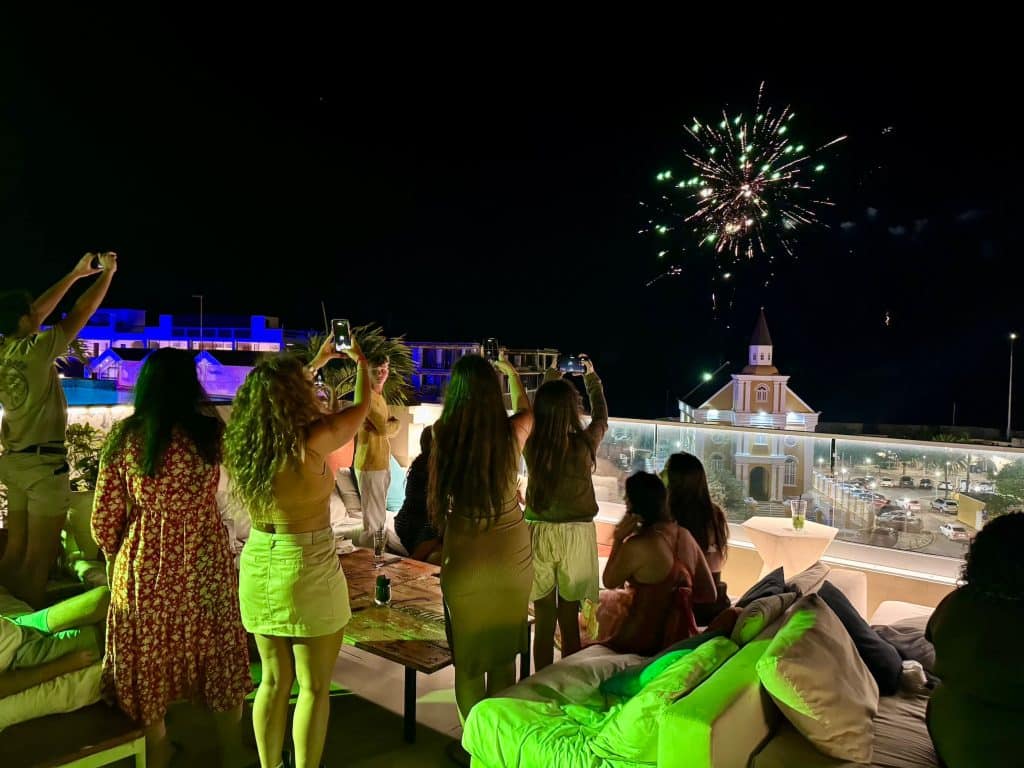
Thursday nights are the best night in Curaçao!
If you’re going to be in Curaçao for less than a week, I strongly encourage you to have at least one Thursday night during your stay. Thursday nights are Punda Vibes — when the Punda neighborhood goes all out with music and celebrations!
This is such a fun time to go out in Willemstad. I loved how alive the city felt.
On the advice of locals, we went to Cascada Rooftop Bar to watch the fireworks at 8:15 PM. It’s a popular spot and there was no seating available, they told us — but we found a big table and just sat there, and nobody seemed to care. You can also walk around if no tables are free.
And another thing — Thursday might be your only chance to experience nightlife in Curaçao. I was genuinely surprised at how dead Punda was just about every other night. Some restaurants will be open, of course, but most bars won’t be.
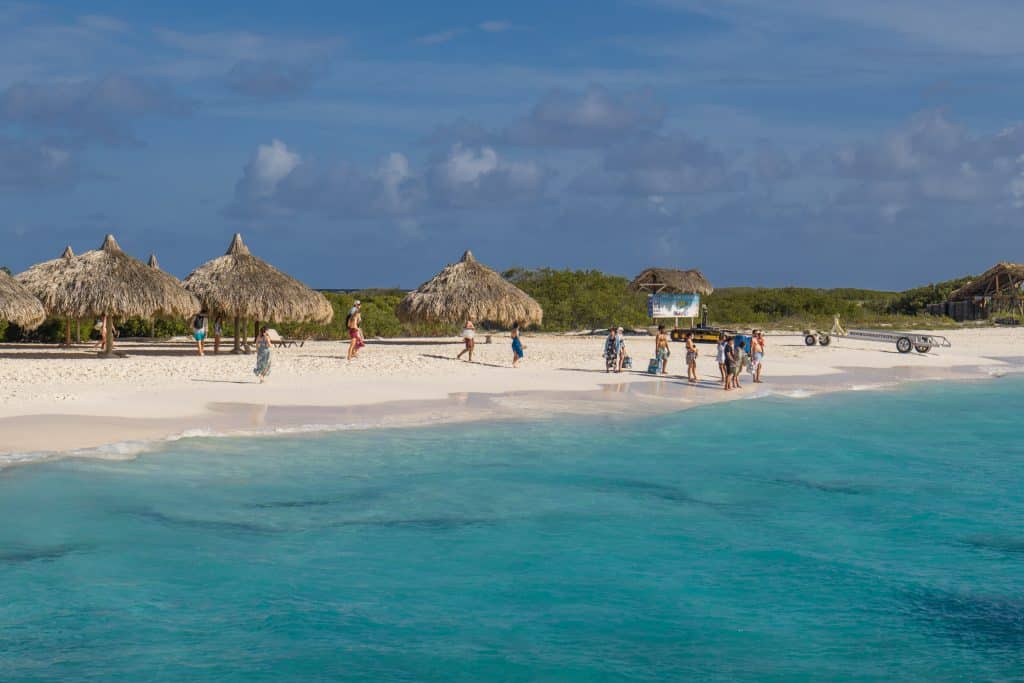
Klein Curaçao makes a lovely getaway-from-your-getaway.
So, you’re already on a small tropical island. What do you do? Clearly, head to an even smaller tropical island!
There is a small island to the southeast of Curaçao called Klein Curaçao, or Small Curaçao. A day trip here is one of the most popular activities in Curaçao.
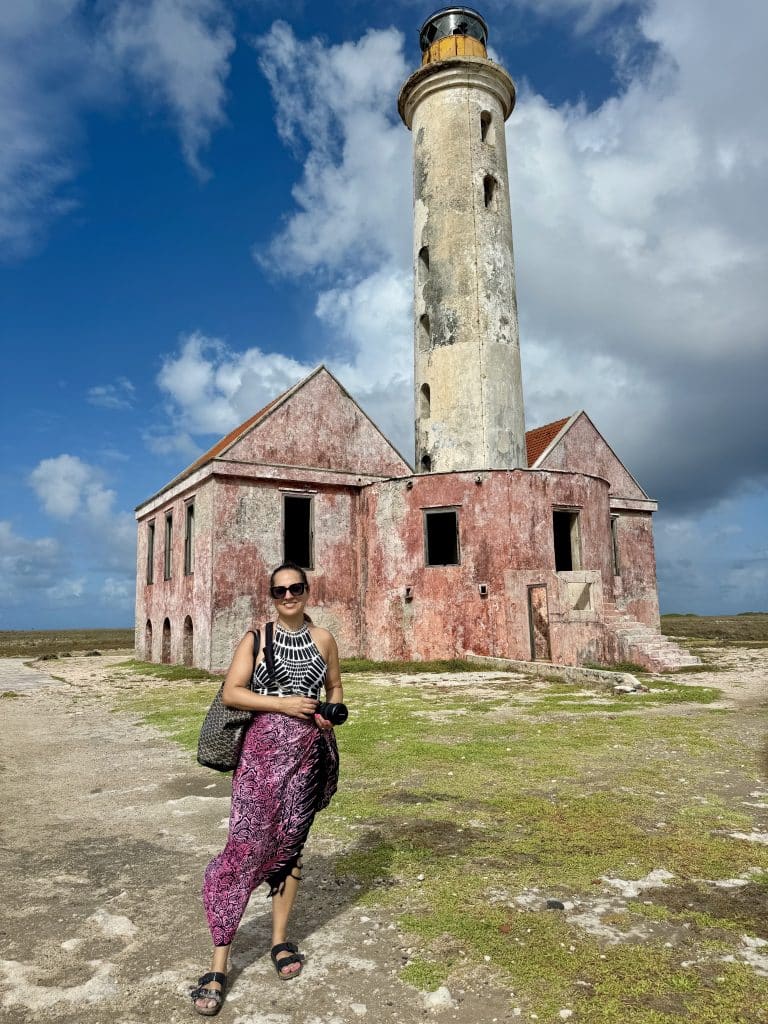
Klein Curaçao is a small, flat island about a 90-minute journey from Curaçao. There are a few sights to see, like an old lighthouse and a few shipwrecks, and the snorkeling off shore is excellent.
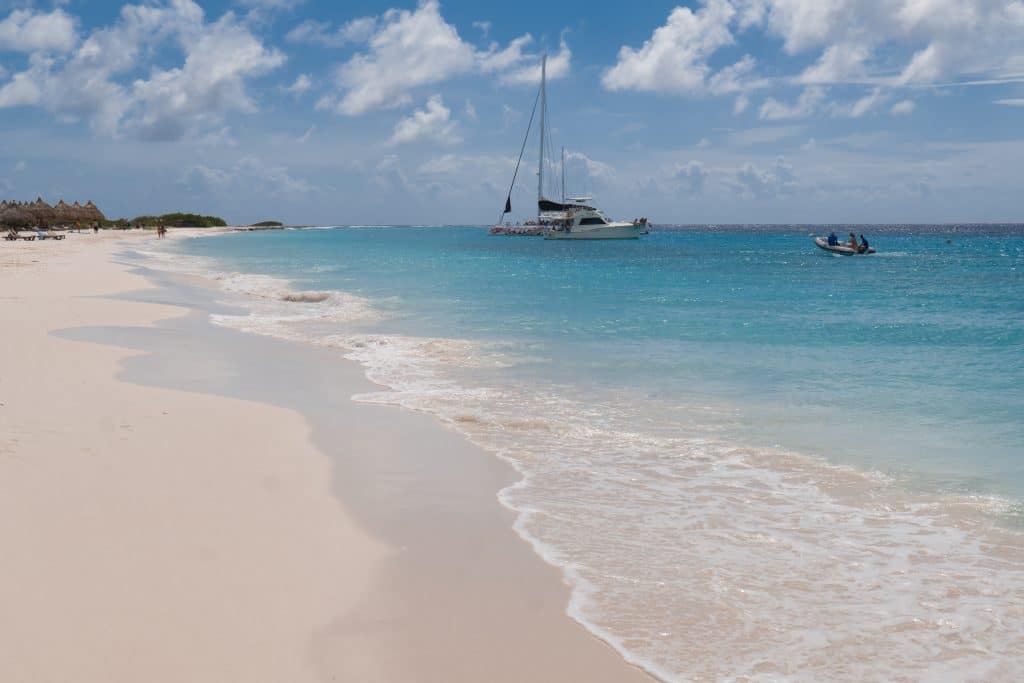
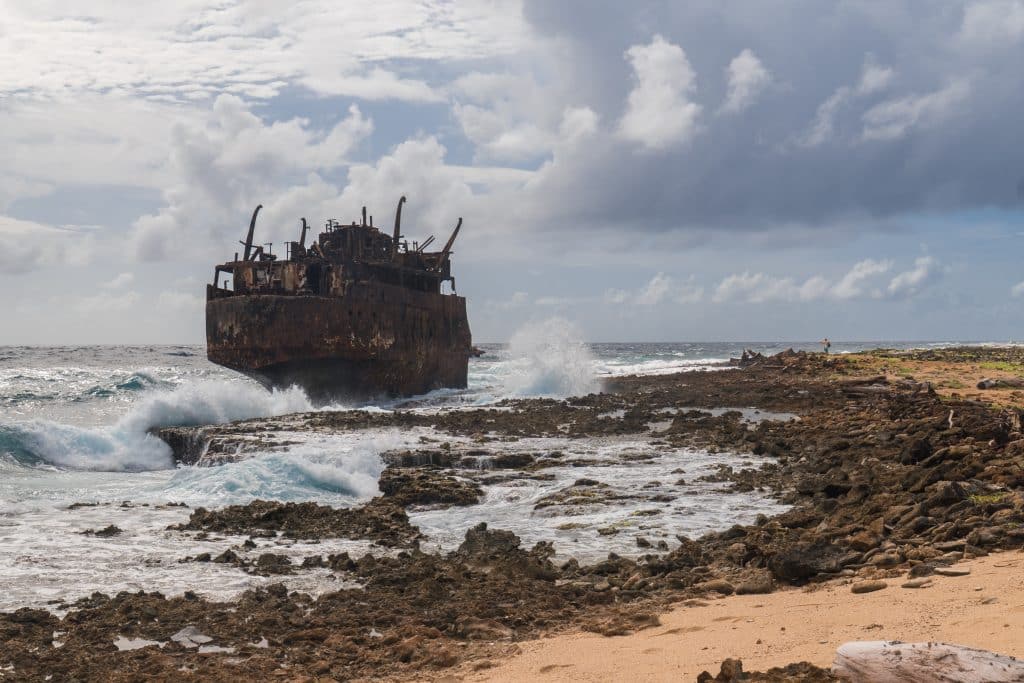
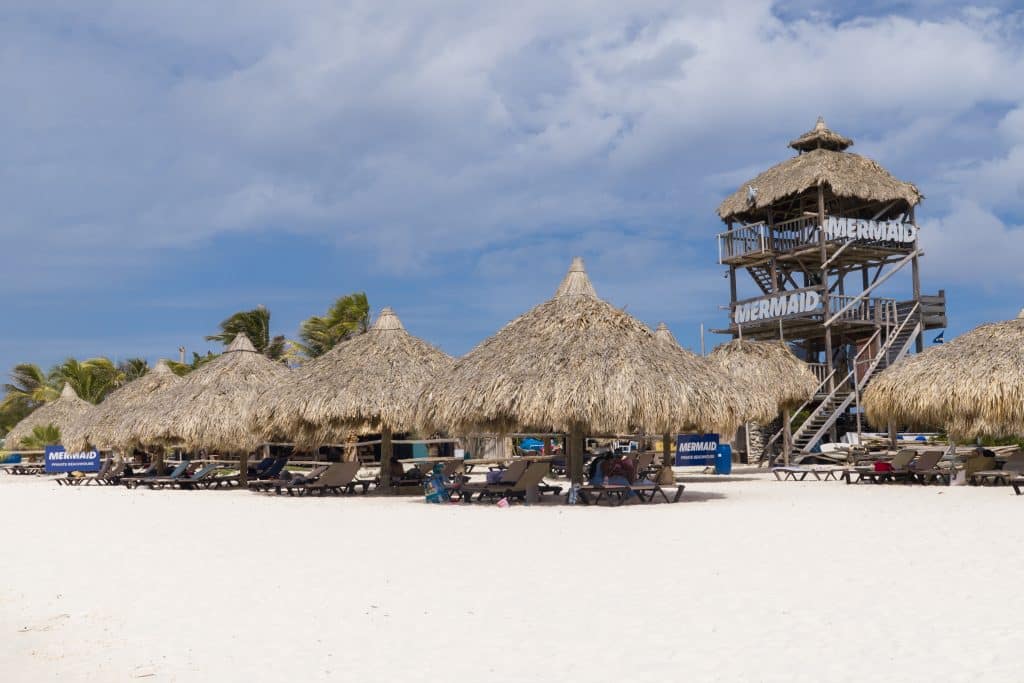
There are several tour providers that do the boat trip to Klein Curaçao. We went with Mermaid Boat Trips, who hosted the two of us, and honestly, I wouldn’t go with anyone else!
So what do you do on the island? Charlie and I did a lap, checking out the lighthouse and shipwrecks, but spent the bulk of our time swimming in the sea and relaxing at the Mermaid compound.
Yes, there’s a compound, a bit ramshackle but with everything you need (and bigger than anything any other company has). There is a real bathroom, lots of areas to eat, snorkeling equipment, and more than enough beach chairs for everyone. Charlie and I got beach chairs and a palapa and no one else was even near us!
We had a breakfast buffet, including breakfast sandwiches and fruit salads. Lunch was a big barbecue with chicken, burgers, ribs, rice, and salads, and it was all delicious.
There is also a bar making tasty frozen cocktails, which are not included.
The trip takes about 90 minutes there and about an hour on the way back. It’s a bit choppy at times, and I recommend motion sickness tablets if you are prone to seasickness.
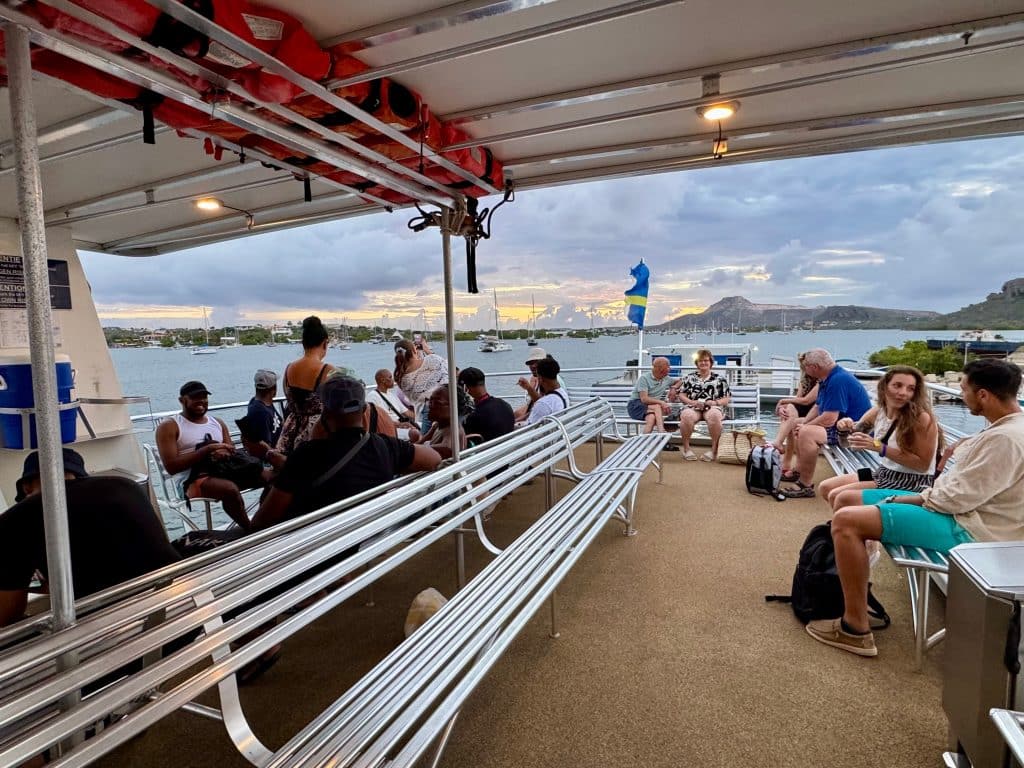
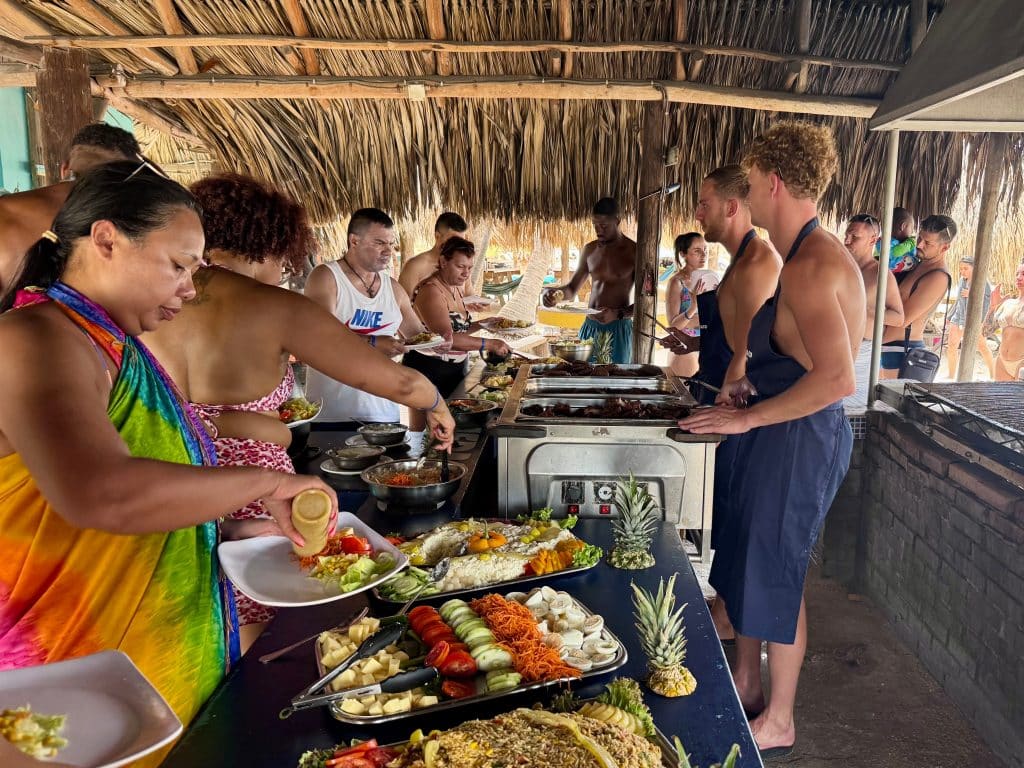
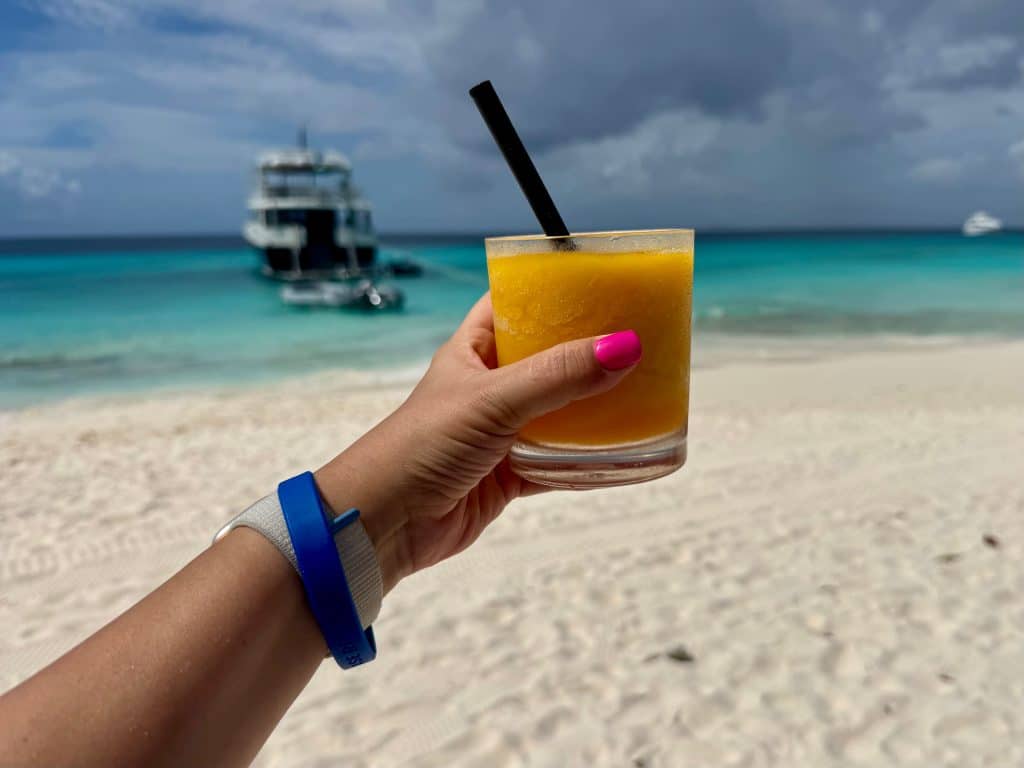
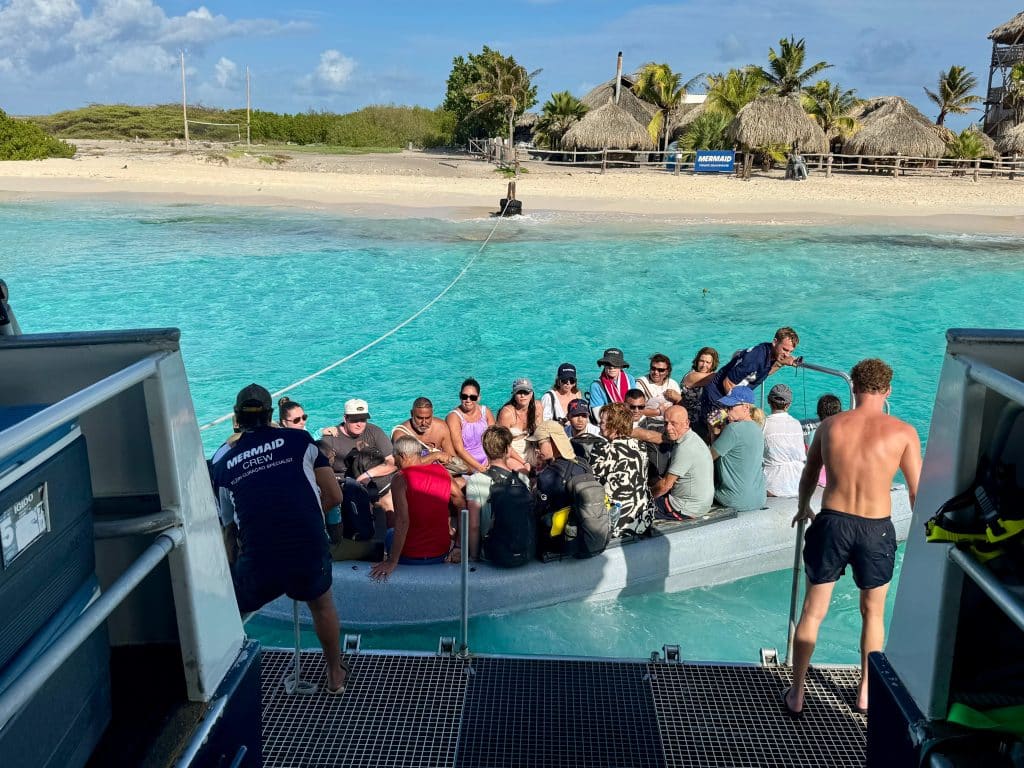
What makes the Klein Curaçao trip worth it? I think it makes a nice day where you can turn your brain off and just lounge, where you get to live without wifi or phone signal, and everything is handled for you. It’s especially nice if you’re staying at a hotel in the city rather than a resort, so you still get to have a resort-like day.
The cost for the day trip is $140 USD per adult, $70 USD per child age 4-12, and free for children three and under. Pick-ups are available for an extra fee; we drove to the dock.
One tip: the tour includes breakfast and lunch, but you’re not served breakfast until you’re on the island. (There’s coffee on the boat, though.)
For that reason, I highly recommend stopping at Coffee Bike Curaçao in the parking lot across the street (that’s a Google Maps link) and getting a coffee and cake to stave off your hunger during the boat trip.
Curaçao has a famous liqueur!
If you’ve ever worked in a bar, you’ve probably seen a bottle of Blue Curaçao — a liqueur from the island in the brightest shade of turquoise, perfect for making neon cocktails like the Swimming Pool.
But there is way more to Curaçao’s liqueurs than just the blue one!
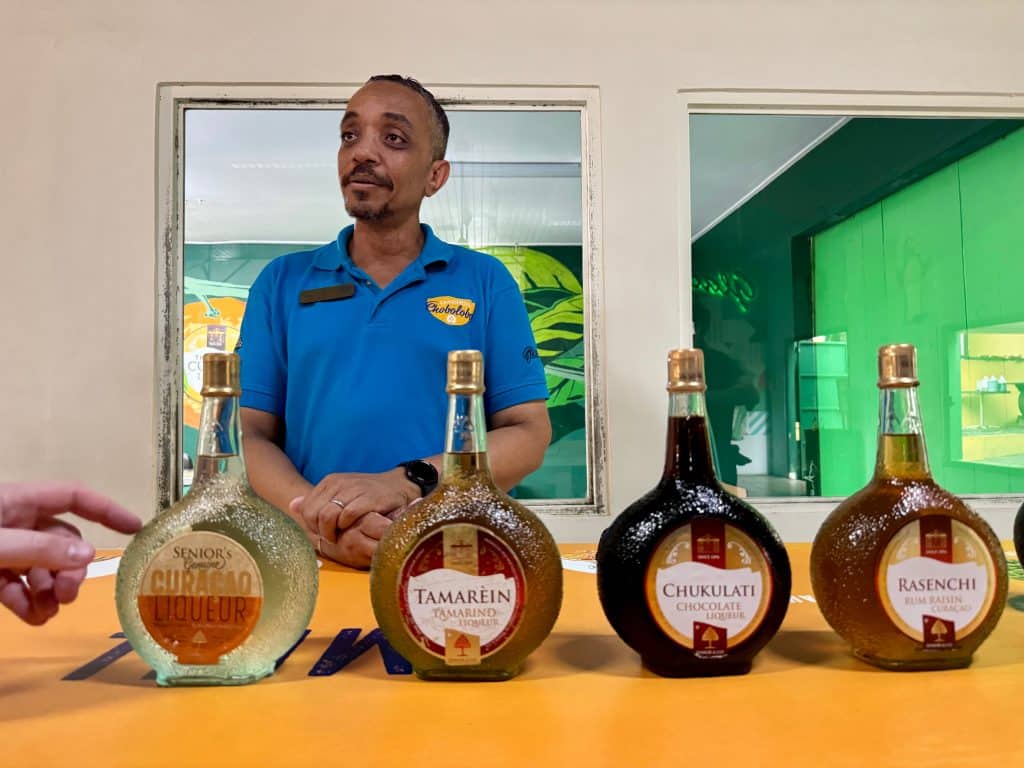
On our one cloudy day of the trip, Charlie and I drove to the Landhuis Chobolobo (what a name!!) to visit the Curaçao Liqueur Distillery.
We took a tour and learned that Spanish settlers intended to cultivate Valencia oranges in Curaçao, but they didn’t grow well in this climate and the fruit came out bitter. But it wasn’t a complete loss — the peels were ripe for distilling.
And the famous blue color? It’s totally a gimmick. It was just added for fun. Curaçao liqueur comes in lots of flavors, most of them in natural brownish colors. We were surprised that we enjoyed the chocolate and coffee liqueurs the most!
After the tour, you get to enjoy some cocktails in the bar. They also have an extensive list of delicious nonalcoholic mocktails, which are perfect for your designated driver.
Chill Out at a Beach Club
If you’re staying at a non-beach hotel in Curaçao like me, it can be fun getting the beach resort experience elsewhere. Klein Curaçao is the lie-on-the-beach-and-veg experience, but if you want something a bit more high-end, spend a day at a beach club!
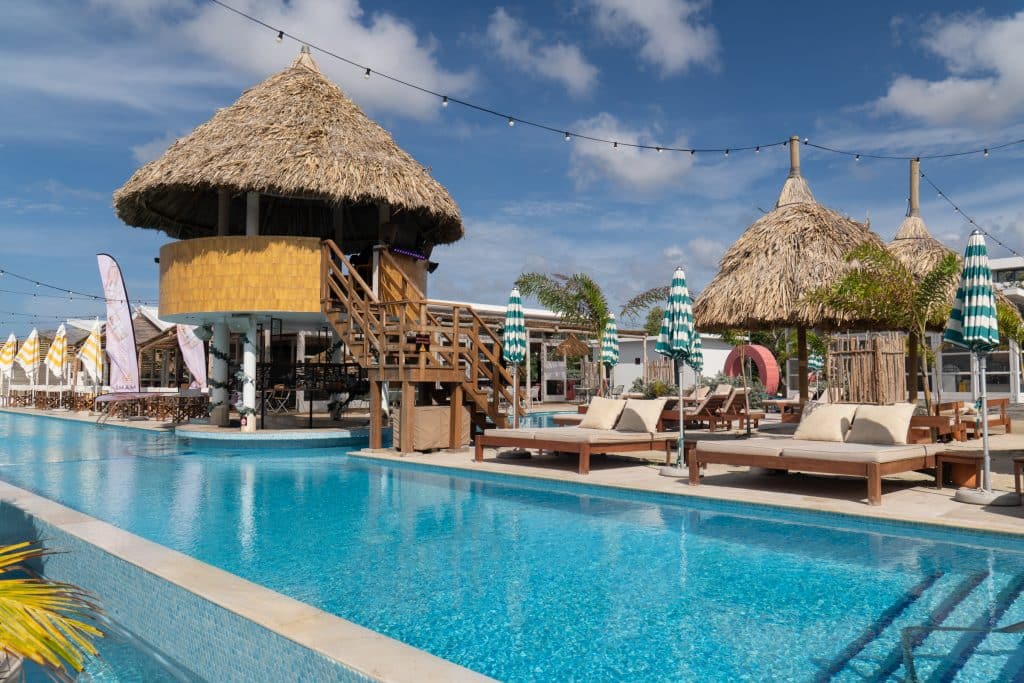
We spent a day at Mondi City Beach Club, who hosted us, and we had a fabulous time. This club is located within walking distance from Willemstad, close to the cruise terminal and Curaçao Rif Mangrove Park.
There isn’t an actual beach here, but it’s perched on the coastline and there are nice pools for cooling off.
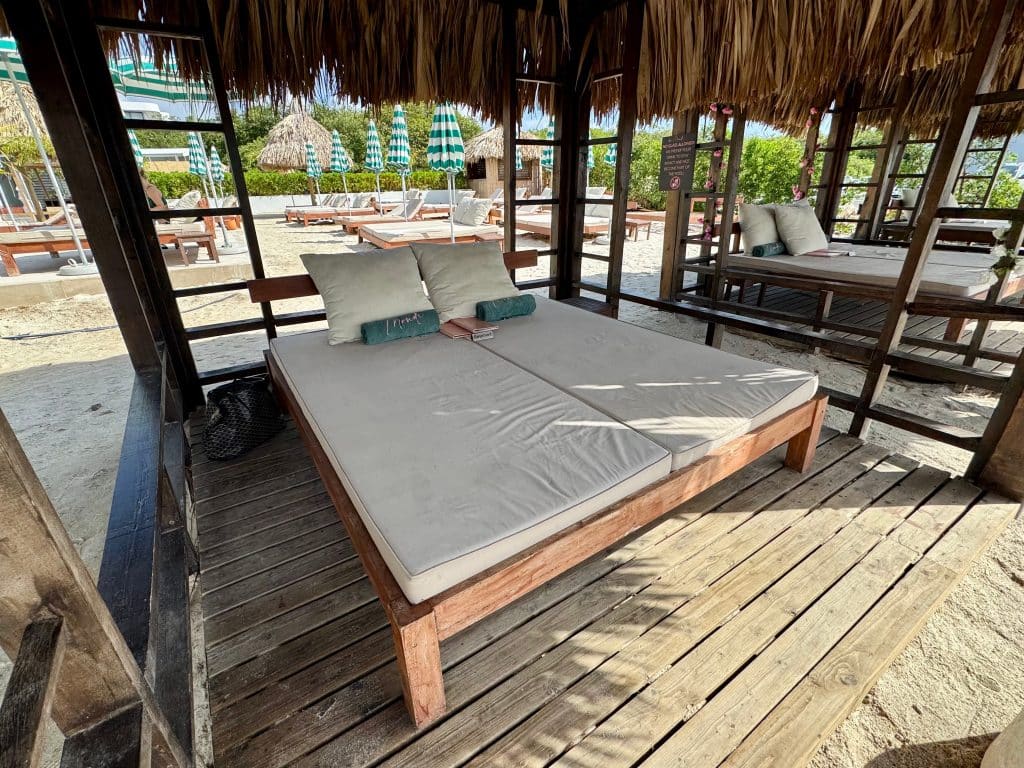
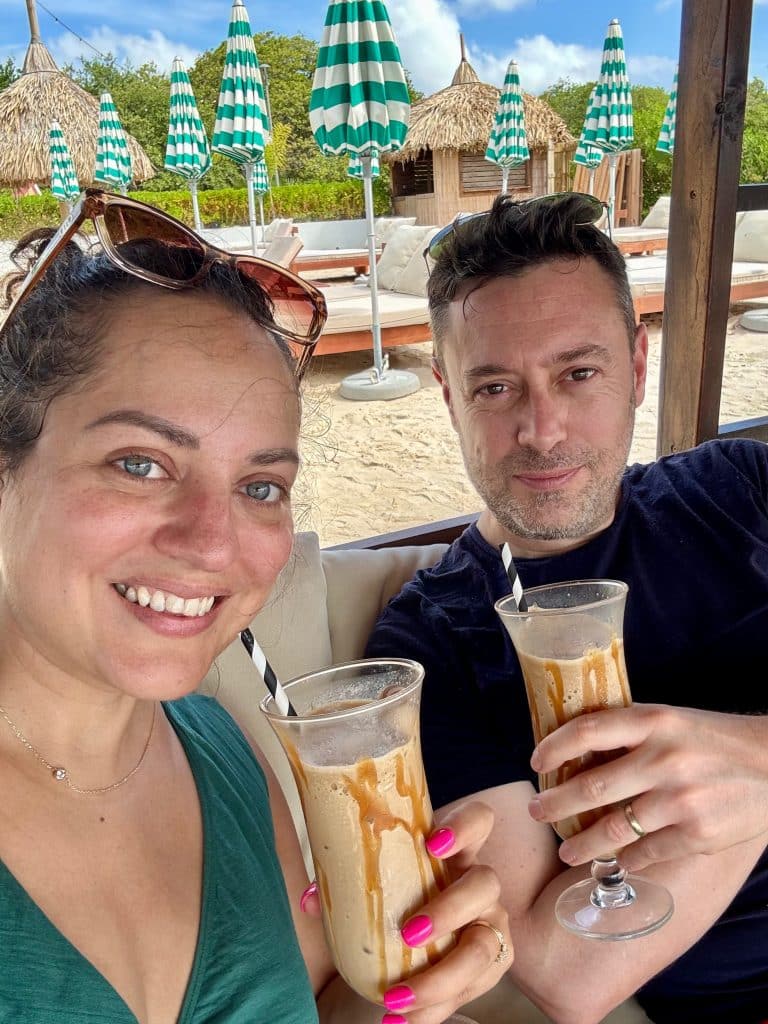
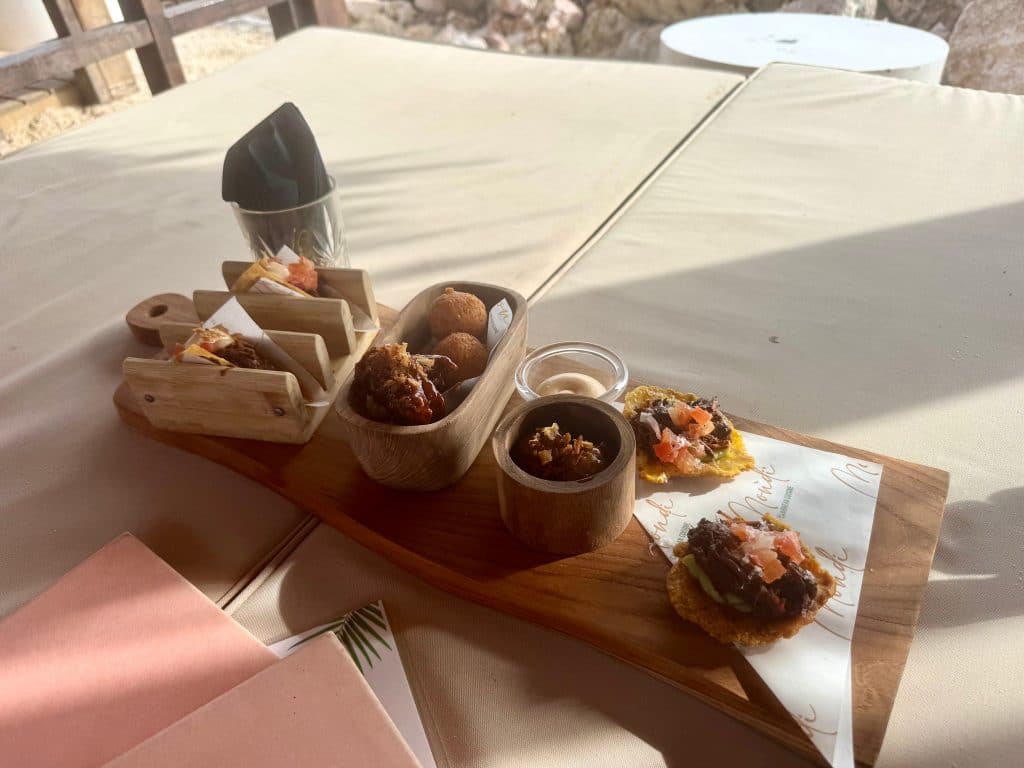
We got the Cabana XL package for the day, which costs 200 Caribbean guilders or $111 USD. It includes a large shaded cabana for two people, one snack platter, two apps, two main courses, two beverages (beer/wine/soft drinks), one bottle of wine, and one bottle of water. I think that is GREAT value for money!
There was SO much food, and it was so tasty. The cheese balls might have been the most addictive food I ate in Curaçao.
So what did we do that day? We relaxed. We ate. We read. We drank cappuccino milkshakes. We enjoyed being shaded all day long, and we got an hourlong massage, which Mondi City provided for us as well.
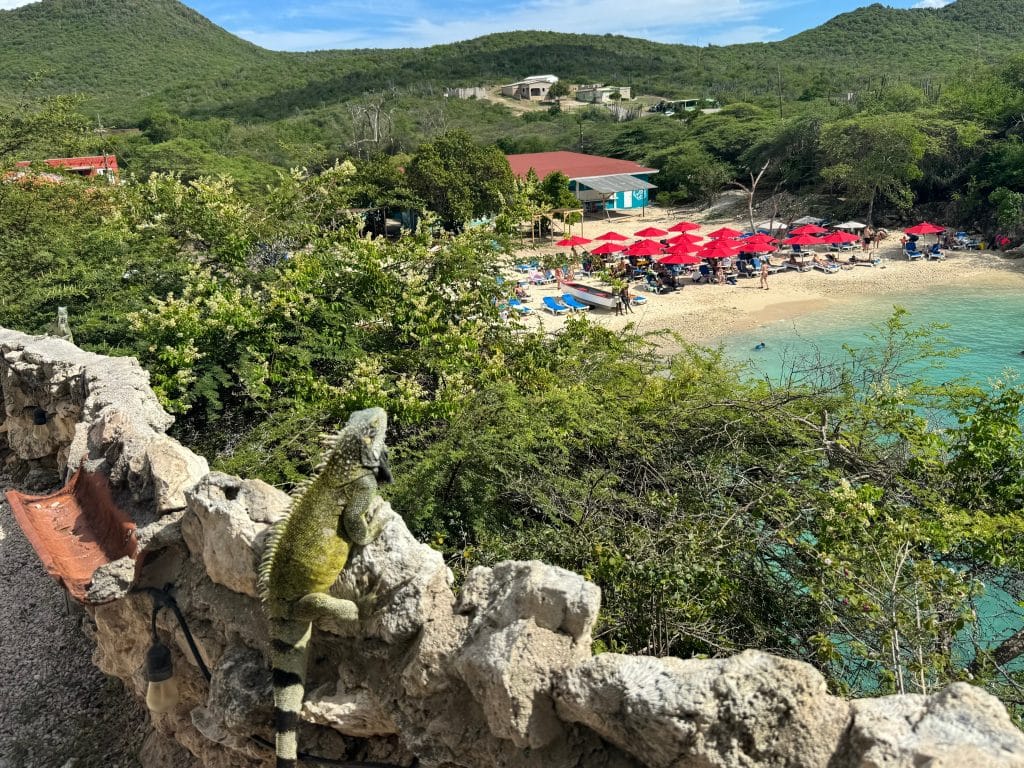
There are iguanas EVERYWHERE in Curaçao.
Curaçao has much more of a desert feel than the rainforest-covered islands in the Eastern Caribbean. Dry, sandy expanses and lots of cacti. And there are iguanas EVERYWHERE!
I loved seeing these cool animals pop up in different places. They’re fairly cool with humans, for the most part, so you can easily photograph them.
The place where I saw the most iguanas was at Bahia Restaurant, the restaurant overlooking Playa Lagun. There had to be five or six good-sized iguanas hanging out up there, basking in the sun, gazing upon the beach like it was their kingdom.
If you have a kid who loves lizards, this is another reason why Curaçao might be for you.
They even eat iguana in Curaçao. I did not partake, nor did I look for it — but I know you can find it with a little research.
Where to Eat in Curaçao
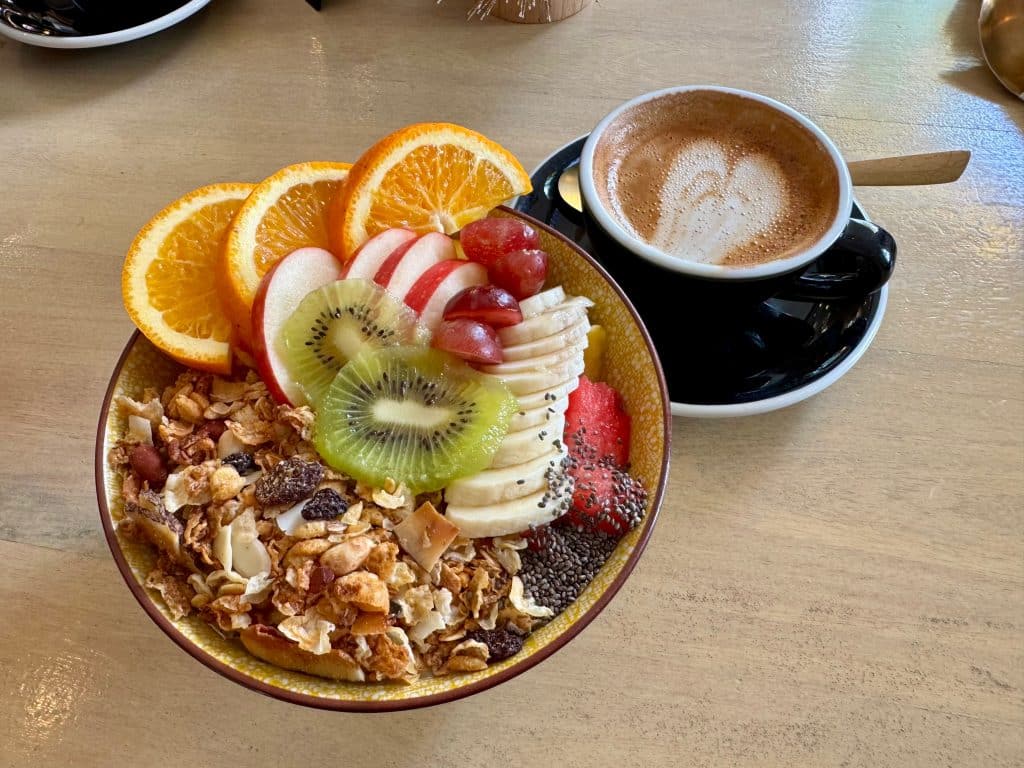
We spent five days in Curaçao, which gave us a chance to try lots of different restaurants. Here are the places we liked:
Cafes in Willemstad
Van Gogh Specialty Coffee — A nice cafe and breakfast spot in Punda with some of the better coffee we had on the island. Good place to go when you’re jet-lagged and up early.
House of Stroop — A small cafe in Otrobanda specializing in stroopwafels, the best Dutch food item ever to exist! Get the ones made fresh; they’re so much better.
Restaurants in Willemstad
Plasa Bieu — A market hall in Punda turning out delicious, hearty plates of local cuisine.
Mar y Tierra — A trendy-feeling spot in Punda, next door to Cascada Rooftop Bar. They made some delicious ceviches.
— Nothing earth-shattering at this place in Punda, but you can get simple dishes like sandwiches, wraps, and Caesar salads. They also have a full breakfast menu.
Bario Food Yard — I think we had an off night at this place in Otrobanda — it was deserted and lots of menu items weren’t available — but the food was decent and it seemed like it would be fun on a busier night.
Bars in Willemstad
Swinging Old Lady Brewery — A brewery in Otrobanda with a FANTASTIC name, a nice outdoor seating area, and some tasty local beers.
Cascada Rooftop Bar — Perfect place to watch the fireworks in Punda on Thursday nights. Our cocktails were ridiculously tasty — I had something that tasted like a watermelon Jolly Rancher!
World’s Best Mojito Bar — Tasty mojitos in the heart of Punda, and I made a fun video here. Keep in mind they close at 6:30 PM every night but Thursday night.
Places Outside Willemstad
Bahia Restaurant — We only had drinks here, but the view overlooking Playa Lagun is SENSATIONAL. One of the best views on the island.
Discover Lagun — A fun and casual outdoor restaurant with great burgers just next door to the parking lot at Playa Lagun.
Coffee Bike Curaçao — A little coffee bar built on a bicycle in a parking lot across from where lots of the boats to Klein Curaçao leave in Caracasbaai, Jan Thiel. I highly recommend getting coffee and cake (the banana bread was great!) before your boat trip.
How to Get to Curaçao
Curaçao might be easier to reach than you think! As someone from the Boston area, where a LOT of people go to Aruba for vacation, I was under the impression that Aruba was the big hub and Curaçao was the side destination, but that’s not the case at all.
There are direct flights to Curaçao from lots of North American cities, including Miami, New York, Toronto, Chicago, and Atlanta, among others. There are also direct flights from Amsterdam, which is the best way to fly in from Europe.
You can also fly direct from Curaçao to the other ABC islands, Aruba and Bonaire, as well as a handful of destinations in the Caribbean and South America. There are no international ferries.
Charlie and I flew from Prague to Amsterdam to Curaçao on our way in, and from Curaçao to Trinidad to Barbados on our way out.
Where to Stay in Curaçao
Where to stay in Curaçao depends entirely on what kind of trip you want to have. Some people come here for the resort experience, but you can also have a more local experience staying in a smaller guesthouse in the city.
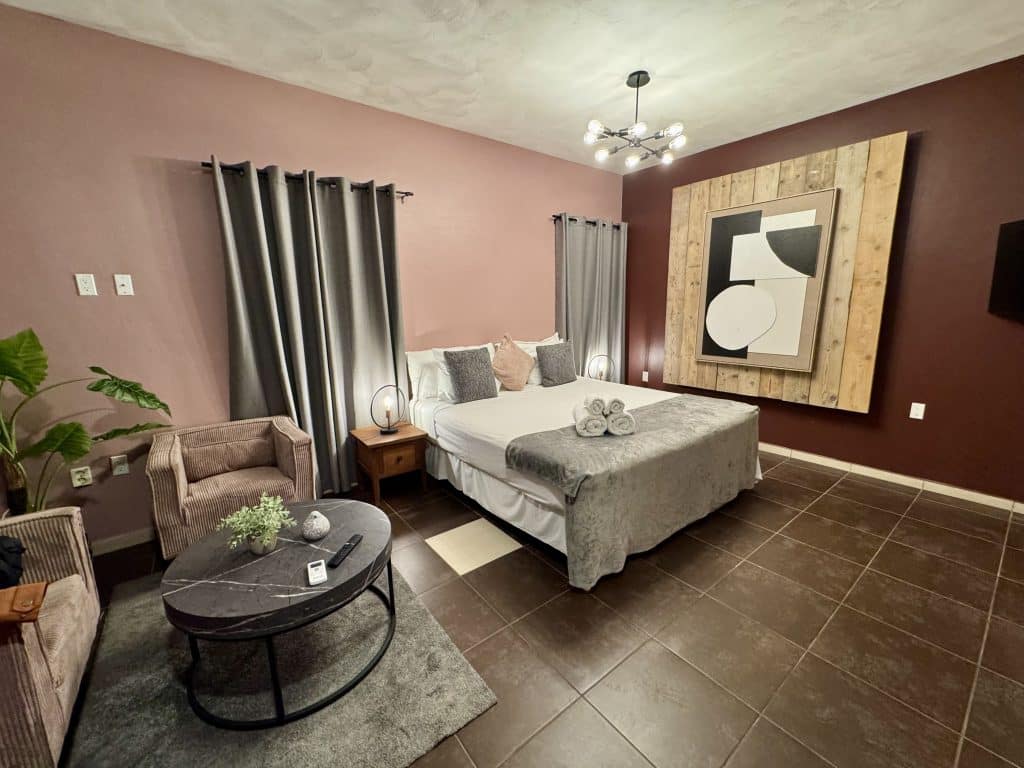
We chose to stay in Willemstad, at Atelier Skalo Boutique Hotel, which was mostly good, but had one big drawback. The location was PERFECT — just over the bridge from Punda, so we could easily walk over and enjoy restaurants and city life, but there was also ample street parking and it was easy to drive in and out.
The room was a good size and tastefully decorated, the breakfast was paid but was decent, and the staff were nice.
The big drawback of this hotel is that the water never got warmer than lukewarm. I can deal with that when it’s really hot out, but if you’re hanging out in an air conditioned room and go shower in not-that-warm water, it’s not pleasant.
So if that’s a drawback for you, don’t stay there. If that’s not a big deal, stay there!
Hot water is not always a given in the Caribbean. We were in the Caribbean four weeks and only had consistent hot water at one place. So keep that in mind.
Top-Rated Places to Stay in Curaçao
Best Time to Visit Curaçao
The ABC islands — Aruba, Bonaire, and Curaçao — are special because they almost never get hurricanes. These islands are located in the southern Caribbean, outside the hurricane belt.
For that reason, if you’re set on a Caribbean trip in September or October (prime hurricane season), I think Curaçao would make an excellent choice.
But overall, Curaçao’s peak season runs from November through March, when there tends to be more sunshine and less rain, and when the northern hemisphere is experiencing chilly temperatures.
And while I visited at the end of November and beginning of December, there was a brief light shower every day. It wasn’t enough to disturb us; we just waited a few minutes and it was over. That’s pretty standard for the Caribbean.
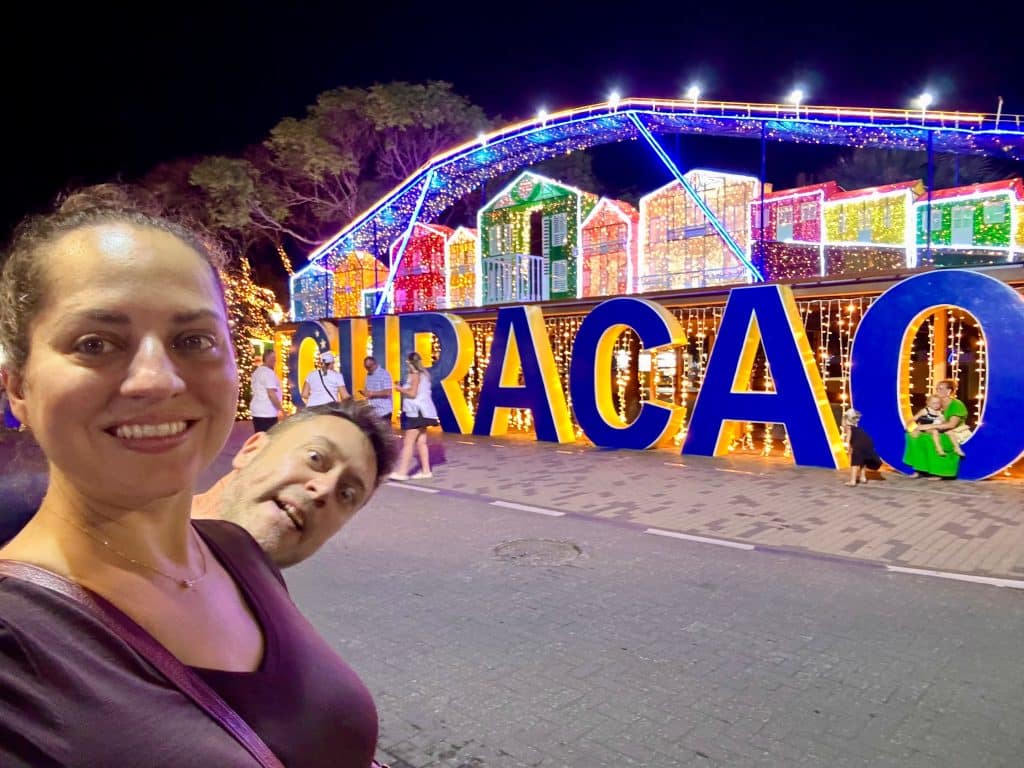
Is Curaçao Worth It?
After reading all this, you might be wondering if it’s actually worth visiting Curaçao. Well, let me tell you something — I loved it here, I would return in a heartbeat, and I’ve been recommending it to many of my travel friends.
I think Curaçao makes an excellent choice for people who are fairly well-traveled and enjoy exploring independently. The cool landscapes, friendly people, and fun things to do are all a bonus.
I hope you have a fabulous time in Curaçao!
More on the Caribbean:
More on what it’s like to travel here:
Have you been to Curaçao? Have any tips? Share away!

