Photo: Bobby Doherty/Food Stylist: Michelle Gatton. Jacket: Erdem. Model: Anna Holbrook.
The plan had been to meet the vegan chef and cookbook author Isa Chandra Moskowitz at one of her old haunts for dinner, but the problem was none of them was left. “That scrambled-tofu heyday is gone. I can’t think of a single fucking place to get tempeh, except, like, maybe Wild Ginger,” she told me, referring to the mid-aughts Pan-Asian mini-chain. You could have gotten it at Modern Love, her vegan comfort spot in Williamsburg, but even she had closed up shop. On the bright side, she was newly available to meet me at 5 p.m. on a Tuesday.
Moskowitz is not a conventional celebrity, but she is extraordinarily famous to an extraordinarily small number of people. Mainly, vegans. Specifically, vegans in or rapidly approaching middle age. “If someone recognizes me, their joints probably hurt,” she said. “Or their mother likes me.” As a vegan of increasingly middle-aged experience, I found this assessment unsettling. “I love it,” she added. She officially gave up meat at 15 and discovered both veganism and leftist politics through the New York City punk scene of the late ’80s. Her culinary history is a portrait of a city that no longer exists. As a teenage high-school dropout, she learned to butcher broccoli and make soups taste good while cooking for Food Not Bombs in the East Village, and though she went on to work in professional kitchens, she stayed true to her anarchist-punk DIY roots. The Post Punk Kitchen, her gleefully low-budget cooking show on Brooklyn Community Access Television, led to an ever-growing canon of voice-y vegan cookbooks, which made way for the restaurant. She opened Modern Love in Omaha, where she happened to be living, in 2014, then two years later she opened a second one on Union Avenue in Williamsburg. Then both restaurants closed. Omaha went first, at the end of 2024; six months later, she shuttered Brooklyn.
“Picture how hard running a restaurant is normally and then just picture someone’s foot on your neck while you’re trying to run it,” she said. She philosophically refused to lean on premade meat alternatives, not because they’re unappetizing — she keeps them in her freezer — but because they do not taste like love. “If I go out to eat, I want to taste the soul of the food,” she said. But that means more steps. Buying fish or cheese or chicken and then cooking it is significantly easier than turning mushrooms into brisket or cashews into cheese. “You just need to prep so much,” she said, sighing. Eating patterns had changed, seemingly forever; by the time she closed up shop in Brooklyn, 60 to 70 percent of orders were for delivery, placed on apps that took a 15 to 30 percent cut. That wasn’t a vegan problem — the apps have come for everyone — except that vegan restaurants have always been hubs for the like-minded: “When it opened, community was important. I was able to be there and talk to tables. I wasn’t always in the back on the phone with fucking Grubhub.” Sales went up, but profits went down. The only way to fill the restaurant, it turned out, was to announce that it was over. “It was nice to see how much everybody loved us, because before that, I had been like, Everybody hates us,” she said. “It was just like, What happened? ”
What happened is that as the city settled into its new post-pandemic normal, the vegan restaurants began to close. On the Upper West Side, Blossom shuttered its final location in the summer of 2024, the same month that Guevara’s, the Cuban café that had been a rising star of the pandemic, called it quits in Clinton Hill and then in Williamsburg. In Harlem, Seasoned Vegan closed and then reopened with a new East Village concept and then, this past spring, that version closed, too. The vegan slice shop Screamer’s closed, and Terms of Endearment closed, and Hartbreakers closed, and the vegan diner Champs was briefly revived as Ro’s, which also closed. The vegan bloodbath seemed to transcend category, aesthetic, age, and borough: Vegetarian Dim Sum House in Chinatown, a pillar since the ’80s; the old-school brown-rice-and-tahini joint the Organic Grill; and the casual Dominican spot the Vegan Factory in the Bronx. By mid-2025, Slutty Vegan was down to one New York location. Planta, a once-growing empire of clubby Japanese-style hot spots, filed for and was acquired out of bankruptcy; the Williamsburg location served its final ahi watermelon nigiri last spring.
Then, this past August, Daniel Humm announced that Eleven Madison Park, which had divested from animal products to extreme fanfare four years earlier, would go back to serving meat. It was a business decision — private events, especially, were down — but it was also, he insisted, the result of a philosophical evolution. “I didn’t realize,” he told the New York Times, “that we would exclude people.”
Had I asked six months ago, the vegan restaurateur Ravi Derossi told me, sitting in his mostly unfurnished office, he’d have said this was not a story. Yes, it had become the narrative that vegan restaurants were closing, but, actually, all restaurants were. “The press likes to talk about how vegan restaurants are closing, not because it’s only vegan restaurants that are closing but because there’s a lot of people who like to talk shit about vegan restaurants.”
But by the time we met in late October, Derossi had changed his mind. “Hospitality in general is getting killed,” he maintained, citing both statistics and the industry experiences of his many omnivorous friends. “But it’s also a vegan thing.” It wasn’t just that vegan restaurants were closing but that they weren’t being replaced. Between 2020 and 2024, the number of new entrants in the New York metro area, a spokesperson from Yelp told me, had been fairly consistent; according to its data, there had been an average of 47 vegan openings each year. In the past year, there were 14.
If it were only New York restaurants where vegans seemed to be losing ground — or only in New York, or only in restaurants — you could maybe chalk it up to material conditions, something about rising rents, the death of counterculture, the decline of public life. But it isn’t. At American grocery stores and other retailers, sales of vegan meats fell 7.5 percent leading into the spring of 2025. At its peak in 2020, the U.S. plant-based-protein retail market did $1.54 billion in sales; in 2025, it did $1.17 billion. While it is normal for an emerging market to stabilize, one analyst told me, she acknowledged it was “a pretty big decline.” Peter McGuinness, the CEO of Impossible Foods, which less than a decade earlier had helped to pioneer the New Wave of beefy beefless burgers, was frank: “The category is smaller today than it was two years ago, four years ago, five years ago. That’s not good.” Beyond Meat, its primary competitor, once valued at more than $14 billion, announced a debt-restructuring deal to fend off bankruptcy and briefly became a meme stock. Slowly, without making a big fuss, buzzy vegan offerings that had briefly and loudly dotted fast-food menus seemed to disappear. What did not disappear was actual meat. Americans were buying more of it than ever. In 2024, U.S. sales hit a record $104.6 billion.
“I’ve known hundreds, if not thousands, of vegans, and most of them aren’t anymore,” Moskowitz told me. “I think people get fatigued, and it’s hard, and it starts feeling pointless.” You give up meat and eggs and milk and fish and make your life, in perpetuity, just slightly less convenient, and you alienate your mother and can’t eat your best friend’s birthday cake, and for what? Because, through your dietary choices, you’ve eliminated suffering? Because you’re trying to save the world?
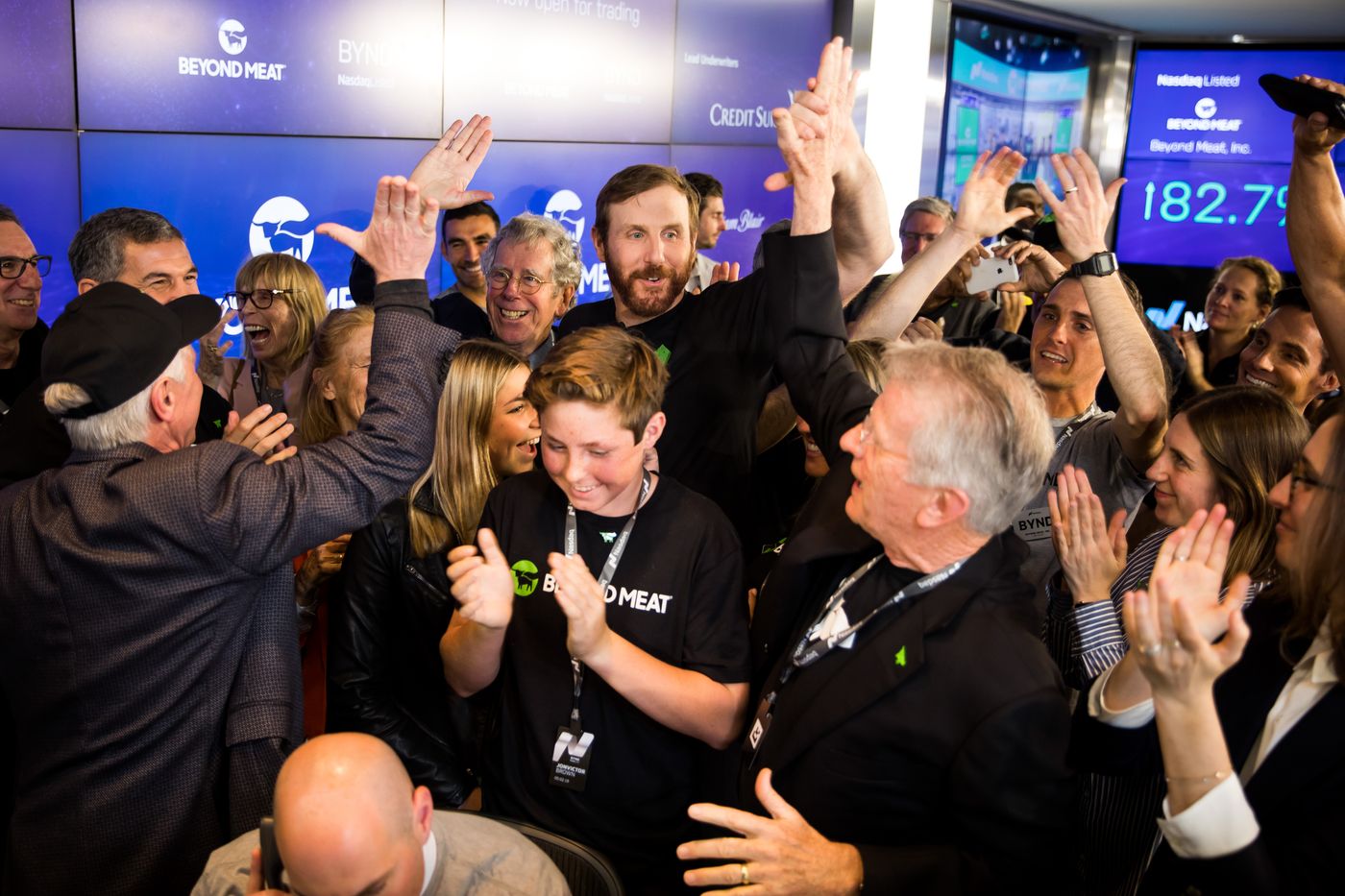
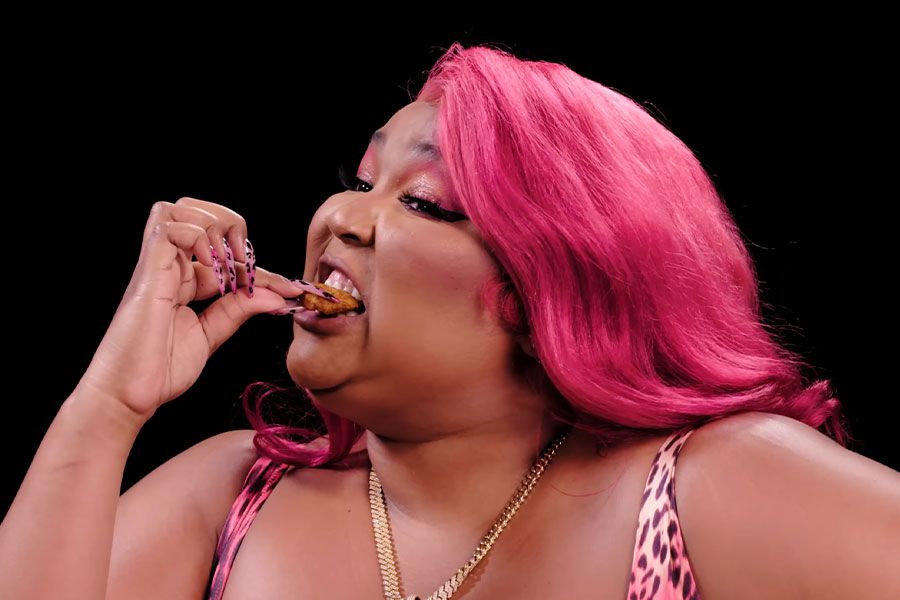
From left: The day of Beyond Meat’s IPO in 2018. It was valued at $3.8 billion. Photo: Michael Nagle/BloombergLizzo eating vegan chicken wings on Hot Ones. Photo: First We Feast/YouTube
From top: The day of Beyond Meat’s IPO in 2018. It was valued at $3.8 billion. Photo: Michael Nagle/BloombergLizzo eating vegan chicken wings on Hot O…
From top: The day of Beyond Meat’s IPO in 2018. It was valued at $3.8 billion. Photo: Michael Nagle/BloombergLizzo eating vegan chicken wings on Hot Ones. Photo: First We Feast/YouTube
There had been so much excitement! From the 2010s through the pandemic, there seemed to be a growing consensus. The global temperature was rising at an alarming rate, and meat was part of the problem. It wasn’t just that animal agriculture, especially cattle, was responsible for a significant percentage of greenhouse-gas emissions — you didn’t even have to care about that. There was an expanding body of evidence that eating lots of meat was bad for you. The WHO linked processed meats to cancer, and pretty much any cause of death that you could think of seemed to correlate with the consumption of red meat. There were documentaries about all of it, Cowspiracy and Dominion and The Game Changers, arguing that the world was being ravaged by the consumption of tortured animals, all while you could achieve peak human performance eating only plants.
People have been following meat-free diets forever (or at least for several millennia). But the promise of the 2010s was that now this lifestyle was going mainstream. Veganism had become, if not cool, then at least to some degree aspirational. It was no longer just for hippies and PETA activists. In New York, rich and beautiful people nibbled raw lasagna and Thai lettuce wraps at Pure Food and Wine. It was also for rich and beautiful people in Los Angeles. Miley Cyrus, nude, mud-smeared, and holding a pig, announced in Paper that she’d been vegan ever since the untimely death of her Alaskan Klee Kai, and she was ready to talk about it. Ellen DeGeneres, Colin Kaepernick, Billie Eilish, Liam Hemsworth, Samuel L. Jackson, Mike Tyson, and Bill Clinton. Venus and Serena Williams voluntarily identified as chegan (cheating vegans), and in 2015, Jay-Z and Beyoncé unveiled a vegan meal-kit service, presumably because they sensed a market opportunity but also because, as Beyoncé told the Times, “the benefits of a plant-based diet need to be known.” “I just feel better when I eat plants,” explained Lizzo. When she appeared on Hot Ones in the summer of 2022, she did it using Daring vegan wings.
Between 2012 and 2020, the number of self-proclaimed animal-free food and drink products launched in the U.S. catapulted by 282 percent. New York, meanwhile, was in the middle of a great vegan flowering. The French vegan bistro Délice & Sarrasin opened, as did Toad Style in Bedford-Stuyvesant and Moskowitz’s Modern Love. Derossi overhauled his entire restaurant group, turning all of Overthrow Hospitality vegan. (His cat had died, which triggered an awakening.) Screamer’s became, reportedly, the city’s first all-vegan slice shop, and Jajaja launched vegan Mexican on the Lower East Side, and the upscale stalwart Blossom expanded. Meanwhile, the city was losing its collective mind over a pair of vegan burgers so good that they attracted normal people. “Why do we have to make it a downer to be in here?” asked the chef Chloe Coscarelli, then 27, whose aggressively adorable namesake restaurant, By Chloe, could barely keep up with the city’s appetite for Instagrammable tempeh-lentil-chia-walnut burgers. Meanwhile, in the East Village, ex–punk-rock drummer turned ex–Del Posto pastry chef Brooks Headley opened the vegetarian and optionally vegan Superiority Burger. GQ immediately named it, without caveats, the burger of the year.
And then there were the bleeding plant-based burgers. Meat was delicious, everyone knew that, but the plant-based burgers were getting really good, and soon, we’d do better: Soon we would grow meat from cells, and it sounded like science fiction, but science fiction had happened before. “In 30 years or so, I believe we will look back and be shocked at what was the accepted way we killed animals en masse for food,” declared Richard Branson in 2018, announcing his investment in the cell-based meat company then known as Memphis Meats. Venture capital had, for a moment, united with the straight-edge anarcho-punks.
“You started to have investors from Hollywood and Silicon Valley really embracing meat alternatives,” said Jenny Stojkovic, a venture capitalist focused on sustainable proteins. During the pandemic, interest rates hit zero. “You had an unprecedented amount of venture-capital funding that was suddenly available,” and at the same time, you had a bunch of people stuck at home desperate for any flicker of novelty. For example, meat-free chicken nuggets. At a conference in the fall of 2021, Pat Brown, the founder and then-CEO of Impossible Foods, predicted that by 2035, within our lifetimes, animal agriculture would be obsolete.
Whether that was plausible was irrelevant. It was, at least, a vision. “When you’re a founder, your job is to make these bombastic statements,” Stojkovic said. And there was, if nothing else, evidence of momentum. David Chang — a chef who had once pulled almost every meatless option from his menu to spite a vegetarian — had introduced New York to the Impossible Burger at Momofuku Nishi in 2016 and then the thing was everywhere: at restaurants, in grocery stores, on Delta Air Lines flights. White Castle had Impossible Sliders, and Burger King had Impossible Whoppers. At the same time, Beyond Meat launched its burger at Whole Foods. The day the company went public in 2019, it was valued at $3.8 billion. “That was the big hallmark moment,” said Stojkovic.
A few years ago, in a midtown hotel suite, I’d tasted what I thought was the future. The San Francisco–based Mission Barns was unveiling its first line of products, which combined plant proteins with lab-cultivated animal fat, originating from what I’d been told was a happy pig named Dawn. I nibbled a miniature BLT and a rich sliver of porcine meatball. Doing any of this at scale seemed to be a problem, but surely that could be figured out? I considered my prospective post-vegan identity. It felt freeing and also unsettling: Someday, I could be just like everybody else, without any moral high ground, going out for lab-grown rib eye, annoying only for standard reasons.
Then meat came roaring back.
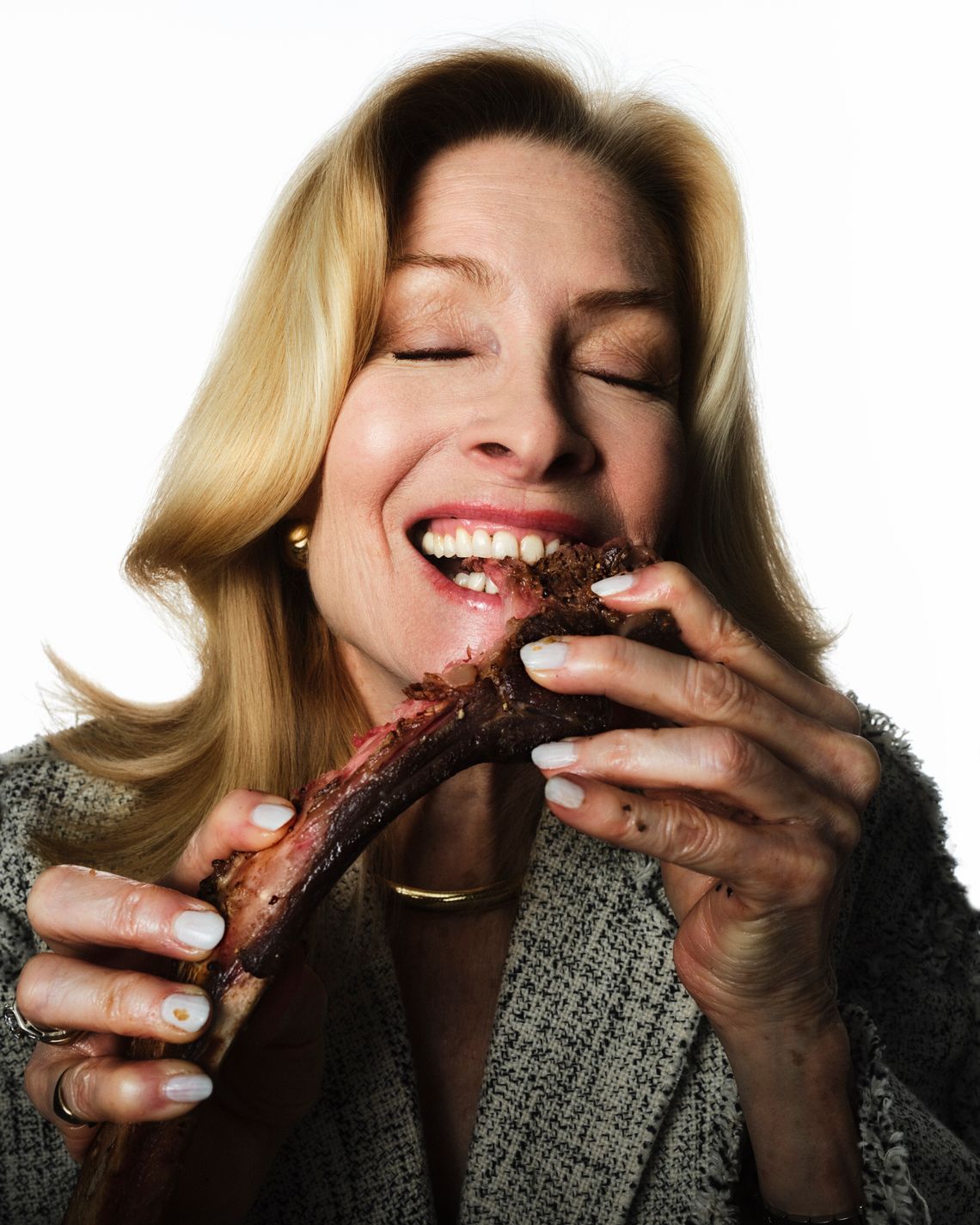
Photo: Bobby Doherty/Food Stylist: Michelle Gatton. Jacket: Erdem. Model: Anna Holbrook.
Given the attention lavished on the vegan question, it would be reasonable to assume there had been, in some direction, a population-level shift. Instead, the number of American vegans has barely moved in at least 30 years. Gallup’s 2023 “Consumption Habits” poll found one percent of Americans identified as vegan and 4 percent as vegetarian, similar to polling from 2012 and 2018. This is slightly lower than the annual number of Americans currently living with bipolar disorder and significantly lower than the number of households that own recreational boats. (It is perhaps very slightly higher than the percentage of households with pet rabbits.) New York, presumably, has more than a lot of places — while there’s no by-city breakdown, vegans skew liberal, female, urban, and non-white — but even if it quintupled, the number would still be small. “Veganism,” the author Alicia Kennedy remarked wryly on Substack, “was never ‘trendy’: To be trendy, it would’ve had to at one time been popular.”
The bubble was always going to burst. “I could not believe how many vegan restaurants there were in the city for a while,” said Amanda Cohen, who has been at the helm of the vegetarian and vegan Dirt Candy since 2008. She herself had been part of the explosion, the chef-partner at the relatively short-lived fast-casual concept Lekka Burger. “Maybe behaviors are changing, but maybe the market is not big enough for us to have a thousand companies all thriving,” suggested Nil Zacharias, the founder and CEO of Plantega, which partners with bodegas to offer plant-based versions of classic orders. He was Zen about the situation. “It’s a market correction, which tends to happen with any boom cycle in any industry.” Except that it also seemed indicative of a real cultural shift. By 2025, everyone was protein-maxxing. On reality television, I watched a man in search of romance purée a baked chicken breast into his daily smoothie. Newly appointed secretary of Health and Human services Robert F. Kennedy Jr. launched a war on seed oils and inspired a renewed fervor for animal fats. The MAHA merch store began selling hats: MAKE FRYING OIL TALLOW AGAIN.
Last spring, citing an industry report, the New York Times declared that “Meat Is Back, on Plates and in Politics.” Americans were eating more of it than they had before the pandemic, and the majority had no interest in cutting back. All the news was bad news; what were you supposed to do about it, eat a grain bowl? Real fur was once again in fashion, as was tanning, as was smoking. Steakhouses, avatars of mid-century American order, seemed to be the hottest openings of the year. Progress no longer appeared inevitable, and if the world wasn’t going to be better and the future wasn’t brighter, or maybe there was no future, then what was the point of all this sanctimonious restraint?
One by one, celebrity vegans announced that, actually, they felt better eating meat. “I found that animal proteins helped me to have more energy, lose weight, and helped with my mental fog,” explained Lizzo in late 2024, summing up the mood. Was eliminating animal products even good for you? Many of the meat substitutes that were meant to be the future, critics kept pointing out, were supposedly “highly processed” with unpronounceable ingredients, a fact that was both somewhat true and extraordinarily well funded. And a lot of the attacks could be traced to the same place: the Center for Consumer Freedom, a nonprofit belonging to the notorious PR executive Richard Berman dedicated to “promoting personal responsibility” by fighting the “growing cabal of activists” — PETA, perhaps, or the Humane Society — meddling in free American lives. Would consumers “keep eating faux meat,” Berman idly wondered in The Wall Street Journal, “when they find out the truth about it?” And it didn’t help the vegan cause that there had been inaccurate claims. A single weekly serving of fish or chicken probably doesn’t triple the risk of colon cancer, contrary to The Game Changers, and despite the passion of Cowspiracy, animal agriculture isn’t actually responsible for 51 percent of greenhouse gasses.
In Washington, RFK Jr. waged a war on ultraprocessed foods and — tenuously related — advocated that Americans eat more meat and more (ideally unpasteurized) dairy, untethered from concerns about suffering or climate or saturated fat. But the great return to meat transcended partisanship. The hippie left and the granola right were united in their legitimate skepticism of a food system poisoned by corporate interests. If we were the richest nation in the world, why did it seem as though everyone was sick? What we needed was a diet uncorrupted by modernity. And what was more natural than a cow? Industrial coddling had made us soft, but we were predators.
While you could resist, Derossi told me, the discourse seeps into your brain. “And eventually, you’re like, We don’t have to go to a vegan restaurant. We have permission now to eat meat,” he said. “I don’t think people are making conscious decisions to say, ‘Oh, global warming is not real. I am going to go eat meat every single day.’ But over time, that’s what’s happening.”
The weekend before it closed for good, Cadence, Derossi’s vegan soul-food concept, hosted its final meal on East 7th Street, a fixed-price mélange of Thanksgiving-inspired dishes (stuffing balls, pecan pie) and the restaurant’s greatest hits (wedge salad with punchy bleu-cheese dressing, Hatch-chile-spiked macaroni and cheese). Southern-fried lasagna, one of its defining dishes, was back on the menu one last time. Derossi is always opening places and closing places and so I’d assumed this was more of the same, but no, he’d told me, this was really it. The rent was more than doubling. “Over time, we’re gonna close almost everything in New York City,” he said. The ownership group wasn’t abandoning niche concepts altogether, but the new plan now was to go national with a pizza-and-pasta joint, Soda Club; the group had already signed a lease on an initial space in Denver.
The mood was celebratory; the lights were glamorously dim. Was there a trace of melancholy in the air? Who could tell? It was November. Mostly, the crowd seemed to be returning customers, or at least people aware they were at a Friendsgiving-themed farewell. It was impossible to know how many of them were vegan, but if history was any indication, it was not most of them. Derossi estimates that about 85 percent of his guests aren’t, which is, in some sense, a vote of confidence. All the restaurants in the world and they chose to walk into his. “You cannot think that you’re going to survive off just the community,” said the vegan chef Guy Vaknin, whose expanding empire includes Le Basque and Reverie. “And if you think that, you’re not surviving.”
It isn’t fair to say that “nobody” likes vegans, but it is, generously, an intimate group. One challenge, then, of running a vegan restaurant is to be the right amount of vegan: vegan enough to communicate to vegans that you’re vegan, but not so vegan that you alienate the vast majority of the dinner-seeking population. “About 85 percent of the people who walk in this door literally shout to me, ‘I’m not vegan, but I love your food!’” said Cecily Tinder, who owns the grab-and-go vegan café Electric Beets in Park Slope. “There’s this proclamation that they need to tell me who they are.”
When she opened in 2022, Tinder posted a vinyl sign in the window: YES WE ARE VEGAN! Her father — deeply not vegan — advised her to ditch it; PLANT BASED was friendlier. “And I’ll be damned if sales didn’t go up the second that I took that out of the window,” she said. Every chef and restaurateur I spoke to for this story emphasized how much they were not preaching, how delighted they were to welcome everyone, how nonjudgmental their restaurants were, and all of them meant it. “I used to think that I’m above other people,” said Eric Yu, who opened Peacefood Cafe on the Upper West Side in 2009. Now he thinks everybody has compassion for something. But it’s also true that a lot of omnivores do feel on some level attacked. And are they exactly wrong? Nobody is vegan for convenience; it’s a choice you make, or try to, because you do think it’s better or healthier or more moral. At the very least, it does not seem delusional that someone might take offense.
“When I first opened, I used to get a lot of comments,” recalled Dirt Candy’s Cohen. This, diners would inform her, was the first time they’d ever had a vegetarian meal. “And I’d always feel like, That’s weird. You’ve had a bowl of cereal. Like, of course you’ve had a vegetarian meal in your life! Like, okay, well … congratulations? ” But she was at the vanguard of a generation of high-end restaurants doing cool and cheffy vegetable-based things. “People think they’re opening a normal restaurant,” Cohen told me, “but the numbers behind a vegan restaurant are so complicated. They’re not the same.”
There is the issue of alcohol sales. People eating vegetable-centric dinners — a sweeping generalization, but on the whole — drink notably less, Cohen has found. They skew frustratingly health-conscious, and they skew young. “They’re not gonna buy, like, the bottles of wine that are going to make you a lot of money. They’re going to buy a drink.” Ideally, to stay functional, maybe a quarter of a restaurant’s total sales would come from alcohol. At Modern Love, said Moskowitz, it was “about 5 percent.” Mocktails, she found, were “very, very helpful,” but the problem is the quantity. “People don’t have three nonalcoholic drinks during their meal.”
And doing crazy things to vegetables, as so many of the most exciting places do, is extraordinarily labor intensive. “This isn’t taking away from a more traditional, protein-focused kitchen, but a steak is — you’re using the best steak, and you put it on a grill, and you’re marinating it, seasoning it, whatever you’re doing to it,” said Cohen. Comparatively, she walked through the process of making a hypothetical Dirt Candy eggplant, a dazzling eggplant, an eggplant that commands a steak-equivalent price. “What we would probably do is, I don’t know, cut it into some funny shape, marinate it, grill it, smoke it, deep-fry it, get a sauce on it,” she riffed. As a result, “we probably have two or three extra prep people we’d need to work on it and probably an extra line cook,” all of whom need to be paid.
At the table next to mine at Cadence, a woman in a sweeping embroidered jacket knocked a candle into an arrangement of dried flowers, and for a second, I wondered if I was witnessing a metaphor. (It was fine.) But for the next several courses, the dining room smelled like burning sage.
Meanwhile, in California, fake meat was at a crossroads. For its first decade of existence, Impossible Foods had positioned itself staunchly against the meat industry. The mission was “Get rid of friggin’ cows.” But the problem with the pitch, it was becoming clear now, was that consumers didn’t want to. Down the coast, outside Los Angeles, Beyond Meat was in the midst of a similar reckoning. If meat came from animals, then any plant-based analogue would be “fake” by definition, and “fake” did not, in the current climate, seem to be a winning strategy. This past summer, the company rebranded. The focus would no longer be meat, but rather “Beyond.”
Both companies had the same problem: The initial hype had died down, and people kept eating pretty much as they always had. Part of the reason milk alternatives had been so successful is that they’d managed to make a case for their existence alongside standard dairy milk. Their slightly different flavors could in fact be assets or at least novelties. “A lot of operators in the coffee space were really smart with those products,” said Lizzy Freier, senior director of menu research at Technomic, designing drinks that actively lean into subtle notes of oat or almond “so it’s part of the entire flavor profile of the drink.” But for the most part, meat alternatives have retained their status as extremely impressive substitutions for people with concerns. And unlike alt-milks, they didn’t necessarily become permanent additions to the menu. Mentions of faux-meat burgers on menus decreased 10 percent over the past year, a drop Freier considered “very significant.” In the fall, White Castle, which had pioneered the triumphal Impossible Slider — one of America’s best fast-food burgers, Eater said — quietly removed it from the menu. “We listen intently to what consumers want, and we act accordingly,” Jamie Richardson, the burger chain’s chief marketing officer, told me. Later this year, White Castle will reveal a new alternative, one that doesn’t look or taste or feel like meat. “It’s a different flavor profile,” he said, “that gives a different experience.”
How much like meat should meat impostors be? Impossible seemed to be doubling down on meatiness with new bloodred packaging “inspired,” according to the press release, “by the craveability of meat.” “We must displace animal products,” McGuinness, the company’s CEO, told me in November with a hint of ambient annoyance. “In order to do that, we have to appeal to animal eaters. I mean, it’s the simplest thing in the world that seems to have people confused.” In the summer, he told the Journal he was considering a “hybrid burger that’s 50 percent beef,” which was received about as well as you’d expect. “I didn’t say I’m doing it,” he clarified. “I’m saying if that was something that unlocked the category and got more meat eaters to try the product and incorporate it into their regimen, I think it’s a win. Is it perfect? No! I’m just saying we’ve got to reach across the aisle here.” The goal is to make plantmeats so objectively delicious that by eating animals, you’d only be depriving yourself.
And yes, of course that meant compromises. At least for now, Burger King’s Impossible Whopper can be topped with dairy cheese, and “no one should be upset by that,” McGuinness told me. This is what progress looks like. A piece of cheese is how you get the Impossible sausage patty into more than 10,000 Starbucks stores. “I wouldn’t even describe Impossible as a vegan company,” McGuinness said, stressing that while “we love the vegan community,” the goal is to transcend labels in service of “the better, greater good.”
“When you’re doing mimicry, you open yourself to criticism around ‘fake,’” Beyond founder and CEO Ethan Brown told me. In addition to the burgers and the chicken and the latest steak filet, Beyond has been experimenting with more conceptual proteins. First came a product called Sun Sausage, which has no direct animal analogue, followed by something called Beyond Ground, which has four ingredients: fava-bean protein, potato protein, psyllium husk, and water. You season it yourself. (That it is almost impossible to talk about without drawing comparisons to meat, he acknowledged, is an ongoing challenge: “The easiest way to describe it is sort of like ground turkey.”) Imitating animal products, Brown insisted, is not the company’s core mission, which is to provide “clean, healthy protein.” “It’s going back to the farm and showing, ‘Here is the fava bean; here’s the milling process,’” he said. “Because that is very real.”
Vegans and their allies are split on the place of fake meat anyway. It is welcoming, unless it’s off-putting. It frees us from the need for animal products, unless it keeps us trapped. “There’s an uncanny valley to it,” said Telly Justice, a former longtime vegan and one-half of the duo behind the tiny East Village optionally plant-based fine-dining spot HAGS. “You’re like, This doesn’t feel like food anymore.” Vaknin, whose menus depend on plant-based analogues and who is an investor in the beef-alternative Chunk Foods, sees it differently. “The idea was to open up the market and make every person feel comfortable,” which, he argued, means using the best possible existing substitutions to create a distinctly un-vegan menu without any animals at all. “Every person could come to the restaurant,” he told me, “and have something familiar for them to eat.”
In December, I met a friend for dinner at Superiority Burger. Two years earlier, the long-standing fans at GQ had christened it “the buzziest restaurant in America,” and on a random post-work Wednesday, the place was packed. My friend is aggressively not interested in vegetarian dining, but obviously she’d been there. “It’s not, like, beautiful vegetables on plates,” she’d told me before stopping to acknowledge that, technically, that’s exactly what it is. “What we do is very intense vegetable cookery,” said Headley. But it doesn’t feel like that. Nobody does a little presentation about the provenance of the roasted purple cabbage; it just shows up, as if it’s always been that way and needs no explanation, like cabbage always tastes like that.
“People come up with lists of the best vegan restaurants in New York or whatever, and we’re never included because we’re a vegetarian restaurant,” Headley said, unbothered, even though it’s “the absolute most vegan-friendly non-vegan restaurant, maybe in the history of the world.” And yet he estimates 94 percent of customers are, like him, omnivores, “which I’ve always thought was sort of cool.” If he could incorporate some meatish products — fish sauce, pork fat — in his perfect world, he would, “but that makes you not vegetarian,” he said wistfully. When his visions call for it, he does use eggs and cheese and milk. “It doesn’t really fit into an easy-to-pin-down category.” That there is nothing virtuous about it may be why it works. “You know, restaurants are huge lands of waste in every possible way,” he said. “You’re not gonna save the world with a restaurant.”
So much of the joy of vegan dining is its impishness. At Dirt Candy: dumplings wrapped in sunchokes stuffed with (different) sunchokes. At Superiority Burger: the overwhelming sensory experience that is the Yuba-Verde hero. “I think that’s really challenging to what people conservatively want from their food right now, which is clean, untouched, unfussy, unpretentious, cerebral, plain,” said Justice of HAGS. “It’s hard to know what the future of vegan cuisine is like in this new context of, like, I just want a piece of roast chicken with French fries in the middle of a plate.” There are still plenty of vegan restaurants in New York, many of them focused on non-Eurocentric cuisine — the Ethiopian spot Ras Plant Based in Crown Heights; HAAM, which does Trinidadian and Dominican food in Williamsburg; Spicy Moon, a vegan Sichuan mini-chain that now has four locations. By Chloe’s Coscarelli returned with a new vegan-burger concept; Derossi opened a spot focused on “slow food and old wine” just this month. Fundamentally, though, these are steakhouse times.
But even at the steakhouse, there’s a good chance there’s now at least one meat-free main dish. One of the reasons vegan restaurants have “slowed down,” suggested Derossi, is that the movement has, in some sense, been successful. “Every non-vegan restaurateur saw the trend, and they’re like, ‘We have to start offering one or two vegan dishes that are good on our menu, not just salad.’ And so they do.” And some of them do it extremely well. Part of the appeal of the vegan-separatist restaurant is that you can eat anything, but these days, you can eat something almost anywhere. Restaurants have always competed on who has the best steak, the best chicken, the standout fish, but now there is “a fourth category,” Cohen said. “What are you doing with your vegetables?” Twenty years ago, that attitude “was just nonexistent” in omnivorous restaurants, and “now the vegetarian section of most restaurants — not all restaurants, but a lot — is equally as important. That’s not something chefs can overlook anymore.” And isn’t that a kind of progress?
In one world, mainstream veganism looks like an explosion of meatless restaurants. In another, meat simply recedes on the menu. You order the vegetables or alternative proteins, traditional or technological, not because you are unusually attuned to animal suffering or climate change or your own cholesterol, but because it’s the thing you want.

